Colorectal cancer, also called bowel cancer, affects the colon and the rectum. It is one of the most common cancers worldwide, and doctors in Nigeria are seeing more cases, including in people under 50. Many patients first blame their symptoms on piles, ulcer or “heat in the body” and wait months before seeing a doctor. Knowing the colorectal cancer early signs, and acting on them quickly, can turn a life-threatening illness into one that is treated and cured.
What the colon and rectum do
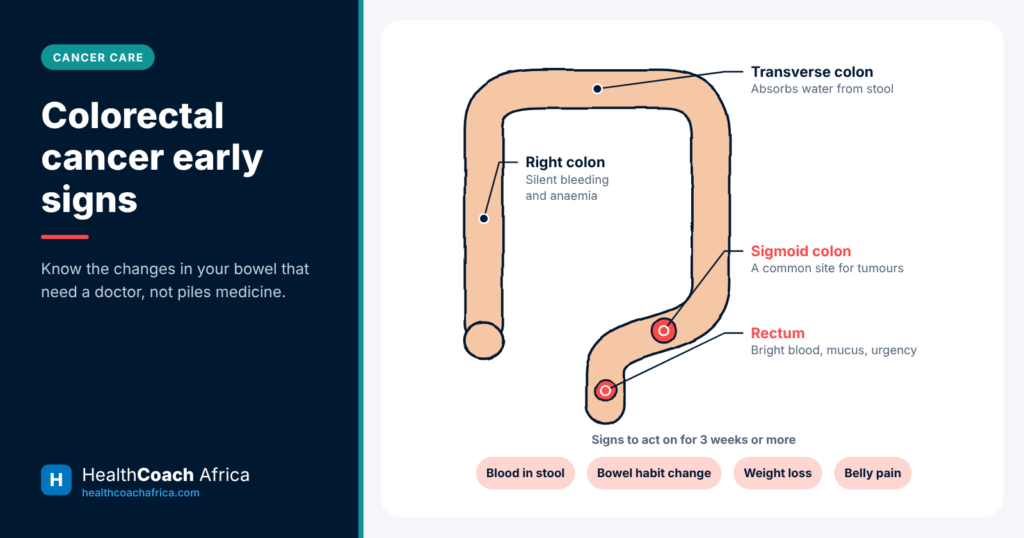
The colon and rectum form the large bowel, the last part of the digestive system. The colon absorbs water and salts from digested food and turns the remainder into stool. The rectum stores stool until it leaves the body.
Most colorectal cancers start as small growths on the inner lining of the bowel, called polyps. Most polyps are harmless. However, some slowly change over 10 to 15 years and become cancer. This long, silent period is a great opportunity, because finding and removing polyps prevents cancer from forming at all.
The main colorectal cancer early signs
See a doctor if you notice any of these for more than three weeks:
Blood in your stool, bright red or dark, or blood on the toilet paper
A change in bowel habit, such as looser stools, constipation or going more often
A feeling that the bowel has not emptied after going to the toilet
Pain, cramping or bloating in the abdomen that keeps returning
Unexplained weight loss
Tiredness and breathlessness, which may be a sign of anaemia caused by slow 1 , hidden bleeding
A lump in the abdomen or back passage
These signs are often caused by less serious conditions. Nevertheless, only a medical check can rule out cancer.
Why piles are often blamed
Haemorrhoids, commonly called piles, are swollen blood vessels around the anus. They are very common and can cause bright red bleeding. Because of this, many people assume that any bleeding is piles and treat themselves with creams or herbal remedies for months.
The danger is that piles and bowel cancer can occur together, and both can cause bleeding. Bleeding with a change in bowel habit, dark blood mixed in the stool, or bleeding in someone over 40 should always be checked by a doctor, even if you have had piles before.
A symptom diary helps
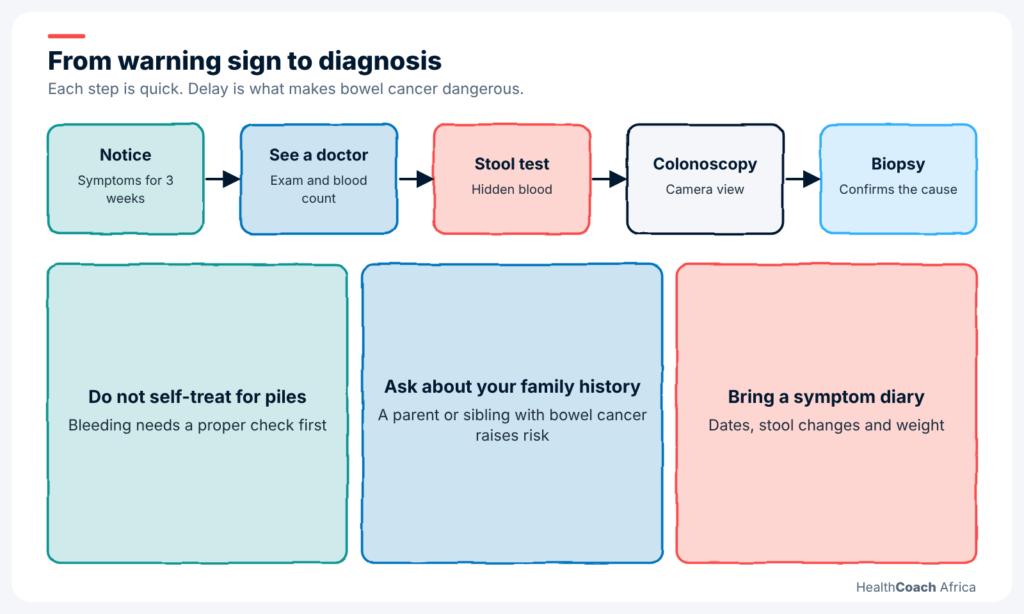
Doctors find it easier to judge colorectal cancer early signs when you bring clear details. Keep a simple diary for two weeks. Write down how often you open your bowels. Note the type of stool, any blood and its colour. Record pain, bloating and your weight. Bring the diary to your appointment. It turns vague worries into useful facts.
Who is at higher risk?
Anyone can develop colorectal cancer, but the risk is higher if you:
Are over 45, although younger cases are rising
Have a parent, brother, sister or child who had bowel cancer, especially before 50
Have had bowel polyps before
Have long-term inflammatory bowel disease, such as ulcerative colitis or Crohn’s disease
Eat a lot of red and processed meat and little fibre
Are overweight, physically inactive or have type 2 diabetes
Smoke or drink alcohol regularly
Some families carry inherited conditions, such as Lynch syndrome, that cause bowel cancer at a young age. If several relatives have had bowel, womb or ovarian cancer, tell your doctor.
Colorectal cancer in younger adults
Bowel cancer has long been seen as a disease of older people. However, studies from Nigeria and other countries report a growing share of patients under 50. Younger adults often wait longer before seeing a doctor, and doctors may not suspect cancer at first.
Therefore, if you are young and have persistent colorectal cancer early signs, be clear about how long the symptoms have lasted and ask whether further tests are needed. Do not accept repeated courses of antibiotics or worm treatment for bleeding that does not stop.
Screening finds cancer before symptoms
Screening looks for cancer or polyps in people who feel well. Many countries now recommend starting at 45 or 50. The main tests are:
Stool tests, such as the faecal immunochemical test, which detect tiny amounts of hidden blood
Colonoscopy, in which a thin, flexible camera examines the whole colon. Polyps can be removed during the same procedure.
Flexible sigmoidoscopy, which examines the lower part of the bowel
Colonoscopy is available at teaching hospitals and some private centres in Nigeria. Ask your doctor which option suits your age, risk and budget.
HUBPHARM PHARMACIST’S NOTE Bowel preparation for a colonoscopy usually means drinking a large volume of laxative solution, and timing matters. Many people take it at the wrong time, or stop their diabetes and blood pressure tablets without checking first. Send a photo of your preparation instructions to a HubPharm pharmacist. We will turn them into a simple hour-by-hour plan and tell you which of your regular medicines to pause.
How colorectal cancer is diagnosed
If you have symptoms, your doctor will ask questions, examine your abdomen and usually check the back passage with a gloved finger. Blood tests check for anaemia. A colonoscopy is the key test, because it allows the doctor to see the bowel lining and take a small tissue sample, called a biopsy.
If cancer is confirmed, scans such as CT show whether it has spread to the liver, lungs or lymph nodes. This information, called staging, guides treatment.
How colorectal cancer is diagnosed” section. Alt text: Flow chart of tests from symptom check to colonoscopy and biopsy for colorectal cancer early signs
Most people with these symptoms do not have cancer, but only tests can tell.
Treatment options
Treatment depends on where the cancer is and how far it has spread:
Surgery removes the part of the bowel with the cancer and nearby lymph nodes. Most patients have the two ends of the bowel joined again. Some need a stoma, an opening on the abdomen where stool collects in a bag, which may be temporary or permanent.
Chemotherapy lowers the chance of the cancer returning, or controls cancer that has spread.
Radiotherapy is often used for rectal cancer before or after surgery.
When colorectal cancer is found early, before it has spread, most people are cured.
Questions to ask your doctor
These questions help you understand your care:
Could my symptoms be colorectal cancer early signs, or something else?
Do I need a colonoscopy, and where can I have it?
How should I prepare for the test?
If polyps are found, will they be removed during the test?
Should my brothers, sisters or children be screened?
Write the answers down. Ask again if anything is unclear.
Living with a stoma
Many people fear a stoma more than the cancer itself. With good support, most people return to work, worship, travel and family life. A stoma nurse teaches you how to change and empty the bag, look after the skin and choose clothing. Bags and accessories 2 can be costly, so plan supplies in advance and ask about reliable sources.
Lowering your risk
You can reduce your risk of colorectal cancer by:
Eating more fibre from beans, vegetables, fruit, oats and whole grains
Limiting red meat and avoiding processed meats such as sausages and corned beef
Staying active for at least 30 minutes most days
Keeping a healthy weight
Stopping smoking and limiting alcohol
Taking part in screening at the recommended age
Myths that delay diagnosis
“Blood in the stool is always piles.” Bleeding needs a medical check, especially with other symptoms.
“Bowel cancer only affects old people.” Younger adults can develop it, and their cancers are often found late.
“A colonoscopy is too dangerous.” It is a routine test. Serious complications are rare, and the benefits are large.
Preparing for a colonoscopy
The bowel must be completely empty for a clear view. You will be given a strong laxative 3 to drink the day before. You may need a clear fluid diet for a day. Stay close to a toilet. Drink plenty of water to avoid dehydration. Tell the doctor about any diabetes or blood-thinning medicines, because doses may need changing. Most people are sedated during the test and go home the same day. Bring someone to take you home. Acting on colorectal cancer early signs with a timely colonoscopy is the surest way to get answers.
Share what you have learned
Talk to your parents, siblings and older friends about bowel health. Many families never discuss stool changes or bleeding, so warning signs stay hidden. Sharing the colorectal cancer early signs with people you love could lead one of them to a timely check.
Getting help
If you have any colorectal cancer early signs for more than three weeks, book an appointment with a doctor and say exactly what you have noticed. The NHS guide to bowel cancer has more detail, and our other cancer care articles cover related topics.For help with bowel preparation medicines, stoma supplies or questions about your treatment, message a HubPharm pharmacist or chat with Afiya on WhatsApp.
Medicines and products in this article
#
Medicine or product
What to know
1
Iron tablets
Over the counter
Treat anaemia from slow bowel bleeding. They can darken stools, so mention them to your doctor.
2
Stoma bags and accessories
Medical supplies
Bags, seals and skin protectors for people with a stoma. Plan supplies ahead.
3
Bowel preparation laxative
Prescription or pharmacy
Clears the bowel before colonoscopy. Follow the timing exactly and drink plenty of clear fluids.
To order any of these, or to ask a pharmacist a question first, message HubPharm on WhatsApp or visit hubpharmafrica.com. Prescription medicines are supplied against a valid prescription.
Diabetes in Nigeria: Why Blood Sugar Control Fails Diabetes in Nigeria does not usually fail in the clinic. Among people who reach a specialist and stay in care, control is often reasonable. It fails in the years before anyone tests you, and it…
COPD Symptoms and Treatment: Living Well With Lung Disease Chronic obstructive pulmonary disease, or COPD, is a long-term lung condition that makes breathing difficult. It is one of the leading causes of death worldwide. In Nigeria, it is often linked not only to smoking…
Nutrition During Cancer Treatment: What to Eat and Why Cancer and its treatment place heavy demands on the body. Chemotherapy, radiotherapy and surgery all increase your need for energy and protein, while side effects such as nausea and mouth sores make eating harder. Good…
Mosquito Control at Home: Protecting Your Family… Mosquitoes are more than a nuisance. In Nigeria, the Anopheles mosquito carries malaria, which kills many children every year. Other mosquitoes spread dengue, yellow fever and other infections. Much of the fight against mosquitoes happens…