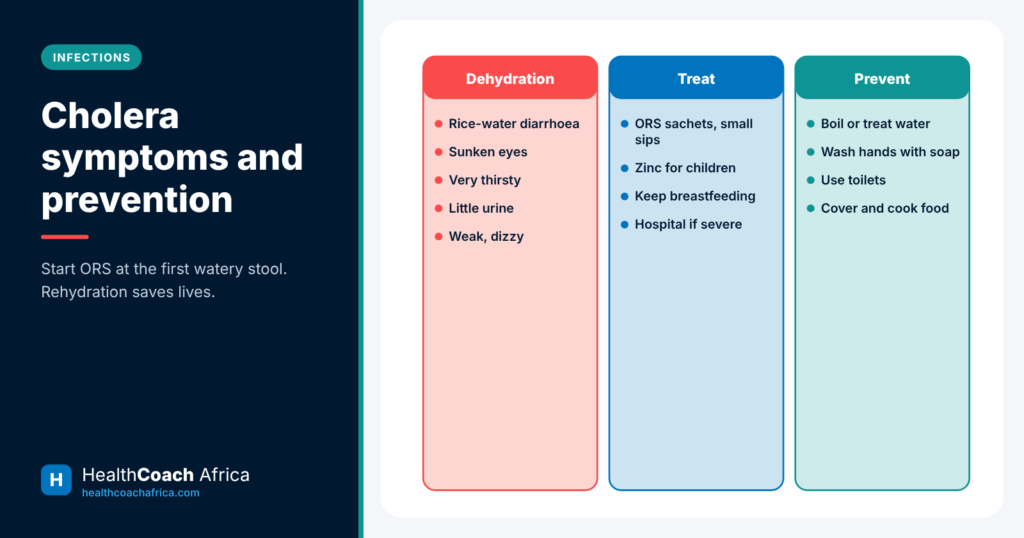
Cholera outbreaks hit Nigeria almost every year, especially during the rainy season, when floods mix sewage with drinking water. Cholera can kill a healthy adult within hours through severe dehydration. Yet most deaths are preventable with simple oral rehydration solution and quick care. Knowing cholera symptoms and prevention steps protects your family and your community. This guide explains the signs, how to treat dehydration at home and how to stop the spread.
What is cholera?
Cholera is an infection of the gut caused by the bacterium Vibrio cholerae. People catch it by swallowing food or water contaminated with the faeces of an infected person. The bacteria release a toxin that makes the gut pour out large amounts of water and salts.
Cholera spreads where there is poor sanitation, unsafe water and crowding. Flooding, open defecation and broken water pipes all increase the risk.
Cholera symptoms
Many infected people have mild symptoms or none at all, but they can still spread the bacteria. In others, symptoms start suddenly, from a few hours to five days after infection. The main cholera symptoms are:
Sudden, profuse watery diarrhoea, often pale and cloudy, described as “rice-water stools”
Vomiting
Leg cramps
Rapid dehydration
Fever is uncommon. The danger comes from losing so much fluid so quickly.
Who is most at risk?
Cholera can affect anyone, but some people become seriously ill faster:
Young children, especially those who are malnourished
Older adults
Pregnant women
People living with HIV or other conditions that weaken immunity
People living in crowded areas, camps or places affected by flooding
Learning cholera symptoms and prevention is especially important for families caring for these groups.
Signs of dehydration
Watch for these signs, which can appear within hours:
Extreme thirst
Dry mouth and tongue
Sunken eyes
Little or no urine
Skin that goes back slowly when pinched
Weakness, dizziness or confusion
A fast, weak pulse
In babies, a sunken soft spot on the head and no tears when crying
Severe dehydration is an emergency. Go to a hospital or cholera treatment centre immediately.
Start ORS straight away
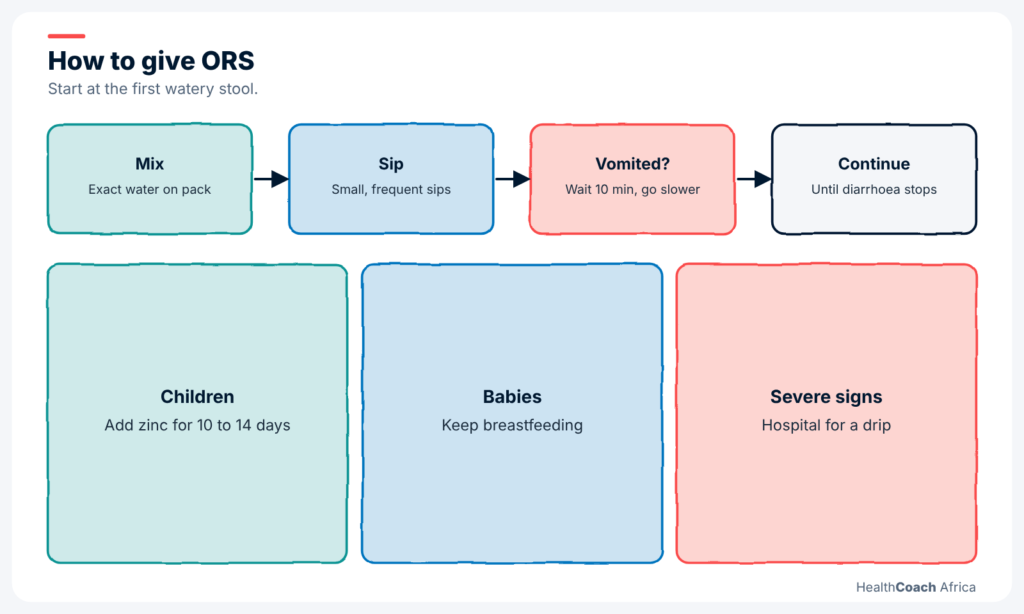
ORS guide for cholera symptoms and prevention at home, from mixing correctly to when to go to hospital
Too much salt in homemade solution can be harmful. Measure carefully.
Oral rehydration solution (ORS) is the most important treatment. It replaces the water and salts lost through diarrhoea. Start giving ORS as soon as diarrhoea begins, even on the way to a health facility.
Use ORS sachets from a pharmacy1 and mix with the exact amount of clean water shown on the pack.
Give small, frequent sips. If the person vomits, wait ten minutes and continue more slowly.
Adults may need several litres a day during severe diarrhoea.
Continue breastfeeding babies.
If you have no ORS sachets, a homemade solution can be made with one litre of clean, boiled and cooled water, six level teaspoons of sugar and half a level teaspoon of salt. Measure carefully, because too much salt can be harmful.
Zinc for children
Children with diarrhoea should also receive zinc supplements2 for 10 to 14 days. Zinc shortens the illness and reduces the chance of diarrhoea returning in the following months. Ask a health worker or pharmacist for the correct dose for your child’s age.
HUBPHARM PHARMACIST’S NOTE
During an outbreak, ORS sachets and zinc tablets can run out quickly in local shops, and homemade solutions are easy to get wrong. Message HubPharm to order a family diarrhoea kit with genuine ORS sachets, zinc for children and water purification tablets, and keep it at home before the rains. A pharmacist will explain how to mix ORS correctly and how much to give each person. Please do not use anti-diarrhoea tablets for cholera. Rehydration saves lives.
When to go to hospital
Seek care immediately if:
Diarrhoea is very frequent and watery
The person is vomiting and cannot keep ORS down
There are signs of severe dehydration
The person is a young child, elderly, pregnant or has a long-term illness
Symptoms do not improve after a few hours of ORS
People with severe dehydration need fluids through a drip. Antibiotics may be given to people with severe cholera to shorten the illness, but rehydration remains the most important treatment.
Cholera symptoms and prevention: safe water
Clean water is the foundation of cholera prevention:
Boil drinking water for at least one minute, then store it in a clean, covered container
Treat water with chlorine tablets3 or household bleach if boiling is not possible, following product instructions
Use sealed bottled or sachet water from registered producers
Avoid ice unless it is made from safe water
Store water in containers with lids and taps, and do not dip cups into them
Cholera symptoms and prevention in schools and markets
Schools, markets and motor parks bring many people together and can spread cholera quickly during outbreaks. Schools should provide safe drinking water, soap and clean toilets. Food vendors should cover food, wash hands often and use safe water for cooking and washing. Traders and parents can insist on handwashing stations. Teaching children cholera symptoms and prevention helps them protect themselves and alert adults when a friend falls ill.
Food safety
Eat food that is freshly cooked and still hot
Wash fruit and vegetables with safe water, and peel fruit yourself
Avoid raw or undercooked seafood
Cover food to protect it from flies
Be cautious with street food during outbreaks
Handwashing and sanitation
Wash hands with soap and water:
After using the toilet
After cleaning a child who has defecated
Before preparing food
Before eating or feeding a child
After caring for someone with diarrhoea
Use toilets or latrines, and keep them clean. Avoid open defecation, especially near water sources. Dispose of children’s faeces in a toilet.
Caring for someone with cholera at home
While waiting to reach care, or after discharge:
Keep giving ORS
Wash your hands carefully after any contact
Clean surfaces and toilets with diluted bleach
Wash soiled clothes and bedding separately, away from water sources
Do not prepare food for others while caring for the sick person, if possible
After floods
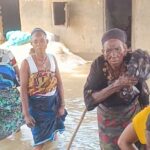
Floods often spread cholera, because latrines overflow and wells become contaminated. After flooding, treat all drinking water, even from wells and boreholes, until authorities confirm it is safe. Clean and disinfect water containers. Wash hands carefully after touching floodwater. Watch closely for diarrhoea in children and older relatives, and start ORS at once if it appears.
The role of communities
Cholera symptoms and prevention depend on community action as well as individual care. Community leaders can organise clean-up exercises, protect water sources from waste and support health workers during outbreaks. Report clusters of diarrhoea cases to the nearest health facility, so that the local health authority can respond early with treatment centres, water treatment and vaccines.
Cholera vaccines
Oral cholera vaccines are used during outbreaks and in high-risk areas. They give good protection for some time but do not replace safe water and sanitation. Health authorities in Nigeria have used them in vaccination campaigns in affected states. Accept the vaccine when it is offered in your community.
Myths about cholera
“Cholera only affects poor people.” Anyone who drinks contaminated water can be infected.
“Diarrhoea should be stopped with medicine.” Anti-diarrhoea tablets are not recommended for cholera. Rehydration saves lives.
“Bitter kola or herbal mixtures cure cholera.” No herbal remedy replaces ORS and medical care.
“Sachet water is always safe.” Only use water from registered producers with intact packaging.
Travelling during an outbreak
If you must travel to an area with cholera, carry ORS sachets, drink only safe water and wash hands often with soap.
The main treatment for cholera dehydration. Mix exactly as directed.
2
Zinc tablets for children
Pharmacy
Given for 10 to 14 days with diarrhoea.
3
Water purification tablets
Over the counter
Make drinking water safe when boiling is not possible.
To order any of these, or to ask a pharmacist a question first, message HubPharm on WhatsApp or visit hubpharmafrica.com. Prescription medicines are supplied against a valid prescription.
Cholera Symptoms and Prevention: A Practical Guide… ARTICLE TEXT Cholera outbreaks occur in Nigeria almost every year, often during the rainy season when floods contaminate wells and boreholes. Cholera can kill within hours if dehydration is not treated. Yet it is easy…
Mosquito Control at Home: Protecting Your Family… Mosquitoes are more than a nuisance. In Nigeria, the Anopheles mosquito carries malaria, which kills many children every year. Other mosquitoes spread dengue, yellow fever and other infections. Much of the fight against mosquitoes happens…
Nasarawa Flood Victims Battle Hunger and Malaria as… DOMA, NIGERIA — Weeks after floods swept through 11 communities in Doma Local Government Area of Nasarawa State, displaced residents are battling hunger, typhoid and malaria, and Nasarawa flood victims malaria cases are rising as…
Nutrition During Cancer Treatment: What to Eat and Why Cancer and its treatment place heavy demands on the body. Chemotherapy, radiotherapy and surgery all increase your need for energy and protein, while side effects such as nausea and mouth sores make eating harder. Good…