Cancer and its treatment place heavy demands on the body. Chemotherapy, radiotherapy and surgery all increase your need for energy and protein, while side effects such as nausea and mouth sores make eating harder. Good nutrition during cancer treatment helps you keep your strength, heal faster and cope better with each cycle. This guide gives practical advice using everyday Nigerian foods.
Why food matters so much
Many people with cancer lose weight without trying. Some of this is fat, but much of it is muscle. Losing muscle leaves you weak, tired and more likely to get infections. It can also mean that doctors have to reduce or delay your treatment.
On the other hand, people who eat enough tend to tolerate treatment better and recover more quickly. You do not need special or expensive foods. The goal is to eat enough energy and protein, drink enough fluid and keep food safe.
Building a strong plate
Think of your plate in three parts at most meals:
Protein, about a quarter of the plate. Eggs, fish, chicken, beans, moi moi, akara, groundnuts, milk and yoghurt help repair tissue and support the immune system.
Energy foods, about a quarter. Rice, yam, potatoes, bread, oats, plantain and pap provide the fuel your body needs.
Vegetables and fruit, about half. Ugwu, spinach, okra, carrots, oranges, pawpaw and bananas supply vitamins and fibre.
During treatment, these proportions can shift. If you are losing weight, eat more of the energy and protein foods and add healthy fats such as palm oil in moderation, groundnut paste or avocado. A dietitian can tailor advice to your needs.
Nutrition during cancer treatment: a sample day
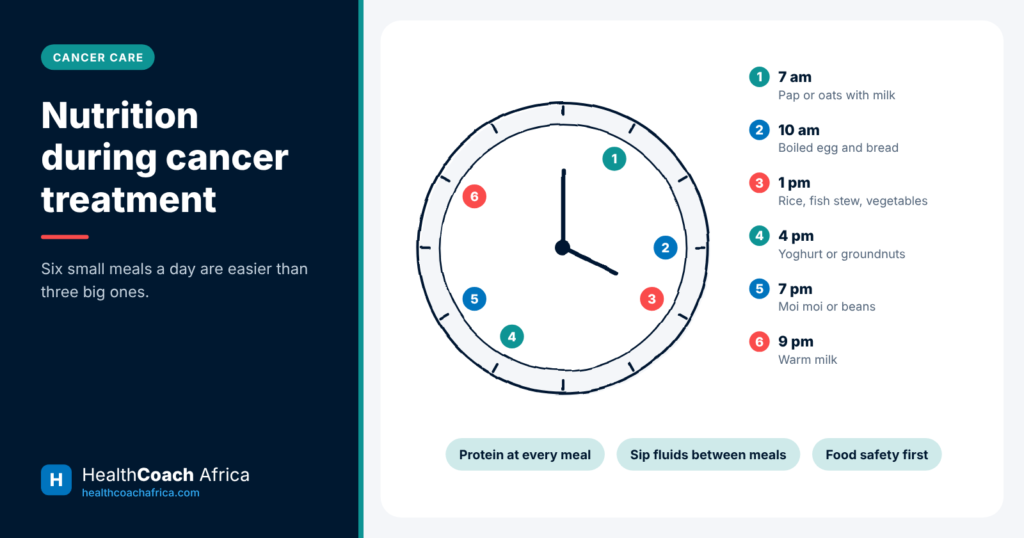
A simple daily plan makes good nutrition during cancer treatment easier to achieve. Adjust it to your taste, budget and side effects:
Early morning: pap or oats made with milk, with a spoon of groundnut paste
Mid-morning: a boiled egg and a slice of bread, or a banana
Lunch: rice or yam with fish or chicken stew and vegetables
Afternoon: yoghurt, a handful of groundnuts or a fruit smoothie
Dinner: moi moi or beans with plantain, or a soft vegetable soup with fish
Bedtime: a warm cup of milk or a nutrition drink
This pattern provides protein at every meal, which is the key to protecting muscle. If you are full quickly, eat the protein part of the meal first.
Small, frequent meals
Large meals can feel overwhelming when your appetite is poor. Instead, aim for five or six small meals and snacks a day. Eat by the clock, rather than waiting until you feel hungry. Keep easy snacks within reach, such as groundnuts, boiled eggs, bread with peanut butter, yoghurt or fruit.
Drinks can also add nourishment. A glass of milk, a smoothie made with banana and yoghurt, or pap with milk and groundnut paste all provide energy and protein in a form that is easy to swallow. Oral nutrition drinks 1 are another option if you cannot eat enough.
Coping with nausea and vomiting
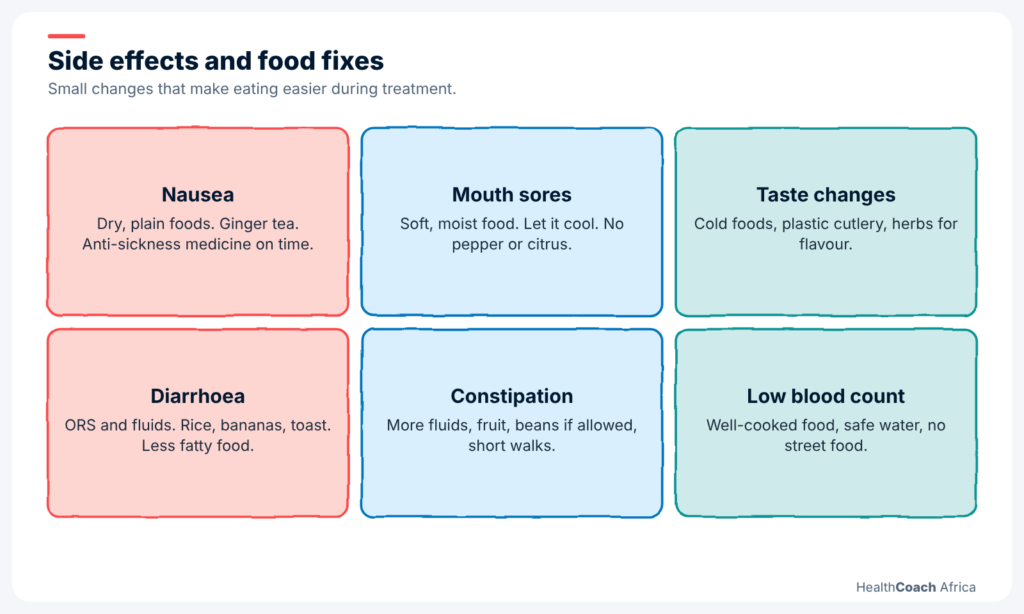
Nausea is one of the most feared side effects of chemotherapy. These tips can help:
Take anti-sickness medicine 2 exactly as prescribed, before nausea starts
Eat dry, plain foods such as crackers, toast or boiled yam when you feel sick
Avoid fried, very spicy or strong-smelling foods
Sip cool fluids between meals rather than with them
Try ginger tea or small pieces of fresh ginger
Rest sitting up for 30 minutes after eating
If you vomit more than a few times in a day or cannot keep fluids down, contact your treatment centre the same day. Dehydration can develop quickly.
Mouth sores, taste changes and dry mouth
Chemotherapy and radiotherapy to the head and neck can cause painful mouth sores. Choose soft, moist foods such as pap, mashed yam, soups, eggs and fish. Let hot food cool before eating. Avoid pepper, citrus and very salty food while the sores heal. Rinse your mouth with a mild salt and baking soda solution several times a day.
Many people also find that food tastes metallic or bland. Plastic cutlery, cold foods and stronger flavours such as herbs or lemon, if your mouth is not sore, can help. For a dry mouth, sip water often and add sauces or gravy to meals.
Protecting yourself from food infections
Chemotherapy lowers your white blood cell count, so infections from food are more dangerous. Safe nutrition during cancer treatment means good hygiene as well as good food:
Wash your hands before preparing and eating food
Cook meat, fish and eggs thoroughly, with no pink meat or runny yolks
Avoid street food, raw salads and unpasteurised milk while your counts are low
Wash fruit well and peel it where possible
Drink treated, boiled or sealed bottled water
Store leftovers in a fridge and eat them within a day
Ask your care team when your blood count is likely to be lowest, and be most careful during those days.
HUBPHARM PHARMACIST’S NOTE Nutrition drinks come in many types: some are high in protein, some are high in energy, and some suit people with diabetes. Tell a HubPharm pharmacist what treatment you are on and how you are eating, and we will help you choose one.
Supplements, herbs and “cancer diets”
It is natural to look for something extra that might help. However, high-dose vitamins, antioxidants and herbal mixtures can interfere with chemotherapy or radiotherapy. Some affect how the liver handles medicines, which can make treatment less effective or more toxic.
Similarly, there is no good evidence that cutting out sugar, fasting, alkaline water or juice-only diets cure cancer. These approaches can cause dangerous weight loss. Always tell your doctor or pharmacist about every supplement and herb you take, including bitters and local mixtures.
Diarrhoea, constipation and tiredness
Some treatments speed up the bowel, while others, along with strong painkillers and anti-sickness medicines, slow it down. For diarrhoea, drink plenty of fluids, including oral rehydration solution 3 , and choose plain foods such as rice, bananas, toast and boiled potatoes. Avoid very fatty food and large amounts of milk until it settles.
For constipation, drink more fluids, eat more fruit, vegetables and beans if your team allows, and walk a little each day. Ask your pharmacist about a gentle laxative if needed.
Tiredness makes cooking hard, and it is one of the biggest barriers to nutrition during cancer treatment. Therefore, cook larger portions on good days and freeze them, accept help from family and keep simple foods in the house.
Tell your care team if a side effect stops you eating or drinking for more than a day.
Weight gain during treatment
Not everyone loses weight. Steroids and some hormone treatments for breast and prostate cancer can increase appetite and cause weight gain. In that case, good nutrition during cancer treatment means choosing filling foods with fewer calories, such as vegetables, beans, fish and fruit, and staying active. Do not start a strict diet during treatment without advice from your care team.
Nutrition after treatment ends
When treatment finishes, the habits you built for nutrition during cancer treatment remain useful, but the focus shifts to long-term health. A diet rich in vegetables, fruit, whole grains and beans, with less red and processed meat, sugar and alcohol, supports recovery and lowers the risk of other diseases. Combined with regular activity, it also helps to keep a healthy weight.
When to seek help
Contact your care team if you:
Lose more than a few kilograms in a month without trying
Cannot eat or drink for more than a day
Have diarrhoea more than four times a day
Find swallowing painful or difficult
Feel dizzy or pass very little urine
These problems are common and treatable. Reporting them early helps you stay on schedule with treatment.
A word for caregivers
Family members often feel helpless, and pushing food can lead to tension. Offer small portions of favourite foods, keep mealtimes calm and accept that appetite will vary from day to day. Celebrate small wins. In addition, look after your own health so that you can keep supporting your loved one.
Getting help
Good nutrition during cancer treatment is part of the treatment itself. Ask your oncologist for a referral to a dietitian, and read our other cancer care articles for more support. The American Cancer Society also has detailed guidance. For advice on nutrition drinks, anti-sickness medicines or supplements, message a HubPharm pharmacist or chat with Afiya on WhatsApp.
Medicines and products in this article
#
Medicine or product
What to know
1
Oral nutrition drinks
Over the counter
Ready-made drinks that provide energy, protein, vitamins and minerals when meals are not enough.
2
Anti-sickness medicines
Prescription only
Prevent nausea and vomiting during chemotherapy. Take them on schedule, before nausea starts.
3
Oral rehydration solution
Over the counter
Replaces water and salts lost through diarrhoea or vomiting. Mix exactly as the packet says.
To order any of these, or to ask a pharmacist a question first, message HubPharm on WhatsApp or visit hubpharmafrica.com. Prescription medicines are supplied against a valid prescription.
Managing Chemotherapy Side Effects: 7 Practical Tips… Chemotherapy saves lives, but it also affects healthy cells, and that is where side effects come from. The good news is that most of them can be prevented, reduced or treated. Managing chemotherapy side effects…
Nigerian Diet for Diabetes: A Practical Guide to Eating Well A diagnosis of diabetes often comes with a long list of foods you are told to stop eating. Many people believe they must give up eba, rice, yam and plantain for ever. That is not…
Triple Negative Breast Cancer: What It Means for Treatment If your report says triple negative, you have probably already searched the phrase and found something frightening. Triple negative breast cancer is more aggressive than other types, and there is no point pretending otherwise. What…
Newly Diagnosed With Breast Cancer? Your First 30 Days Guide If you have just been newly diagnosed with breast cancer, start here. You do not need to understand everything today. You need to know what to do next, and in what order. This guide breaks…