Chemotherapy saves lives, but it also affects healthy cells, and that is where side effects come from. The good news is that most of them can be prevented, reduced or treated. Managing chemotherapy side effects well is not a luxury. It helps you stay strong enough to finish every cycle on schedule, which gives your treatment the best chance of working. Here are seven practical steps for patients and caregivers.
Why chemotherapy causes side effects
Managing chemotherapy side effects is easier when you understand where they come from. Chemotherapy medicines attack cells that divide quickly. Cancer cells do this, but so do some healthy cells. These include the cells in hair roots, the lining of the mouth and gut, and the bone marrow that makes blood.
As a result, the most common side effects involve hair, digestion and blood counts. Healthy cells repair themselves between cycles, which is why treatment is given with rest periods. Most side effects therefore fade after treatment ends.
Side effects also vary greatly. Two people on the same medicine can have very different experiences. In addition, having few side effects does not mean the treatment is failing, and having many does not mean it is working better.
1. Stay ahead of nausea
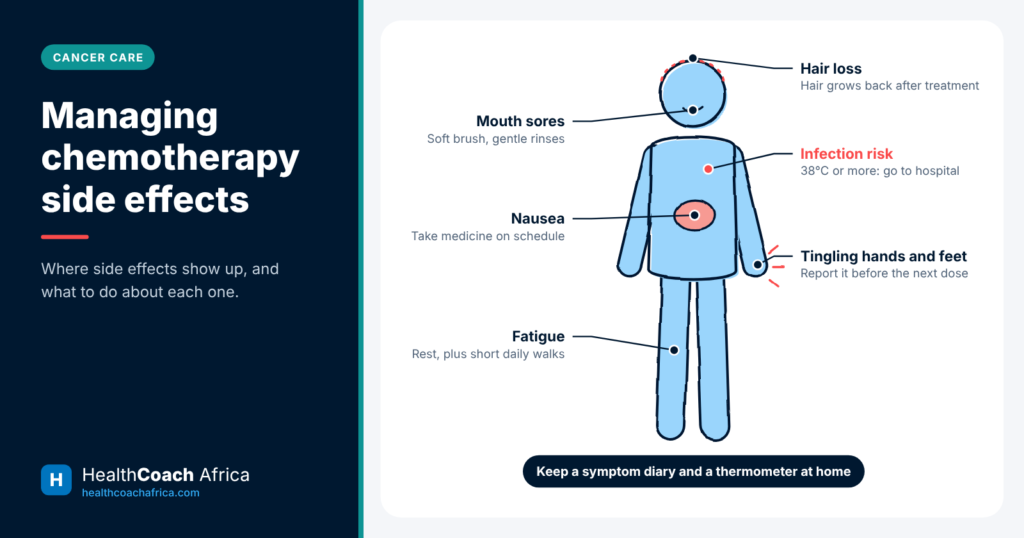
Modern anti-sickness medicines work best when taken on schedule, before nausea starts. Therefore, take them exactly as prescribed, even on days you feel fine. Eat small, frequent meals, sip fluids through the day and avoid strong smells and oily food. Ginger tea and dry crackers can also settle the stomach. Tell your team if you vomit more than three times in a day or cannot keep fluids down.
2. Treat fever as an emergency
Chemotherapy lowers the white blood cells that fight infection, usually between 7 and 14 days after each dose. During this period, a temperature of 38°C or higher is a medical emergency, even if you feel well. Go to hospital immediately. Do not take paracetamol to bring the fever down before you have been assessed, because it can hide the warning sign.
In addition, wash your hands often, avoid crowded places and people who are sick, and eat freshly cooked food.
3. Protect your mouth
Mouth sores make eating painful. Use a soft toothbrush and rinse four times a day with a pinch of salt and bicarbonate of soda dissolved in warm water. Also avoid alcohol-based mouthwash, very hot food and pepper while your mouth is sore.
4. Plan around fatigue
Tiredness is the most common side effect, and it builds up over several cycles. Rest when you need to. However, short daily walks reduce fatigue better than staying in bed. Ask family to take over heavy tasks during the first week after each treatment. Also eat enough protein, such as eggs, beans and fish, to help your body rebuild between cycles.
5. Report tingling, bowel changes and bleeding early
Numbness or tingling in the hands and feet can become permanent if ignored, so mention it before your next dose. Likewise, report diarrhoea lasting more than 24 hours, constipation lasting more than three days, unusual bruising, nosebleeds or black stools.
6. Be careful with herbs and supplements
Many patients in Nigeria combine hospital treatment with herbal mixtures, bitters or high-dose vitamins. Some of these interfere with chemotherapy or strain the liver and kidneys. For that reason, show your oncologist or pharmacist everything you take, including products from church, family or the market. Never stop or skip oral chemotherapy tablets without asking first.
7. Look after your mind and your appearance
Hair loss usually starts two to three weeks after the first cycle, and hair grows back once treatment ends. Scarves, wigs and a short haircut beforehand help many people cope. Anxiety and low mood are also common and treatable, so speak up about them. Many hospitals and support groups offer counselling for patients and families.
Eating and drinking well during treatment
Good nutrition is a large part of managing chemotherapy side effects, because it helps your body recover between cycles. However, appetite and taste often change, so a flexible approach works best.
Eat little and often. Five or six small meals are easier than three large ones.
Choose protein at every meal. Eggs, fish, beans, moi moi, chicken and milk all help tissue to heal.
Use soft foods when your mouth is sore. Pap, oats, mashed yam, soft rice and light soups are gentle.
Drink enough. Aim for about two to three litres of fluid a day, unless your doctor has set a limit.
Keep food safe. Wash fruit and vegetables well, and avoid undercooked meat, raw eggs and roadside food when your blood count is low.
Avoid alcohol. It irritates the mouth and adds work for the liver.
If food tastes metallic, try plastic cutlery and add lemon or ginger for flavour. Tell your team if you lose weight quickly, because supplements or a dietitian may be needed.
Sex, fertility and pregnancy
Chemotherapy can harm an unborn baby. Therefore, use reliable contraception during treatment and for as long afterwards as your doctor advises. Because small amounts of medicine may be present in body fluids for a few days after each dose, condoms are a sensible precaution.
Some treatments also reduce fertility in men and women, sometimes permanently. If you hope to have children, raise this before the first cycle. Options such as sperm banking and egg or embryo freezing are available in some Nigerian fertility centres. Breastfeeding is not recommended during chemotherapy.
Make sure your medicines are genuine
Supportive medicines only work if they are real and stored correctly. For that reason, buy them from a licensed pharmacy, check the NAFDAC number and expiry date, and refuse packs that have been opened. Some injections that boost white blood cells must stay refrigerated from the pharmacy to your home. Ask how to transport them, especially during a power cut.
Side effects that appear later
A few effects last beyond treatment or begin months afterwards. These include lingering tiredness, numb fingers and toes, poor concentration and early menopause. Certain medicines can also affect the heart. Consequently, keep your follow-up appointments even when you feel well, and report new symptoms without waiting.
A simple plan for managing chemotherapy side effects at home
Keep a small notebook with your treatment dates, medicines, temperature readings and symptoms, and bring it to every clinic visit. Keep a working thermometer at home. Furthermore, save your hospital’s emergency number on two phones. Above all, do not wait for your next appointment if something worries you. Caregivers play a central role in managing chemotherapy side effects, so share this plan with the person who looks after you.
When to go to hospital immediately
Temperature of 38°C or above, chills or shaking
Chest pain or difficulty breathing
Bleeding that does not stop
Severe vomiting or diarrhoea, or passing very little urine
Confusion, severe headache or sudden weakness
Frequently asked questions
Will I definitely lose my hair?
No. It depends on the medicine. Some cause complete hair loss, some cause thinning and others cause none. Ask your oncologist what to expect from your treatment.
Can I keep working during chemotherapy?
Many people do, often with reduced hours. Plan lighter duties for the week after each cycle, and avoid crowded settings when your blood count is at its lowest.
What should I do if I think I have malaria?
Do not treat yourself. During chemotherapy, any fever must be assessed in hospital on the same day, because it may be a serious infection. The team will test for malaria as well.
Are vaccines safe during treatment?
Some are recommended, such as the flu vaccine, but live vaccines are usually avoided. Check with your oncologist before any injection.
Do caregivers need to take precautions?
Yes, simple ones. Wear gloves when handling vomit or urine in the first two days after a dose, and wash your hands well. Caregivers are central to managing chemotherapy side effects, so they should also rest and ask for help.
A final word of encouragement
Managing chemotherapy side effects is a skill that improves with each cycle. You learn your own pattern, and your team adjusts the plan. Speak up early and write things down. Above all, remember that most of these effects are temporary.
Getting help
Managing chemotherapy side effects is easier with a team behind you. HubPharm supplies oncology and supportive medicines across Nigeria, and our pharmacists can explain how to take each one. You can also explore our cancer care library or the US National Cancer Institute’s guide to treatment side effects for more detail.
Please follow and like us:
Views:58
Related Posts:
Triple Negative Breast Cancer: What It Means for Treatment If your report says triple negative, you have probably already searched the phrase and found something frightening. Triple negative breast cancer is more aggressive than other types, and there is no point pretending otherwise. What…
How to Check for Breast Cancer at Home: 5 Simple, Safe Steps Most Nigerian women who find breast cancer find it themselves. Not at a screening centre, and not during a routine check-up, but in the shower or while dressing. So learning how to check for breast…
Coping With Panic Attacks: 6 Steps That Calm Your Body Fast Your heart pounds, your chest tightens and you are suddenly sure that something terrible is about to happen. Many people who rush to hospital convinced they are having a heart attack are in fact having…
Newly Diagnosed With Breast Cancer? Your First 30 Days Guide If you have just been newly diagnosed with breast cancer, start here. You do not need to understand everything today. You need to know what to do next, and in what order. This guide breaks…