Your heart pounds, your chest tightens and you are suddenly sure that something terrible is about to happen. Many people who rush to hospital convinced they are having a heart attack are in fact having a panic attack. The experience is frightening, but it is not dangerous and it always passes. Coping with panic attacks is a skill you can learn, and this guide shows you how.
What a panic attack feels like
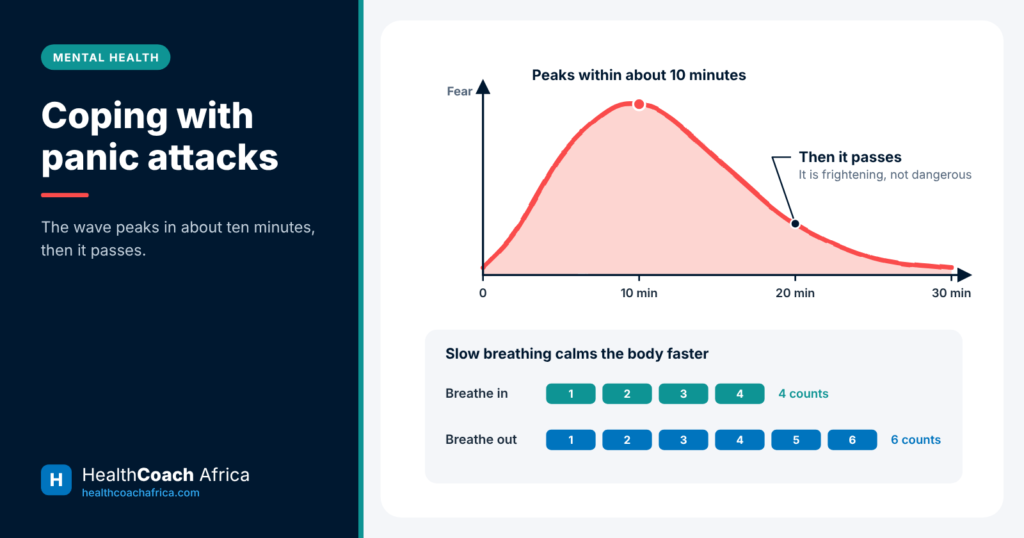
A panic attack is a sudden wave of intense fear that peaks within about ten minutes. It happens when the body’s alarm system fires even though there is no real danger. Attacks can strike without warning, even during sleep, or follow a clear trigger such as a crowded bus, an exam or bad news. Common symptoms include:
A racing or pounding heart
Chest tightness and shortness of breath
Trembling, sweating or chills
Dizziness, or tingling in the hands and face
Nausea or stomach discomfort
Feeling detached or unreal
Fear of dying, fainting or losing control
Most attacks ease within 5 to 20 minutes, although you may feel drained afterwards.
Why the body reacts this way
Understanding the mechanism removes much of the fear. Your body has an alarm system designed to protect you from danger. When it fires, adrenaline floods the bloodstream. The heart beats faster to send blood to the muscles. Breathing speeds up, and the body sweats to stay cool.
During a panic attack, this alarm goes off by mistake. Fast breathing then lowers the level of carbon dioxide in the blood. Consequently, you feel dizzy, light-headed and tingly, which seems to confirm that something is terribly wrong.
In reality, every one of these sensations is harmless. The body cannot keep the alarm running for long, so the surge always falls again. This knowledge is the foundation of coping with panic attacks.
Six steps for coping with panic attacks in the moment
Name it. Tell yourself: “This is a panic attack. It will pass. I am not in danger.”
Slow your breathing. Breathe in through your nose for a count of four, then out through your mouth for a count of six. Repeat for a few minutes, because fast, shallow breathing makes dizziness and tingling worse.
Ground yourself. Name five things you can see, four you can touch, three you can hear, two you can smell and one you can taste.
Relax your muscles. Drop your shoulders, unclench your jaw and press your feet into the floor.
Stay where you are if it is safe. Running away teaches the brain that the place was dangerous, which makes the next attack more likely.
Let it rise and fall. Fighting the feelings feeds them. Instead, let the wave pass.
Panic attack or heart attack?
The two can feel alike, which is why so many people rush to hospital. These differences are a useful guide:
Panic attack. The pain is often sharp or stabbing and stays in one place. It peaks within about ten minutes and then eases. Tingling in the hands and around the mouth is common.
Heart attack. The pain is more often a heavy pressure or squeezing. It may spread to the arm, jaw, neck or back, and it does not ease with slow breathing. It often comes with cold sweat and nausea, and it may follow physical effort.
However, no checklist is perfect. If you are over 40, or have high blood pressure, diabetes or a family history of heart disease, get examined. There is no shame in being told that your heart is healthy.
Common triggers in daily life
Attacks sometimes arrive from nowhere. Often, though, a pattern emerges. Frequent triggers include:
Caffeine and energy drinks
Poor sleep over several nights
Prolonged stress, such as exams, money worries or long hours in traffic
Grief or a frightening event
Cannabis and other recreational drugs
Suddenly stopping alcohol or sedatives
Crowded, hot or enclosed places
Knowing your triggers does not mean avoiding life. Instead, it makes coping with panic attacks more predictable.
How to reduce future attacks
Daily habits matter. For example, cut down on caffeine, energy drinks and alcohol, and do not skip meals, because low blood sugar can mimic panic. Protect your sleep and exercise on most days. In addition, practise slow breathing every day, not only during an attack, and talk to someone you trust about what you are going through. Keeping a short diary of when attacks happen can also reveal triggers you had not noticed.
However, avoid treating yourself with sedatives or sleeping tablets bought without a prescription. They can cause dependence and usually make anxiety worse over time.
The fear of fear
After a first attack, many people begin to watch their bodies closely. A skipped heartbeat or a moment of dizziness sets off worry, and the worry itself triggers the next attack. Soon they avoid buses, markets, church services or driving.
Unfortunately, avoidance makes the problem grow, because the brain never learns that these places are safe. The way out is gradual return. For example, go back to the avoided place for a few minutes with a friend, then stay longer each time.
When to see a doctor
Part of coping with panic attacks is knowing when self-help is not enough. See a doctor if attacks keep returning, if you start avoiding places for fear of another one or if worry about the next attack dominates your day. This pattern is called panic disorder. It responds well to cognitive behavioural therapy and, where needed, prescribed medicine.
A doctor can also check for physical conditions that cause similar symptoms, including an overactive thyroid, anaemia, asthma and heart rhythm problems.
Important: chest pain that is new, lasts more than a few minutes, spreads to the arm or jaw or comes with fainting needs emergency assessment. Therefore, do not assume it is panic the first time it happens.
How panic disorder is treated
Self-help is only one part of coping with panic attacks. Professional treatment works well, and most people improve within a few months.
Cognitive behavioural therapy (CBT). A therapist teaches you how panic works, how to breathe and how to face feared sensations and places step by step. It has the strongest evidence.
Medicine. Certain antidepressants reduce attacks. They take two to six weeks to work and may cause mild jitteriness at first, so doctors start with a low dose.
Short-term sedatives. These are occasionally prescribed for a few days. They are not a long-term solution, because dependence develops quickly.
In Nigeria, psychiatrists and clinical psychologists work in teaching hospitals, federal neuropsychiatric hospitals and private practice. Online consultations have also made access easier.
How to help someone else
Stay calm and speak slowly. Breathe with the person at a steady pace and remind them that the feeling will pass. Avoid saying “calm down” or “it is all in your head”. Afterwards, ask what helped, so that you know what to do next time. If it is their first attack, or the symptoms do not settle within 20 to 30 minutes, take them for a medical check.
Frequently asked questions
Can a panic attack kill me or make me faint?
No. It feels dangerous, but it does not damage the heart or the brain. Fainting is rare, because blood pressure rises during panic.
Can panic attacks happen during sleep?
Yes. Some people wake suddenly with a pounding heart and intense fear. The same breathing and grounding steps apply.
Am I going mad?
No. Panic attacks are a common anxiety problem and are not a sign of losing your mind.
Should I breathe into a paper bag?
This is no longer recommended. Slow breathing through the nose, with a longer breath out, is safer and works as well.
Will I need treatment for life?
Usually not. Many people complete a course of therapy and stay well. Others take medicine for six to twelve months and then stop gradually with their doctor.
Keep practising
Coping with panic attacks improves with repetition. Practise slow breathing when you are calm, so that it becomes automatic when you need it. Each attack you ride out, without running away, teaches your brain that the alarm was false.
Getting help
Coping with panic attacks gets easier with practice and support. Read our guide to understanding anxiety, or see the World Health Organization’s overview of anxiety disorders. You can also talk to Afiya on WhatsApp at any time for a private, judgement-free first step towards professional care.
Please follow and like us:
Views:51
Related Posts:
All You Need To Know About Anxiety Are you anxious? Maybe you are disturbed about a particular problem. Maybe you have butterflies in your stomach while waiting for the results of a medical test. Maybe you get nervous when driving home in…
How to Check for Breast Cancer at Home: 5 Simple, Safe Steps Most Nigerian women who find breast cancer find it themselves. Not at a screening centre, and not during a routine check-up, but in the shower or while dressing. So learning how to check for breast…
Blood Pressure Medication Side Effects and What to Do Most people never tell anyone about their blood pressure medication side effects. They notice their ankles have swollen, or that a dry cough has not gone away since February, and they draw the obvious conclusion:…
Warning Signs of Stroke: Act FAST and Save a Life A stroke happens when blood flow to part of the brain is cut off, or when a blood vessel in the brain bursts. Brain cells begin to die within minutes. In Nigeria and across Africa,…