Cholera outbreaks occur in Nigeria almost every year, often during the rainy season when floods contaminate wells and boreholes. Cholera can kill within hours if dehydration is not treated. Yet it is easy to prevent and, in most cases, easy to treat with a simple drink of oral rehydration solution. This guide explains cholera symptoms and prevention, and what every household should do when an outbreak is reported.
What causes cholera
Cholera is an infection of the gut caused by a bacterium called Vibrio cholerae. The bacteria release a toxin that makes the intestine pour out large amounts of water and salts. This causes severe, watery diarrhoea and rapid dehydration.
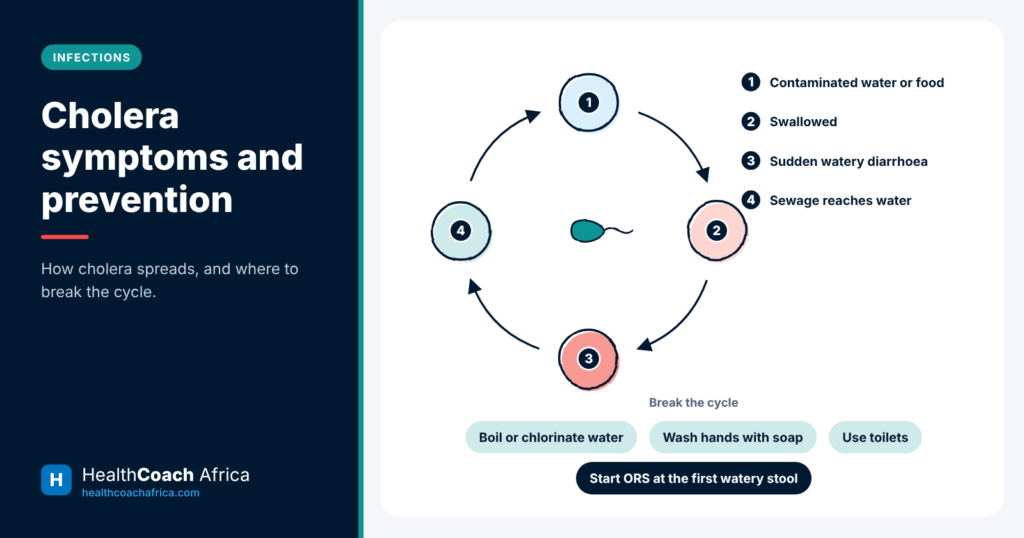
People become infected by swallowing food or water contaminated with faeces from an infected person. Contaminated wells, rivers, street food, unwashed fruit and poor sanitation all spread the disease. Outbreaks are most common where people lack clean water and toilets, such as crowded urban areas, flood-hit communities and camps for displaced people.
Cholera symptoms to recognise
Most people infected with cholera have mild symptoms or none at all. However, they can still pass the bacteria on in their stool. About one in five infected people develop the typical illness, which starts suddenly, from a few hours to five days after infection. The main signs are:
Sudden, severe, watery diarrhoea, often described as looking like water in which rice has been washed
Vomiting
Leg cramps
Intense thirst
Weakness and dizziness
Cholera usually causes little or no fever. Diarrhoea can be so heavy that an adult loses many litres of fluid in a day.
Danger signs of dehydration
Dehydration is what makes cholera deadly. Seek urgent care if you notice:
Sunken eyes
Very dry mouth and tongue
Little or no urine
Skin that stays folded when pinched
Fast heartbeat or weak pulse
Confusion, extreme sleepiness or collapse
In babies, watch for a sunken soft spot on the head, no tears when crying and fewer wet nappies. Children and older people dehydrate faster than young adults.
Start ORS immediately
Oral rehydration solution 1 , or ORS, replaces lost water and salts. It is the most important treatment for cholera and saves most lives. Start giving ORS as soon as watery diarrhoea begins, even before you reach a health facility.
Prepare ORS sachets exactly as the packet says, using clean water
Give small, frequent sips, even if the person is vomiting
Adults may need several litres a day
Continue breastfeeding babies throughout the illness
Make a fresh batch every 24 hours
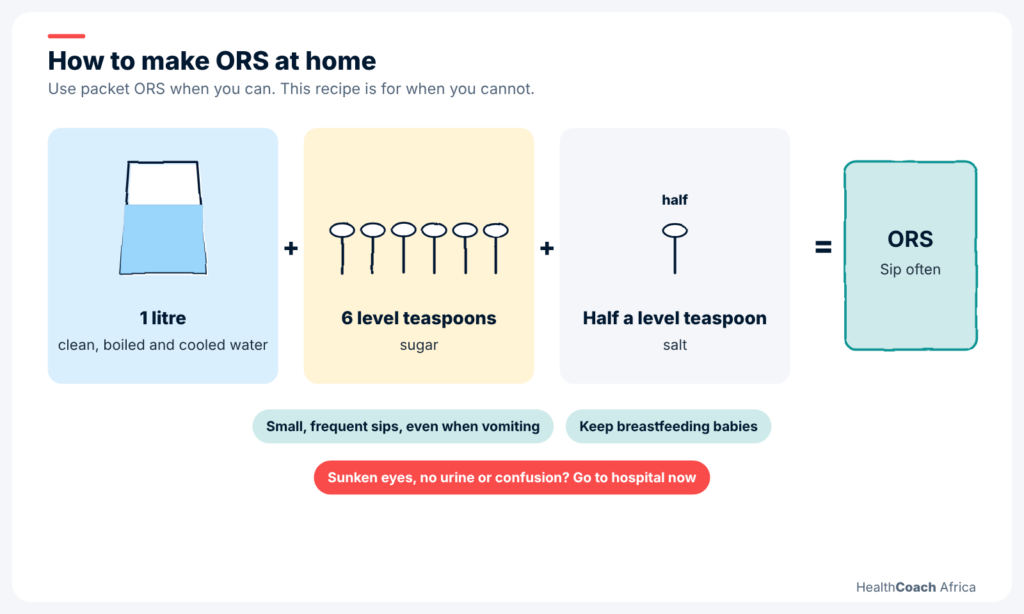
If ORS sachets are not available, a home solution can be made. Mix six level teaspoons of sugar and half a level teaspoon of salt in one litre of clean, boiled and cooled water. Measure carefully, because too much salt can be harmful.
HUBPHARM PHARMACIST’S NOTE ORS sachets have to be mixed with the exact amount of clean water printed on the pack. If you make it too strong or too weak, it works less well. Ask a HubPharm pharmacist for a home kit with ORS, zinc and water treatment tablets, and we will show you how to mix it correctly.
Recipe diagram for home oral rehydration solution, a key step in cholera symptoms and prevention
Measure carefully with level teaspoons. Too much salt is harmful. Make a fresh batch every 24 hours.
Treatment at a health facility
People with moderate or severe dehydration need care at a health facility or cholera treatment centre. Severe cases need fluids through a drip. Doctors may also give an antibiotic, such as a single dose of doxycycline, to people with severe illness. Antibiotics shorten the illness but are not needed for most mild cases.
Children with diarrhoea should also receive zinc tablets 2 for 10 to 14 days. Zinc shortens the illness and lowers the risk of future episodes.
Cholera prevention starts with safe water
The best way to stop cholera is to make sure that water and food are safe. The key steps in cholera symptoms and prevention are:
Treat drinking water. Boil it for at least one minute, or add chlorine tablets 3 or liquid as directed. Store it in a clean, covered container.
Wash hands with soap. Do this after using the toilet, after changing nappies, and before preparing food, eating or feeding a child.
Use toilets. Avoid open defecation, and keep latrines clean and away from water sources.
Eat food that is hot and freshly cooked. Avoid raw seafood, cold leftovers and food left uncovered.
Wash and peel fruit and vegetables with safe water.
These simple actions also prevent typhoid, hepatitis A and other diarrhoeal diseases.
Cholera symptoms and prevention during floods
Floods are a common trigger for cholera outbreaks in Nigeria. When flood water enters wells and boreholes, they can become contaminated with sewage. After a flood:
Do not drink from wells or boreholes until they have been cleaned and treated
Boil or chlorinate all drinking water, even if it looks clear
Discard food that has been in contact with flood water
Wash hands, cooking utensils and surfaces with safe water and soap
Keep children from playing in flood water
Paying attention to cholera symptoms and prevention after flooding can stop an outbreak before it spreads.
Oral cholera vaccine
Oral cholera vaccines are safe and effective. They are mainly used during outbreaks and in high-risk areas, through vaccination campaigns. The vaccine is given by mouth, usually in one or two doses. It does not replace safe water and hygiene, but it adds strong protection. Check with your local health authority whether a campaign is planned in your area.
Caring for a sick person at home safely
If someone in your home has cholera, take precautions to protect others:
Wash your hands with soap after any contact with the sick person, their clothes or bedding
Keep their vomit and stool away from water sources, and dispose of it in a toilet
Clean soiled surfaces with a bleach solution
Wash soiled clothes separately, away from drinking water sources
Schools, markets and gatherings
Cholera can spread quickly where many people share food and water. Schools should provide handwashing stations with soap and safe drinking water. Food vendors in markets should use treated water, cover food and wash hands often. At weddings, funerals and religious gatherings, organisers can provide handwashing points and serve food hot. Families can help by carrying their own safe water when travelling.
Teaching children good habits
Children learn hygiene habits early. Teach them to wash their hands with soap for at least 20 seconds after using the toilet and before eating. Make handwashing fun with songs. A tippy tap, a simple handwashing device made with a container and a stick, is cheap to build at home. Teaching children about cholera symptoms and prevention protects the whole family.
Preparing your home before the rainy season
A little preparation goes a long way. Before the rains begin, buy a supply of ORS sachets and zinc tablets, a water container with a tap and lid, and water treatment tablets or liquid. Repair leaking toilets and clear blocked drains around the house. Agree as a family where you would go for care if someone developed severe diarrhoea at night. These steps make cholera symptoms and prevention part of everyday household planning.
Myths about cholera
“Drinking salt water or strong local gin will protect me.” These do not prevent cholera and can be dangerous.
“Everyone with diarrhoea needs antibiotics.” Most diarrhoea, including most cholera, is treated with ORS and fluids. Unnecessary antibiotics fuel resistance, as explained in our article on antibiotic misuse.
“Stop feeding a person with diarrhoea.” People should keep eating once vomiting settles, and babies should continue breastfeeding.
Getting help
Knowing cholera symptoms and prevention can save lives in your household and community. Report suspected cases to your local health facility, and read the WHO cholera fact sheet for more information. To stock ORS sachets, zinc tablets or water treatment products before the rainy season, message a HubPharm pharmacist or chat with Afiya on WhatsApp.
Medicines and products in this article
#
Medicine or product
What to know
1
Oral rehydration solution (ORS)
Over the counter
The main treatment for cholera dehydration. Mix with the exact volume of clean water stated on the sachet.
2
Zinc tablets
Over the counter
Given to children with diarrhoea for 10 to 14 days to shorten the illness.
3
Water treatment tablets or liquid
Over the counter
Chlorine products that make drinking water safe when used as directed.
To order any of these, or to ask a pharmacist a question first, message HubPharm on WhatsApp or visit hubpharmafrica.com. Prescription medicines are supplied against a valid prescription.
Nutrition During Cancer Treatment: What to Eat and Why Cancer and its treatment place heavy demands on the body. Chemotherapy, radiotherapy and surgery all increase your need for energy and protein, while side effects such as nausea and mouth sores make eating harder. Good…
Metformin Side Effects: What Is Normal and What Is Not Most people meet metformin side effects in the first fortnight, decide the drug does not agree with them, and stop it without telling anyone. That decision is usually wrong, and it is almost always avoidable,…
Tuberculosis Symptoms and Treatment: What You Need to Know Tuberculosis, or TB, is one of the oldest diseases known to humans, and it remains a major killer. Nigeria has one of the highest TB burdens in Africa, and many people with the disease have…
Malaria and Typhoid Fever: How to Tell Them Apart… "You have malaria and typhoid." It is one of the most common diagnoses given in Nigeria, and millions of people are treated for both at the same time. Yet malaria and typhoid fever are two…