Tuberculosis, or TB, is one of the oldest diseases known to humans, and it remains a major killer. Nigeria has one of the highest TB burdens in Africa, and many people with the disease have not yet been diagnosed. Yet TB is preventable, testing is free in public facilities and the disease can be cured. This guide explains tuberculosis symptoms and treatment, how TB spreads and how to protect your family.
What TB is and how it spreads
TB is caused by a bacterium called Mycobacterium tuberculosis. It most often affects the lungs, but it can attack almost any part of the body, including the lymph nodes, spine, brain and abdomen.
TB spreads through the air. When a person with active TB of the lungs coughs, sneezes, talks or sings, they release tiny droplets containing the bacteria. People nearby can breathe these in. Crowded, poorly ventilated rooms, buses and workplaces increase the risk. TB is not spread by shaking hands, sharing food or touching surfaces.
Latent and active TB
Not everyone who breathes in TB bacteria becomes ill. In many people, the immune system keeps the bacteria under control. This is called latent TB infection. People with latent TB have no symptoms and cannot spread the disease.
However, if the immune system becomes weak, latent TB can become active. Active TB causes symptoms and, when it affects the lungs, can spread to others. The risk of moving from latent to active TB is highest in the first two years after infection and in people with weakened immunity.
Common tuberculosis symptoms
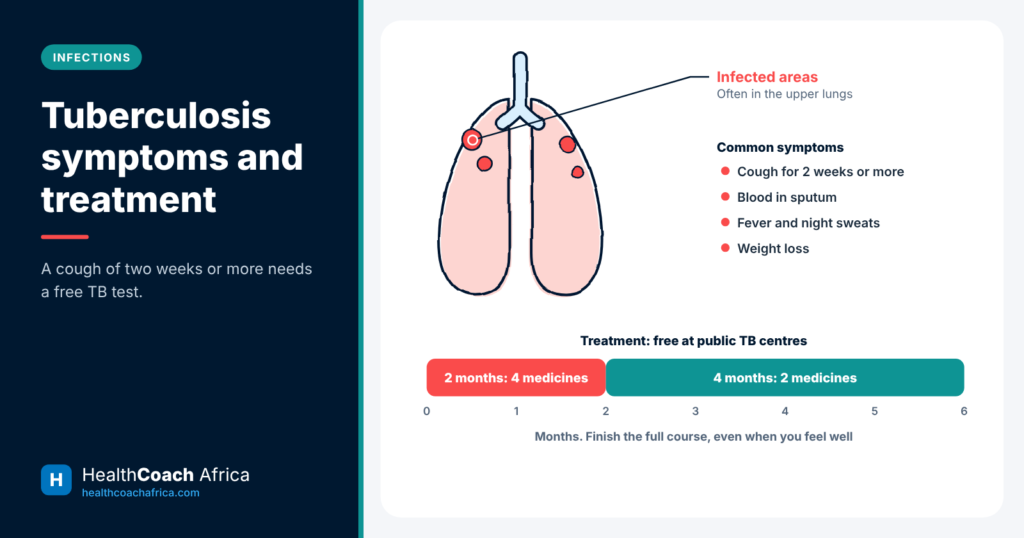
The classic sign of TB of the lungs is a cough lasting two weeks or longer. Other common symptoms include:
Coughing up sputum, sometimes with blood
Fever, often in the evenings
Drenching night sweats
Weight loss without trying
Loss of appetite
Tiredness and weakness
Chest pain or shortness of breath
TB outside the lungs causes symptoms depending on where it is. Examples include swollen glands in the neck, back pain from spinal TB or headache and confusion from TB of the brain.
Why delays are common
Many people do not recognise tuberculosis symptoms and treatment options early enough. A cough is often blamed on catarrh, smoking or dust, and people try cough syrups or antibiotics for weeks. Stigma also plays a part, because some people fear being rejected by family or employers. As a result, TB is often diagnosed late, after it has damaged the lungs and spread to others. Understanding tuberculosis symptoms and treatment helps people seek care sooner.
Who is at higher risk?
Anyone can get TB. Nevertheless, the risk is higher for:
People living with HIV
People with diabetes
People who are malnourished or very underweight
Smokers and heavy drinkers
Household contacts of someone with TB
Young children and older adults
Health workers and people in crowded settings such as prisons
People living with HIV are many times more likely to develop active TB. Anyone with HIV should be screened for TB at every clinic visit.
Getting tested
If you have a cough lasting two weeks or more, or other tuberculosis symptoms, go to a health facility and ask for a TB test. Testing is free at public TB centres across Nigeria.
The most common test today is a rapid molecular test, often called GeneXpert, which checks a sputum sample for TB bacteria. It gives results within hours and also shows whether the TB is resistant to rifampicin, a key medicine. A chest X-ray may also be done. Children and people with TB outside the lungs may need other tests.
Tuberculosis symptoms and treatment: the six-month course
TB is cured with a combination of antibiotics taken for several months. For drug-sensitive TB, the standard course lasts six months and has two phases:
Intensive phase, two months: four medicines, namely rifampicin, isoniazid, pyrazinamide and ethambutol 1 , usually combined in one or two tablets
Continuation phase, four months: two medicines, rifampicin and isoniazid
Treatment is free in Nigeria under the national TB programme. Most people feel much better within two to four weeks. However, the bacteria are still present, so the full course must be completed.
Why you must finish the course
Stopping TB treatment early, or taking it irregularly, is dangerous. The illness can return, and the bacteria can become resistant to the medicines. Drug-resistant TB is harder, longer and more expensive to treat.
To help people stay on track, many TB centres use directly observed treatment, where a health worker or trained family member watches each dose. Phone reminders, pill boxes and support groups also help. Learn more about why resistance matters in our article on antibiotic misuse and superbugs.
Side effects to know about
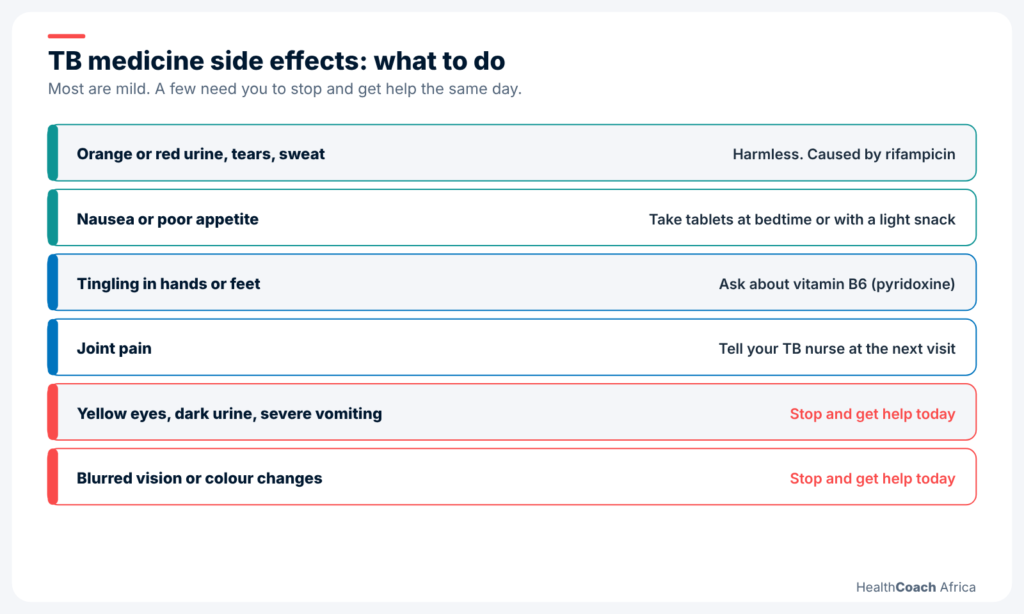
Most people complete treatment without serious problems. Common effects include:
Orange or red urine, tears and sweat. This is caused by rifampicin and is harmless.
Nausea or poor appetite. Taking tablets at bedtime or with a light snack may help.
Tingling or numbness in the hands and feet. Isoniazid can cause this. Vitamin B6 2 (pyridoxine) is often given to prevent it.
Joint pains. These can occur with pyrazinamide.
Report these serious side effects immediately: yellow eyes or skin, dark urine, severe vomiting or abdominal pain, a widespread rash, or changes in vision or colour perception.
HUBPHARM PHARMACIST’S NOTE TB treatment is free, but the medicines people take alongside it, such as contraception, diabetes tablets or HIV medicines, often need adjusting. Send your full medicine list to a HubPharm pharmacist and we will flag anything that interacts with rifampicin.
Table of common side effects during tuberculosis symptoms and treatment, with the right action for each
Never stop TB treatment on your own. Report side effects so the team can help.
Medicine interactions
Rifampicin interacts with many other medicines. Most importantly, it makes hormonal contraceptives, including pills, implants and injections, less effective. Women of childbearing age should use condoms or a copper IUD during treatment. Rifampicin also affects some HIV medicines, blood thinners, diabetes tablets and epilepsy medicines. Always tell your doctor and pharmacist about everything you take.
Drug-resistant TB
When TB does not respond to rifampicin and isoniazid, it is called multidrug-resistant TB. In the past, treatment took up to two years and involved daily injections. Today, newer all-oral regimens, many lasting about six to nine months, are used. They are available through specialist TB centres. Testing everyone with TB for resistance at the start helps to choose the right treatment early.
Eating well during TB treatment
TB often causes weight loss, and good nutrition supports recovery. Eat regular meals with protein, such as beans, eggs, fish and meat, along with grains, fruit and vegetables. Avoid alcohol, which increases the risk of liver damage from TB medicines. If you have diabetes, keeping your blood sugar under control helps TB treatment to work better. Every part of tuberculosis symptoms and treatment care, from diet to daily medicine, contributes to a cure.
TB and HIV together
TB and HIV often occur together, and each makes the other worse. Everyone diagnosed with TB should be offered an HIV test. People living with both infections need treatment for both. HIV medicines are usually started within a few weeks of TB treatment. Your doctor will choose a combination that works safely with rifampicin. Learning about tuberculosis symptoms and treatment is especially important for people living with HIV.
Protecting your family and community
While on treatment, you can protect others by:
Covering your mouth and nose when you cough or sneeze
Opening windows to let fresh air circulate
Sleeping in a separate, well-ventilated room for the first few weeks if possible
Encouraging household contacts to be screened
Most people stop being infectious after two to three weeks of effective treatment. Babies receive the BCG vaccine at birth, which protects against severe forms of TB in children. Household contacts and people living with HIV may be offered TB preventive treatment.
Getting help
Understanding tuberculosis symptoms and treatment saves lives. If you or someone you know has a cough lasting two weeks or more, get tested at a public TB centre. The WHO TB fact sheet gives more background.For help managing side effects, checking interactions with your other medicines or getting vitamin B6, message a HubPharm pharmacist or ask Afiya on WhatsApp.
Medicines and products in this article
#
Medicine or product
What to know
1
Rifampicin, isoniazid, pyrazinamide and ethambutol
Free at public TB centres
The standard six-month combination for drug-sensitive TB, usually in one or two combined tablets.
2
Pyridoxine (vitamin B6)
Over the counter
Often given with isoniazid to prevent tingling and numbness in the hands and feet.
To order any of these, or to ask a pharmacist a question first, message HubPharm on WhatsApp or visit hubpharmafrica.com. Prescription medicines are supplied against a valid prescription.
Heart Attack Warning Signs: Act Fast and Save a Life Heart disease is rising in Nigeria, driven by high blood pressure, diabetes, smoking and changing lifestyles. A heart attack is a medical emergency in which every minute counts. The faster treatment starts, the more heart…
Diabetes in Nigeria: Why Blood Sugar Control Fails Diabetes in Nigeria does not usually fail in the clinic. Among people who reach a specialist and stay in care, control is often reasonable. It fails in the years before anyone tests you, and it…
Nutrition During Cancer Treatment: What to Eat and Why Cancer and its treatment place heavy demands on the body. Chemotherapy, radiotherapy and surgery all increase your need for energy and protein, while side effects such as nausea and mouth sores make eating harder. Good…
AI in Healthcare: A Strategic Guide for African… How should healthcare organizations in Africa approach emerging artificial intelligence solutions? In an era where artificial intelligence (AI) is rapidly advancing in the realm of healthcare, African health organizations are presented with the challenge of…