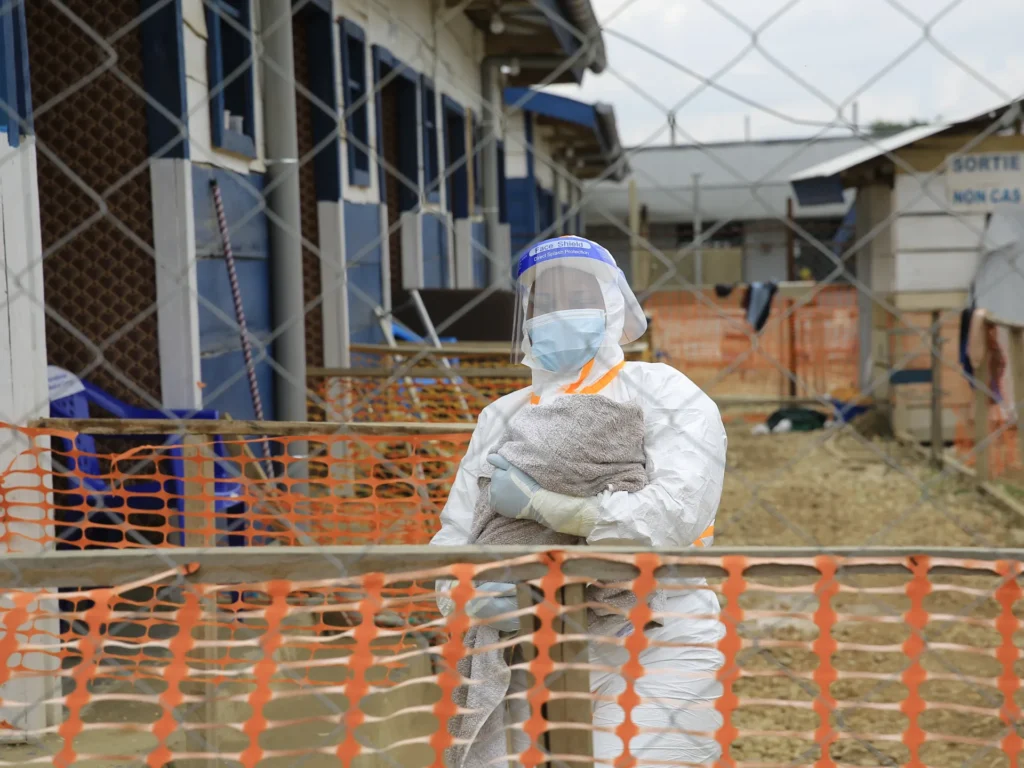
KINSHASA, D R CONGO — The Ebola outbreak in the Democratic Republic of Congo remains out of control six months after it was declared, the head of the Africa Centres for Disease Control and Prevention said on Sunday, 15 November, in an Africa CDC Ebola warning reported by Al Jazeera and Reuters.
“If we don’t stop this outbreak now, it would be the worst Ebola outbreak that the world will have,” Africa CDC Director-General Jean Kaseya told Reuters.
Behind the Africa CDC Ebola warning
The outbreak, declared on 15 May 2026, has caused more than 11,200 cases and more than 5,500 deaths, according to government data cited by Al Jazeera. It has spread to eight of the DRC’s 26 provinces, and cases linked to it have been reported in East, Central and West Africa, the widest geographic spread of any Ebola outbreak on the continent.
More than 80 per cent of new cases are emerging outside known contact lists, and over 65 per cent of deaths occur in the community rather than in health centres, the report said. Both are signs that the virus is spreading undetected.
At least 3,000 people have recovered, according to WHO.
The Africa CDC Ebola warning comes as WHO reports slightly lower totals than DRC government data, a gap that is common in fast-moving outbreaks as cases are confirmed and reclassified.
It is now the second-largest and second-deadliest Ebola outbreak on record, behind the 2014 to 2016 West African epidemic, which infected more than 28,600 people and killed more than 11,000.
No specific vaccine or treatment
The outbreak is caused by the Bundibugyo strain, for which no vaccine or treatment has yet been developed. It kills about half of those infected, Al Jazeera reported. WHO approved clinical trials for two new vaccines earlier in November and expects results in early 2027.
WHO Director-General Tedros Adhanom Ghebreyesus has said transmission is slowing in several early epicentres, the report said.
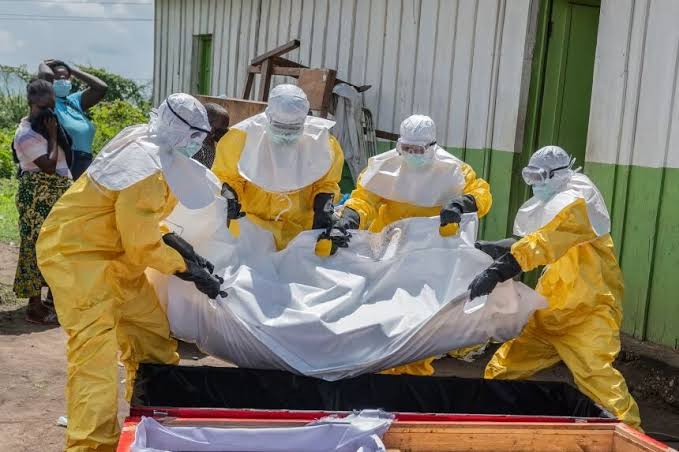
As general background, the licensed Ebola vaccine used in recent DRC outbreaks protects against the Zaire species of the virus, not Bundibugyo. Without a specific vaccine, responders must rely on isolation of patients, safe burials, contact tracing and supportive care, including fluids and treatment of complications, which improves survival.
Funding and coordination gaps
Kaseya described coordination between the DRC and donors as “a collective failure.” Donors have pledged $2.9 billion, but only $1.3 billion has been released, according to the report. The DRC is working to digitise payments to health workers who have gone unpaid for months, Kaseya said.
Delayed detection, conflict and strained health services have allowed the virus to spread faster than in previous outbreaks, the report said.
Eastern DRC has faced armed conflict for many years, displacing millions of people and making it difficult and dangerous for health workers to reach communities. Distrust of authorities and misinformation can also lead families to avoid treatment centres and hold unsafe burials, which spread the virus.
Unpaid health workers are another weakness. When staff go months without pay, some stop working or demand payments from patients, which discourages people from seeking care early. As general background, similar problems were seen in earlier DRC outbreaks, which is why Kaseya highlighted the payment issue.
What it means for the region
Imported cases have already reached Kenya and Nigeria. Kenya discharged its last patient and began a 42-day countdown to Ebola-free status, while Nigeria completed 21-day monitoring of all 62 contacts of its case without secondary transmission.
As general background, strong public health systems are the best defence against imported cases. Early detection, laboratory capacity, contact tracing and infection prevention in health facilities have allowed Kenya and Nigeria to contain their cases, and investments in health security, such as those HealthCoach Africa has covered in its reporting on World Bank support for health security, help countries respond quickly.
Unpaid health workers, community deaths and untraced cases make the outbreak harder to stop at its source. The Africa CDC Ebola warning is a call for faster release of pledged funds and better coordination before the outbreak grows further.
Travellers from affected areas who develop fever, vomiting, diarrhoea or unexplained bleeding within 21 days should seek care immediately and report their travel history.
Health workers across the region are advised to ask about travel history for all patients with fever, use standard infection prevention measures and report suspected cases immediately. The Africa CDC Ebola warning underlines that the outbreak will remain a regional threat until transmission in the DRC is stopped.
Why it matters: An uncontrolled Ebola outbreak in the DRC keeps the risk of imported cases high across Africa, including in Nigeria and Kenya.
DRC Ebola Cases Top 11,000 as Outbreak Becomes… KINSHASA, DEMOCRATIC REPUBLIC OF CONGO — Ebola cases top 11,000 in the Democratic Republic of Congo (DRC), with 5,387 deaths, making the Bundibugyo virus outbreak the second-largest Ebola epidemic ever recorded, GBC Ghana Online reported…
DRC Ebola Outbreak Becomes Largest in Its History as… KINSHASA, DEMOCRATIC REPUBLIC OF CONGO The Bundibugyo virus outbreak in the Democratic Republic of Congo (DRC) is now the DRC largest Ebola outbreak ever recorded, regardless of virus species, the World Health Organization (WHO) said…
Africa CDC Warns Continent Is Not Winning as Ebola… ADDIS ABABA, ETHIOPIA — The head of the Africa Centres for Disease Control and Prevention has issued a stark Africa CDC Ebola warning, telling more than 40 African health ministers that the continent is “not…
Kenya Discharges Last Ebola Patient, Starts 42-Day… NAIROBI, KENYA — Kenya has discharged its Kenya last Ebola patient and begun a 42-day countdown to being declared free of the disease, Health Cabinet Secretary Aden Duale announced at a news conference in Nairobi…