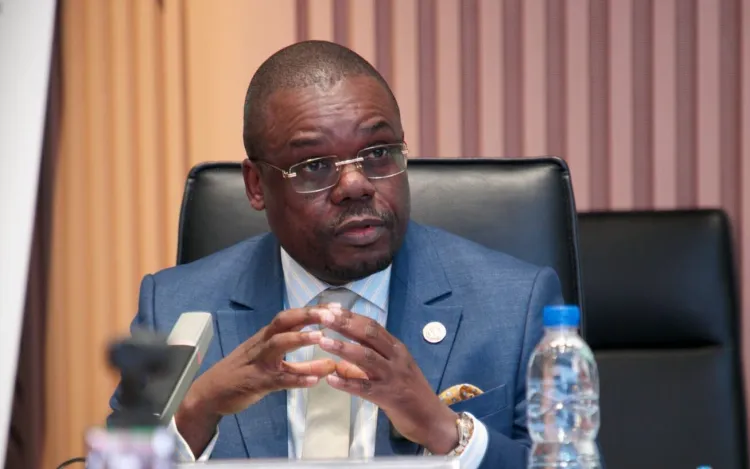
ADDIS ABABA, ETHIOPIA — The head of the Africa Centres for Disease Control and Prevention has issued a stark Africa CDC Ebola warning, telling more than 40 African health ministers that the continent is “not winning” against the Bundibugyo outbreak as confirmed cases passed 10,000, Premium Times reported on 29 October.
“Yesterday I stood before more than 40 African Ministers and said what the data tells us: we are not winning so far,” Director-General Jean Kaseya said, referring to an extraordinary meeting of African health ministers on Wednesday. “I have worked on Ebola outbreaks for more than 30 years. I have never stopped feeling the weight of each life lost.”
The numbers behind the Africa CDC Ebola warning
According to World Health Organization (WHO) figures cited in the report, the outbreak has caused 10,172 confirmed cases and 4,932 deaths across five countries. The Democratic Republic of the Congo (DRC) accounts for 10,141 cases and 4,928 deaths across eight provinces as of 26 October.
Kenya has nine confirmed cases and two deaths, and Uganda has 20 confirmed cases and two deaths, plus one probable case and one probable death. France and Nigeria have each reported one imported case with no deaths. Nigeria’s patient, who had travelled from Uganda, was medically evacuated to Switzerland, and the Nigeria Centre for Disease Control and Prevention reported 54 contacts under follow-up as of 26 October.
Ministers agreed to prepare every country for possible cases, coordinate cross-border responses, keep borders open and strengthen surveillance, according to Premium Times. The WHO advises against travel and trade restrictions on affected countries.
Kaseya recalled the cost of the 2014 to 2016 West African epidemic, which he said kept about 5 million children out of school, left about 23,000 children without parents and cost nearly $3 billion in lost GDP. “We already know what an uncontrolled Ebola outbreak costs,” he said.
Why the outbreak is hard to control
Al Jazeera reported this week that about 80 per cent of new cases in the DRC fall outside known transmission chains, meaning they occur in people who were not on contact lists. Africa CDC says at least 95 per cent of new cases must come from known contacts for an outbreak to be considered under control. When most cases appear unexpectedly, the virus is spreading faster than tracing teams can follow it.
There is no licensed vaccine or specific treatment for Bundibugyo virus disease. The Tumaini trial, which began in eastern DRC on 23 October, is testing whether existing and experimental vaccines can protect contacts, but results are expected to take several months. Insecurity has also hampered the response; a nurse working on the outbreak was killed in an attack in the DRC this month.
The Africa CDC Ebola warning also reflects concern about spread to new countries. The cases in Kenya and Nigeria show how air travel can carry the virus far from the epicentre, and both countries have had to activate full response systems for a single introduction. Genomic sequencing found that Nigeria’s virus differs by one mutation from Kenya’s first case, although Health Minister Muhammad Pate has said this does not establish a direct link.
Kaseya has previously called for urgent international funding and criticised the lack of a Bundibugyo vaccine, saying a vaccine would already exist if the disease affected Western countries. He has also urged African leaders not to politicise the outbreak.
The Africa CDC Ebola warning follows the agency’s earlier appeals to international partners for flexible financing, medical supplies, diagnostic equipment and trained responders. Uganda, which declared its earlier outbreak over in August, has tightened controls by ordering a 21-day quarantine for citizens returning from the DRC, Premium Times reported on 27 October.
The figures show how concentrated the outbreak remains: more than 99 per cent of confirmed cases are in the DRC, a calculation based on the WHO numbers. WHO has long argued that closing borders can push travellers towards informal crossings where screening is impossible and can slow the movement of supplies and responders.
For countries not yet affected, preparedness means trained health workers who can recognise suspected cases, isolation units that are equipped and staffed, laboratories able to confirm infection quickly, and clear public communication.
“Ebola anywhere in Africa demands preparedness everywhere in Africa. We will get there, together,” Kaseya said.
The report did not say whether ministers agreed new funding commitments at the meeting.
Why it matters: With most DRC cases appearing outside contact lists, every African country must assume an imported case is possible and prepare now.
Africa CDC Blames Global Neglect for Missing… ADDIS ABABA, ETHIOPIA — As africa cdc blames global neglect for the total absence of an approved commercial vaccine against the Bundibugyo ebolavirus strain, continental health leaders are urging African nations to urgently establish independent…
Bundibugyo Ebola Outbreak Passes 2,300 Deaths in DR Congo ADDIS ABABA, ETHIOPIA. The Africa Centres for Disease Control and Prevention said on Aug. 17 that the Bundibugyo Ebola outbreak in the Democratic Republic of the Congo has passed 5,000 confirmed cases and more than…
DRC Launches First Bundibugyo Ebola Vaccine Trial BUNIA, DR CONGO — As the drc launches first bundibugyo Ebola vaccine trial to evaluate protective candidates, public health authorities have administered the initial doses in Bunia, eastern Democratic Republic of the Congo (DRC). Named…
WHO Says Ebola Survivors Can Spread Virus Through… BRAZZAVILLE, CONGO — People who survive Ebola can pass the virus on through sex if it persists in semen after recovery, but are not expected to spread it through sweat or saliva once discharged, the…