Drinking is part of many social events in Nigeria. Weddings, burials, birthdays and evenings with friends often involve beer, palm wine or spirits. For most people, drinking stays occasional. For some, it slowly grows into a habit they cannot control. Recognising alcohol use disorder signs early can protect your health, your family and your work. This guide explains what to watch for, how alcohol harms the body and where to find help.
What is alcohol use disorder?
Alcohol use disorder is a medical condition in which a person cannot control their drinking despite the harm it causes. It ranges from mild to severe. In its severe form, it is often called alcohol dependence or alcoholism.
It develops over time. Regular heavy drinking changes the brain’s reward system. The body adapts to alcohol, so more is needed to get the same effect. Eventually, the person may feel unwell without alcohol.
The main alcohol use disorder signs
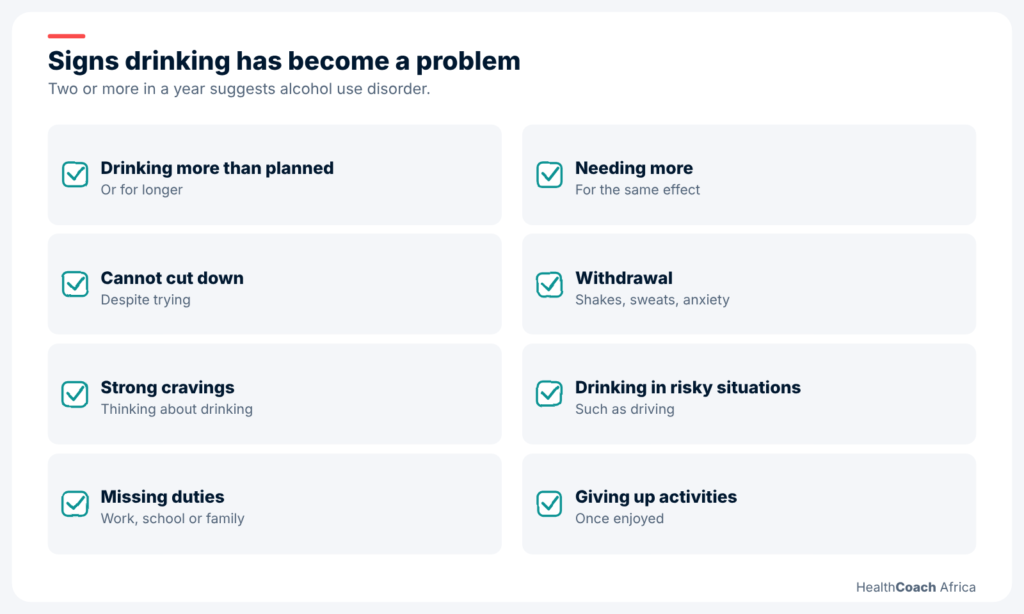
Checklist of alcohol use disorder signs, from cravings and tolerance to withdrawal symptoms
Recognising the signs early makes recovery easier.
Look for these alcohol use disorder signs in yourself or someone close to you:
Drinking more, or for longer, than intended
Wanting to cut down but being unable to
Spending a lot of time drinking or recovering from drinking
Strong cravings for alcohol
Missing work, school or family duties because of drinking
Continuing to drink despite arguments, health problems or money trouble
Giving up activities once enjoyed
Drinking in risky situations, such as before driving
Needing more alcohol to feel the same effect
Withdrawal symptoms when not drinking, such as shaking, sweating or anxiety
Having two or more of these signs within a year suggests alcohol use disorder. The more signs, the more severe the problem.
Other warning signs families notice
Families often notice changes before the drinker does:
Drinking in the morning to steady the nerves
Hiding bottles or drinking secretly
Money going missing
Mood swings, anger or violence
Frequent falls, injuries or accidents
Smelling of alcohol during the day
Neglecting personal hygiene
Alcohol and mental health
Alcohol is a depressant. Many people drink to relax, forget problems or sleep. Over time, heavy drinking worsens anxiety, depression and insomnia. It also raises the risk of suicide. People sometimes drink to cope with stress, grief or trauma, which creates a cycle that is hard to break. Treating depression or anxiety at the same time as the drinking gives the best chance of recovery.
Alcohol and medicines
Alcohol interacts with many medicines. It can make sleeping tablets, strong painkillers and some anti-anxiety medicines dangerously sedating. With paracetamol, regular heavy drinking raises the risk of liver damage. With metronidazole, alcohol can cause severe vomiting. People with diabetes who drink heavily risk low blood sugar. Always ask a pharmacist whether it is safe to drink with your medicines.
How alcohol harms the body
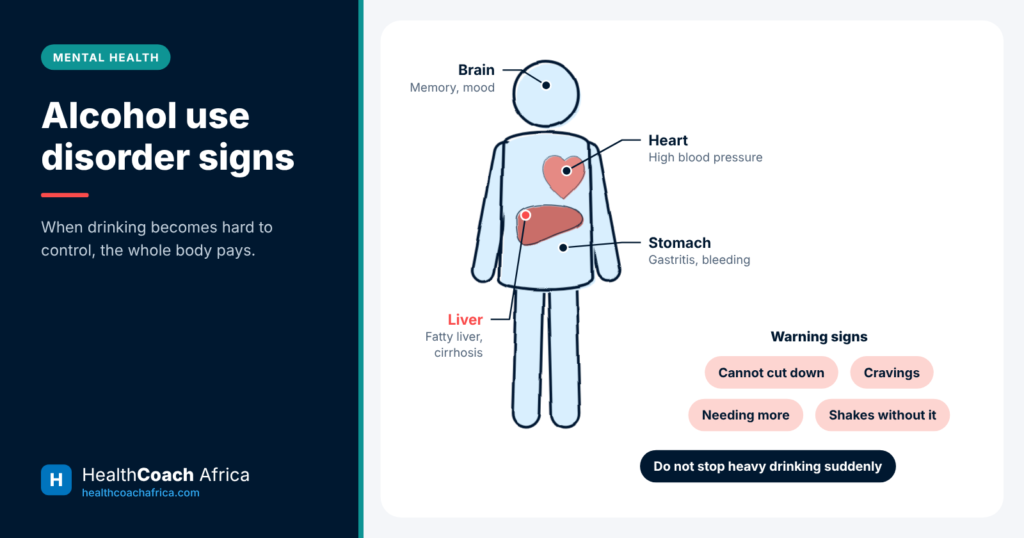
The World Health Organization links alcohol to more than 200 diseases and injuries. Heavy drinking over time can cause:
Liver damage, including fatty liver, hepatitis and cirrhosis
High blood pressure, heart disease and stroke
Stomach problems, including gastritis and bleeding
Pancreatitis, a painful inflammation of the pancreas
Several cancers, including cancers of the mouth, throat, liver and breast
Brain damage, memory problems and nerve damage
Depression and anxiety
Weaker immunity, raising the risk of infections such as tuberculosis
Alcohol also causes road accidents, violence and injuries.
Local drinks and hidden strength
Some drinks are much stronger than they look. Locally distilled spirits, such as ogogoro, can be very high in alcohol. Cheap sachet and small-bottle spirits make it easy to drink large amounts quickly. Illegally made spirits may also contain methanol, a poison that can cause blindness and death. Buy only regulated products, and be cautious with drinks of unknown origin.
Why stopping suddenly can be dangerous
People who drink heavily every day should not stop suddenly without medical advice. Alcohol withdrawal can cause:
Shaking, sweating and anxiety
Nausea and vomiting
Fast heartbeat
Seizures
Confusion and hallucinations, known as delirium tremens
Delirium tremens is a medical emergency and can be fatal. A doctor can arrange a safe, supervised withdrawal, sometimes called detox, using medicines to control symptoms. This is the safest way to stop after long-term heavy drinking.
HUBPHARM PHARMACIST’S NOTE
If you drink heavily every day, please do not stop suddenly on your own. Withdrawal can cause fits and confusion, and it needs medical support. Talk privately to a HubPharm pharmacist about how much you drink and what you take. We will help you find a doctor or treatment centre for safe, supervised withdrawal, explain medicines that reduce cravings and check your other medicines for dangerous interactions with alcohol. We can also supply thiamine (vitamin B1) if it has been prescribed. Nobody will judge you, and your conversation stays confidential.
Treatment options
Recovery is possible, and many people stop or cut down successfully. Treatment usually combines several approaches:
Brief advice from a doctor or nurse for people drinking at risky levels
Supervised withdrawal for people who are dependent
Counselling and talking therapies, including motivational and cognitive behavioural approaches
Medicines that reduce cravings1 or help people stay alcohol-free, prescribed by a doctor
Support groups, such as Alcoholics Anonymous, which meets in several Nigerian cities
Treatment of related problems, such as depression, liver disease and poor nutrition
People recovering from heavy drinking often need vitamin B1 (thiamine)2 supplements to protect the brain.
How to talk to someone about their drinking
Choose a calm time when the person is sober. Speak with care, not anger. Describe specific behaviours you have noticed and how they affect you. Avoid labels such as “drunkard”. Offer to help them find support, and look after your own wellbeing too. Al-Anon groups support families of people who drink.
Alcohol use disorder signs in young people
Young people who start drinking early are more likely to develop problems later. Peer pressure, easy access to cheap spirits and drinking at parties all play a part. Warning signs in teenagers include falling grades, new friends, secrecy, missing money and smelling of alcohol. Parents can help by talking openly about alcohol, setting clear rules and setting a good example.
Alcohol and pregnancy
There is no known safe amount of alcohol in pregnancy. Alcohol passes to the baby and can cause miscarriage, low birth weight and lifelong problems with learning and behaviour. Women who are pregnant or trying for a baby should avoid alcohol completely. Breastfeeding mothers should also avoid drinking.
Recovery is a journey
Many people need more than one attempt to stop drinking. A relapse is not a failure. It is a signal to review the plan and seek more support. Family members should keep watching for alcohol use disorder signs, without blame, and encourage a quick return to treatment. Celebrate progress, such as a week or a month without alcohol. Over time, sleep, mood, energy and relationships often improve.
Cutting down safely
If you drink but are not dependent, these steps help:
Set drink-free days each week
Choose smaller measures and lower-strength drinks
Alternate alcoholic drinks with water
Avoid drinking on an empty stomach
Track how much you drink
Avoid situations where heavy drinking is expected
Myths about alcohol
“Beer is safer than spirits.” All alcoholic drinks contain the same harmful substance.
“I can handle my drink, so I am fine.” Tolerance is one of the alcohol use disorder signs.
“Only people who drink every day have a problem.” Binge drinking also causes serious harm.
“Strong coffee sobers you up.” Only time removes alcohol from the body.
Help some people stay alcohol-free, alongside counselling.
2
Thiamine (vitamin B1)
Pharmacy or prescription
Protects the brain in people recovering from heavy drinking.
To order any of these, or to ask a pharmacist a question first, message HubPharm on WhatsApp or visit hubpharmafrica.com. Prescription medicines are supplied against a valid prescription.
Gout Diet and Treatment: How to Stop the Attacks Gout causes some of the most intense pain a person can experience. An attack can turn a big toe hot, red and so tender that even a bed sheet feels unbearable. Gout is becoming more…
7 Science-backed Strategies To Replace Bad Habits… The truths about replacing habits. What does it takes to change habit? You just have to learn proven strategies to rewire your brain. Let's face it. Stopping bad habit is challenging and developing good habits…
Grief and Bereavement Support: Living Through Loss Losing someone we love is one of the hardest experiences in life. In Nigeria, families often come together quickly after a death, with visitors, prayers, ceremonies and long funeral preparations. When the crowds leave, many…
Malaria Prevention for Travellers: Staying Safe on Your Trip Every year, many people travel to Nigeria for business, holidays, weddings, funerals and family visits. These include Nigerians who live abroad and return home. Malaria is present throughout Nigeria, all year round. Travellers who have…