Losing someone we love is one of the hardest experiences in life. In Nigeria, families often come together quickly after a death, with visitors, prayers, ceremonies and long funeral preparations. When the crowds leave, many people are left alone with deep sorrow. Good grief and bereavement support helps people mourn in a healthy way and rebuild their lives over time. This guide explains what grief feels like, how to cope and when extra help is needed.
What grief is
Grief is the natural response to loss. It is not a sign of weakness or lack of faith. It reflects the love and connection we had with the person who died. Grief can also follow other losses, such as a miscarriage, divorce, job loss or the loss of health.
There is no right or wrong way to grieve, and no fixed timetable. Each person’s grief is shaped by their relationship with the person, the circumstances of the death, their culture and their support.
How grief can feel
Grief affects the whole person:
Emotions: sadness, shock, numbness, anger, guilt, fear, relief and longing
Body: tiredness, poor sleep, loss of appetite, headaches, chest tightness and a weakened immune system
Thoughts: difficulty concentrating, forgetfulness, constant thoughts of the person, or replaying the death
Behaviour: crying, withdrawing from others, restlessness or keeping very busy
These reactions are normal. They often come in waves, sometimes triggered by birthdays, holidays, songs or places.
Grief comes in waves
Many people expect grief to move through neat stages. In reality, it rises and falls. In the early weeks, waves of grief may be frequent and overwhelming. Over months, they usually become less frequent and less intense, although they can still be strong at times. Most people find that, over time, they learn to carry their loss while engaging with life again.
Mourning customs and grief
Nigerian funeral and mourning customs can provide comfort, community and meaning. They allow people to honour the dead and share their sorrow. However, some customs place heavy financial pressure on families, or strict restrictions on widows. Others leave little space for quiet, private mourning.
Good grief and bereavement support respects culture and faith while recognising each person’s needs.
HUBPHARM PHARMACIST’S NOTE In the weeks after a death, many people start sleeping tablets 1 or take more of their usual painkillers, and some stop their own medicines for blood pressure or diabetes without noticing.Message a HubPharm pharmacist for a gentle check of what you are taking. We can help you sleep more safely and keep your long-term treatment on track.
Taking care of yourself
These steps can help you cope:
Allow yourself to grieve. It is fine to cry, talk about the person and feel what you feel.
Keep a simple routine. Regular meals, sleep and short walks help the body cope.
Accept help. Let others cook, run errands or look after children.
Talk to someone you trust, such as a friend, family member or religious leader.
Avoid numbing the pain with alcohol, sleeping tablets or other drugs.
Delay major decisions, such as selling property or moving, where possible.
Find ways to remember, such as writing, praying, visiting the grave or sharing stories.
Supporting someone who is grieving
Many people want to help but do not know what to say. Practical grief and bereavement support from friends and relatives includes:
Saying the person’s name and sharing memories
Listening without trying to fix the pain
Offering specific help, such as cooking, school runs or paperwork
Continuing to check in after the funeral, when support often fades
Remembering anniversaries and difficult dates
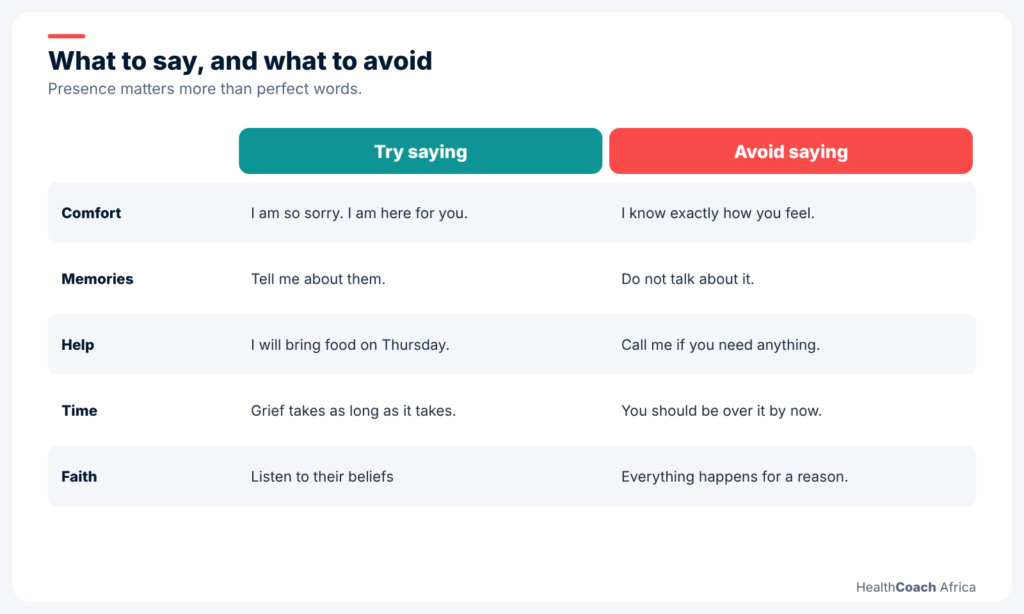
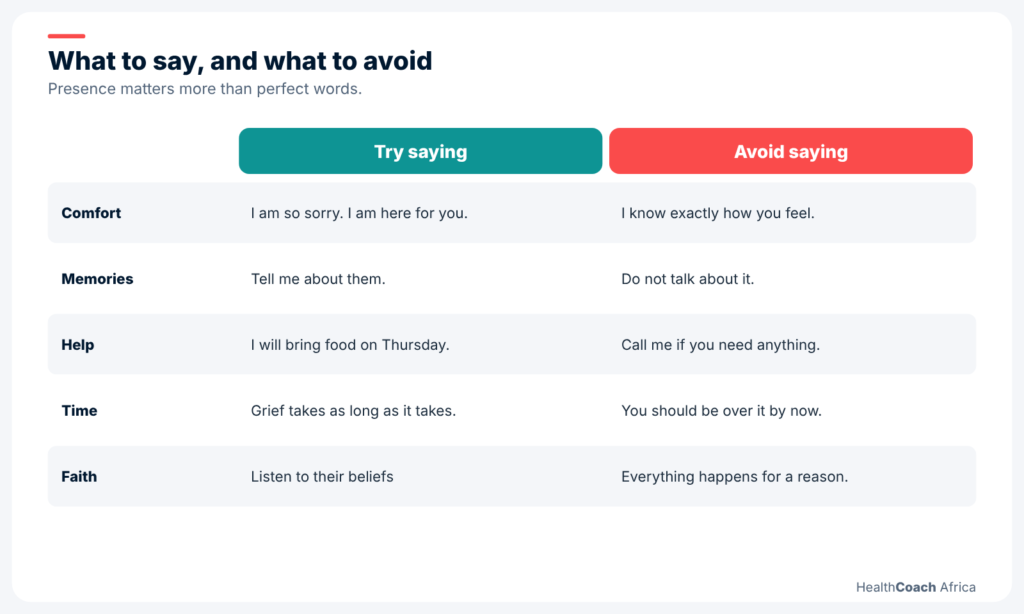
Avoid phrases such as “it was God’s will”, “be strong” or “at least they are no longer suffering” unless the grieving person uses them first. Your presence matters more than perfect words.
What to say and what to avoid when offering grief and bereavement support
Practical help, like cooking or running errands, often means the most.
Helping children with grief
Children grieve too, but they may show it differently. Young children may ask the same questions many times, play out the death or become clingy. Older children may become angry, withdrawn or struggle at school.
Use simple, honest language, such as “Daddy died. His body stopped working and he cannot come back.” Avoid saying the person is “sleeping”, which can cause fear. Let children take part in mourning if they wish, keep routines steady and tell their teachers.
Grief and bereavement support at work
Returning to work after a loss can be hard. Concentration may be poor, and tears can come without warning. Employers can offer compassionate leave, flexible hours and a quiet place to take a break. Colleagues can help by acknowledging the loss rather than avoiding the subject. Simple words such as “I am sorry for your loss” mean a lot. Good grief and bereavement support at work helps people return to their roles at their own pace.
When a death is sudden or traumatic
Deaths from accidents, violence, suicide or sudden illness can be especially hard. Survivors may experience shock, nightmares, intrusive memories and guilt. Specialist trauma support can help. Suicide loss carries extra stigma, and survivors need compassion rather than judgement.
When grief becomes complicated
For most people, the pain of grief slowly eases. For some, it remains intense and disabling for a long time. Signs that extra help may be needed include:
Intense longing that dominates every day, long after the death, often beyond a year
Being unable to accept the death
Feeling that life has no meaning
Avoiding anything that reminds you of the person
Severe guilt or anger that does not ease
Being unable to work, care for children or carry out daily tasks
This may be prolonged grief disorder or depression, both of which can be treated. Read more in our article on facts about depression.
Grief and physical health
Grief affects the body as well as the mind. Sleep, appetite and blood pressure may all change. People with diabetes or high blood pressure may find their numbers harder to control. Take prescribed medicines as usual. Keep regular meals. Attend check-ups. Tell your doctor about your loss, because it may explain new symptoms. Looking after your physical health is part of grief and bereavement support.
Grief after pregnancy loss
Miscarriage, stillbirth and the death of a newborn are often grieved in silence. Parents may be told to move on quickly. Their loss is real and deserves recognition. Partners may grieve differently. Talking openly, naming the baby if parents wish, and seeking counselling all help.
Anniversaries and special days
Birthdays, holidays and the anniversary of the death can bring grief back strongly. Plan ahead for these days. Some people like to mark them with a prayer, a visit or a family meal. Others prefer a quiet day. Let others know what would help you.
When to seek urgent help
If you or someone you know feels that life is not worth living or is thinking about suicide, seek help immediately. Go to the nearest hospital emergency department or call the national emergency number 112. You do not have to face this alone.
Professional grief and bereavement support
Counsellors, psychologists and psychiatrists can help people work through grief. Some hospitals, churches, mosques and non-governmental organisations offer bereavement groups. Talking therapy helps many people make sense of their loss, manage guilt and anger, and rebuild routines. If grief affects sleep or mood severely, a doctor may also suggest short-term treatment.
Faith, community and grief
For many Nigerians, prayer, worship and community rituals bring comfort after a death. Visits from friends and neighbours can ease loneliness. Lean on these sources of strength, while also speaking up if you are struggling. Faith leaders can be part of grief and bereavement support.
Getting help
Grief is a journey, and support makes it more bearable. The NHS guide to grief has more advice. If you have been relying on sleeping tablets or want to review medicines after a loss, message a HubPharm pharmacist in confidence. You can also talk to Afiya on WhatsApp at any hour.
Medicines and products in this article
#
Medicine or product
What to know
1
Sleeping tablets
Prescription only
Sometimes used for a few nights only. Long-term use causes dependence.
To order any of these, or to ask a pharmacist a question first, message HubPharm on WhatsApp or visit hubpharmafrica.com. Prescription medicines are supplied against a valid prescription.
Cancer Caregiver Support Tips: Caring Well Without… When someone is diagnosed with cancer, the whole family feels it. In Nigeria, most care happens at home, often led by a spouse, adult child or sibling. Caregivers manage medicines, cook special meals, travel to…
Childhood Cancer Warning Signs: Early Action Saves… Cancer in children is less common than in adults, but it is a leading cause of death in children worldwide. In high-income countries, more than eight in ten children with cancer survive. In low- and…
Tramadol and Codeine Addiction: Signs, Dangers and… Tramadol and codeine are opioid medicines used to relieve pain and, in the case of codeine, to suppress coughs. Used correctly for a short time, they are helpful. However, misuse has become a serious problem…
Diabetes in Nigeria: Why Blood Sugar Control Fails Diabetes in Nigeria does not usually fail in the clinic. Among people who reach a specialist and stay in care, control is often reasonable. It fails in the years before anyone tests you, and it…