Cancer in children is less common than in adults, but it is a leading cause of death in children worldwide. In high-income countries, more than eight in ten children with cancer survive. In low- and middle-income countries, including Nigeria, survival is far lower, mainly because children are diagnosed late or cannot complete treatment. Parents, teachers and health workers who know the childhood cancer warning signs can help change that.
Childhood cancer is different
Childhood cancers are not usually caused by lifestyle factors such as diet or smoking. Most arise from changes in growing cells that happen by chance. As a result, they cannot usually be prevented. Early detection is the most powerful tool we have.
The good news is that many childhood cancers respond very well to treatment. According to the World Health Organization, most can be cured with generic medicines and other treatments, such as surgery and radiotherapy.
Common childhood cancers in Nigeria
The types of cancer seen in children differ from those in adults. In Nigeria and other parts of Africa, common childhood cancers include:
Leukaemia, cancer of the blood and bone marrow
Lymphoma, including Burkitt lymphoma, which often causes a fast-growing swelling of the jaw or abdomen
Retinoblastoma, a cancer of the eye in young children
Wilms tumour, a kidney cancer that causes a swollen belly
Brain and spinal tumours
Bone and soft tissue sarcomas
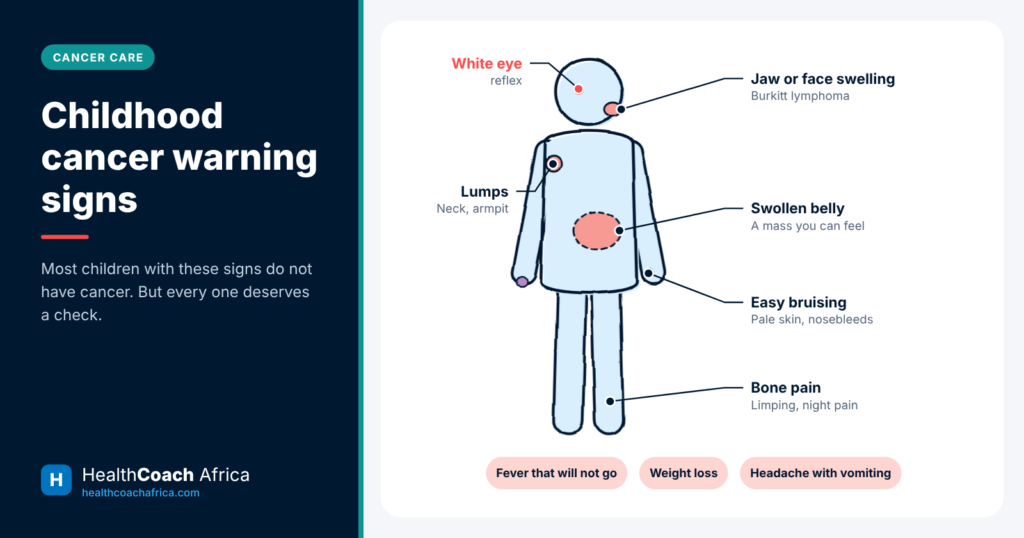
Key childhood cancer warning signs
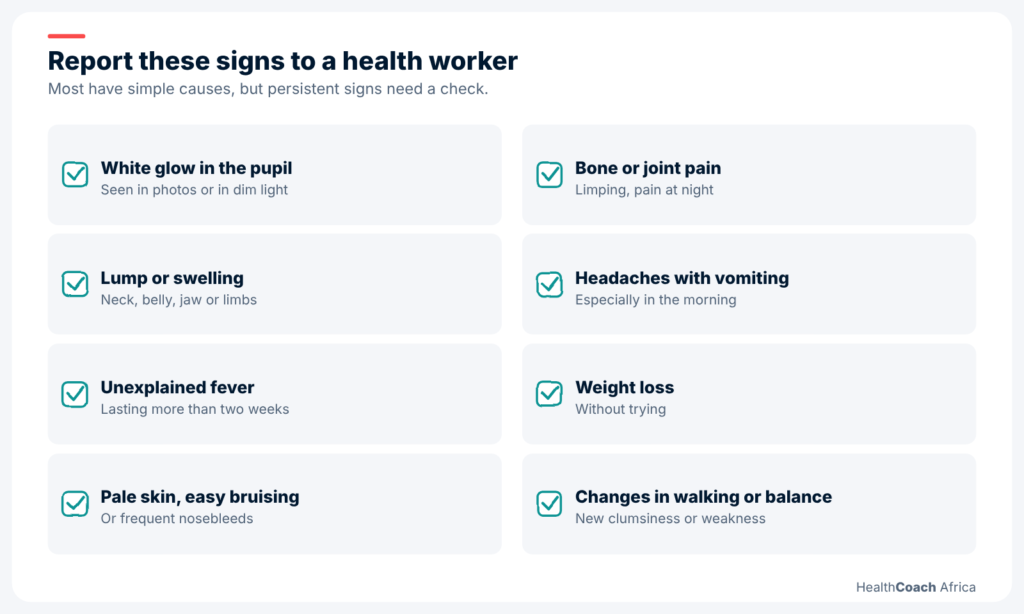
See a doctor promptly if a child has any of these signs, especially if they persist or keep returning:
A white glow or “cat’s eye” in the pupil, often noticed in a flash photograph, or a new squint
A swelling of the jaw, face or neck that grows quickly
A lump or swelling in the belly, often noticed while bathing or dressing the child
Unusual paleness, tiredness or breathlessness
Easy bruising, bleeding gums or tiny red spots on the skin
Fever or infections 1 that keep coming back without a clear cause
Bone or joint pain, or limping that does not settle
Morning headaches with vomiting, or changes in balance, walking or behaviour
Unexplained weight loss or night sweats
These signs can have many causes, most of them not cancer. However, persistence is the clue. A sign that lasts more than two weeks, or keeps coming back, needs investigation.
The white pupil: a sign never to ignore
Retinoblastoma usually affects children under five. The most common sign is a white reflection in the pupil, where a healthy eye looks red or black in photographs. Parents often spot it first.
When found early, retinoblastoma can be cured and sight can often be saved. When it is found late, the child may lose the eye or the cancer may spread. Any white glow in a child’s eye should be seen by an eye specialist within days, not weeks.
Childhood cancer warning signs: a simple checklist
Parents can keep this checklist in mind:
Is there a lump, swelling or glow that was not there before?
Has a symptom lasted more than two weeks?
Has it come back after treatment?
Is the child losing weight or energy?
Is the child pale or bruising easily?
If the answer to any question is yes, ask for a full examination. Mention that you are worried about childhood cancer warning signs. Health workers take parents’ concerns seriously when they are clearly described.
Checklist of childhood cancer warning signs parents should report to a health worker
Trust your instincts. If a sign does not go away, ask for a review.
Why diagnosis is often delayed
Several factors delay diagnosis in Nigeria:
Early signs look like common illnesses such as malaria, typhoid or worms
Children are treated repeatedly at patent medicine stores without a full examination
Families may first visit traditional healers or prayer houses
Cost and distance to specialist centres
Fear that cancer always means death
Every week of delay allows the cancer to grow. Combining faith and family support with prompt medical care gives the child the best chance.
The role of health workers and teachers
Nurses, community health workers and teachers see many children every day. They are well placed to spot childhood cancer warning signs early. A child who is always tired, pale or bruised deserves attention. So does a child with a growing lump or a white eye reflex. Simple training helps front-line staff refer quickly. Schools can encourage parents to seek care rather than wait.
How childhood cancer is diagnosed
If a doctor suspects cancer, the child will be referred to a paediatric cancer unit, usually at a teaching hospital. Tests may include a full blood count, ultrasound or CT scans, a bone marrow test for leukaemia, and a biopsy of any lump. These tests confirm the type of cancer and how far it has spread.
Treatment and support
Treatment for childhood cancer may include chemotherapy, surgery and radiotherapy. Many treatments last several months. Completing the full course is essential, because stopping early allows the cancer to return.
Families face heavy costs and long hospital stays. Ask the treatment team about social workers, charities, support groups and any government or donor programmes that help with medicines and transport. Some childhood cancer medicines need careful storage, and reliable supply is vital.
HUBPHARM PHARMACIST’S NOTE Children’s cancer medicines are usually dosed by body surface area, and some come as liquids that need careful measuring. A small error matters. Send the prescription to a HubPharm pharmacist and we will check doses, show you how to measure liquids, and tell you which medicines need cold storage.
Caring for a child during treatment
Children on chemotherapy are at high risk of infection. Keep the home clean, practise good hand hygiene and avoid crowds when the blood count is low. Any fever of 38°C or more during treatment is an emergency. Go to the hospital immediately, day or night.
Good nutrition 2 , rest, play and schooling, where possible, help children cope. Children understand more than adults often think. Honest, age-appropriate explanations reduce fear.
Supporting brothers and sisters
When one child has cancer, siblings can feel left out, frightened or even guilty. Explain what is happening in simple words. Let them visit if possible. Give them some special time with a parent or relative. Tell their teachers, so they understand any changes in behaviour. Siblings cope better when they feel included.
Finishing treatment matters
Some families stop treatment when the child looks better, or when money runs out. This allows the cancer to return in a form that is harder to treat. Talk to the team early if you are struggling. Social workers and charities may be able to help. Recognising childhood cancer warning signs is only the first step. Completing treatment is what brings cure.
Life after childhood cancer
Many children treated for cancer grow up to live full lives. Some need long-term follow-up for effects of treatment on growth, fertility, the heart or learning. Keep a record of the treatments your child received and attend follow-up clinics.
Nutrition during treatment
Children on cancer treatment need extra energy and protein. Offer small meals often. Eggs, beans, fish, milk and groundnut paste are good choices. Keep food hygiene strict, because infections are dangerous when the blood count is low.
Myths about childhood cancer
“Children do not get cancer.” They do, and early detection makes a big difference.
“Cancer in a child is a curse or punishment.” Childhood cancers are medical conditions caused by changes in cells.
“Treatment is pointless.” Many childhood cancers are curable, especially when found early.
Getting help
If you notice any childhood cancer warning signs that persist, ask your doctor for an urgent review and, if needed, referral to a teaching hospital. Read more in our cancer care articles. For help sourcing children’s cancer medicines, fever thermometers or nutrition supplements during treatment, message a HubPharm pharmacist or chat with Afiya on WhatsApp.
Medicines and products in this article
#
Medicine or product
What to know
1
Paracetamol syrup
Over the counter
For pain or fever after advice from the cancer team. A fever during chemotherapy needs hospital review first.
2
Oral nutrition supplements
Over the counter
Extra energy and protein for children who cannot eat enough during treatment.
To order any of these, or to ask a pharmacist a question first, message HubPharm on WhatsApp or visit hubpharmafrica.com. Prescription medicines are supplied against a valid prescription.
Teen Depression Warning Signs: A Guide for Parents… The teenage years bring rapid changes in the body, emotions and relationships. Mood swings, arguments and a desire for privacy are a normal part of growing up. However, some teenagers develop depression, a medical condition…
Breast Cancer Warning Signs: What Every Woman Should Check Breast cancer is the most common cancer in Nigeria. Sadly, many women reach hospital only when the disease is advanced and harder to treat. Knowing the breast cancer warning signs, and acting on them quickly,…
Colorectal Cancer Early Signs: What Your Bowel Is… Colorectal cancer, also called bowel cancer, affects the colon and the rectum. It is one of the most common cancers worldwide, and doctors in Nigeria are seeing more cases, including in people under 50. Many…
How to Lower Cholesterol and Protect Your Heart High cholesterol has no symptoms, yet it is one of the main causes of heart attacks and strokes. Many Nigerians only discover it during a routine check or after a heart problem. The good news…