High cholesterol has no symptoms, yet it is one of the main causes of heart attacks and strokes. Many Nigerians only discover it during a routine check or after a heart problem. The good news is that cholesterol responds well to changes in diet and lifestyle, and to medicine when needed. This guide explains how to lower cholesterol, what your test results mean and which changes make the biggest difference.
What cholesterol is
Cholesterol is a fatty substance made mainly by the liver. The body needs it to build cells and make some hormones. It travels in the blood attached to proteins, forming particles called lipoproteins.
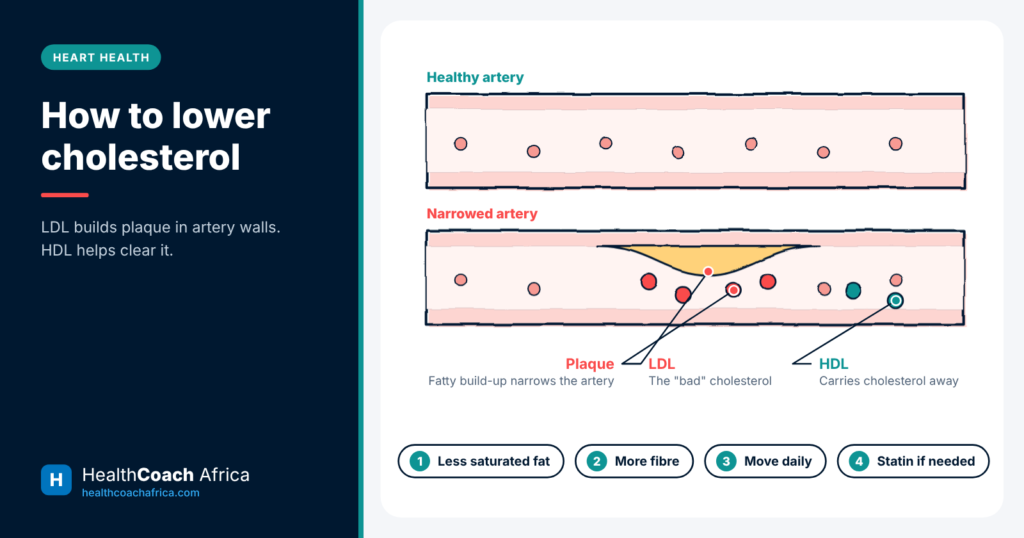
LDL cholesterol is often called “bad” cholesterol. Too much of it builds up in artery walls and narrows them.
HDL cholesterol is called “good” cholesterol. It helps carry cholesterol away from the arteries to the liver.
Triglycerides are another type of blood fat. High levels are linked to heart disease and are often raised by sugar, refined carbohydrates and alcohol.
Why high cholesterol matters
When too much LDL cholesterol circulates, it slowly builds up inside the walls of arteries as plaques. This process, called atherosclerosis, narrows the arteries and makes them stiff. If a plaque breaks open, a clot can form and block the artery. In the heart, this causes a heart attack. In the brain, it causes a stroke.
High cholesterol is more dangerous when combined with high blood pressure, diabetes or smoking. Each risk factor adds to the others.
Getting tested
Cholesterol is measured with a blood test called a lipid profile. Many labs now accept non-fasting samples, but some still ask you to fast for 10 to 12 hours, especially if triglycerides are being measured. Ask your doctor or lab.
Adults should have a cholesterol test at least every five years from the age of 40, or earlier if they have diabetes, high blood pressure, obesity or a family history of early heart disease or high cholesterol.
Understanding your numbers
Results are usually given in mmol/L in Nigeria, although some labs use mg/dL. As a general guide for healthy adults, the NHS suggests:
Total cholesterol: below 5 mmol/L
HDL cholesterol: above 1.0 mmol/L for men, above 1.2 mmol/L for women
Non-HDL cholesterol, which is total minus HDL: below 4 mmol/L
Many labs also report LDL cholesterol, which is generally best kept below 3 mmol/L in healthy adults, and triglycerides, ideally below 1.7 mmol/L when fasting.
People who already have heart disease, diabetes or kidney disease usually need lower LDL targets. Your doctor will set yours based on your overall risk.
Annotated example lipid profile explaining the numbers behind how to lower cholesterol
In this example, high LDL and triglycerides with low HDL point to a higher heart risk.
How to lower cholesterol with food
Diet changes can lower LDL cholesterol significantly. Focus on these steps:
Cut saturated fat. Reduce fatty meat, chicken skin, suya fat, full-fat dairy, butter, coconut oil and heavy use of palm oil.
Avoid trans fats. These are found in some margarines, pastries and repeatedly reused frying oil.
Eat more soluble fibre. Oats, beans, lentils, okra, garden egg, apples and oranges help remove cholesterol from the body.
Choose healthy fats. Use small amounts of groundnut, soybean, olive or sunflower oil, and eat a handful of unsalted nuts most days.
Eat oily fish twice a week. Mackerel, sardines and herring provide omega-3 fats that lower triglycerides.
Change your cooking methods too. Grilling, boiling and steaming are better than deep frying.
Exercise and weight
Regular physical activity raises HDL cholesterol and lowers triglycerides. Aim for at least 150 minutes of moderate activity each week, such as brisk walking, dancing, cycling or swimming. That is about 30 minutes on five days.
Losing excess weight, especially from around the waist, also improves cholesterol levels. Even a loss of 5% to 10% of body weight helps.
Other lifestyle changes
Stopping smoking raises HDL cholesterol and greatly reduces heart risk within a year. Cutting down on alcohol lowers triglycerides. Reducing sugar and refined carbohydrates, including soft drinks, white bread and pastries, helps too. Learning how to lower cholesterol often brings other benefits, such as lower blood pressure and better blood sugar. See our article on lifestyle changes for hypertension.
When medicine is needed
Lifestyle changes are not always enough, especially if your cholesterol is very high or your overall risk is high. In these cases, doctors prescribe medicines.
Statins, such as atorvastatin 1 , rosuvastatin and simvastatin 2 , are the most common. They reduce cholesterol production in the liver and lower the risk of heart attack and stroke.
Ezetimibe 3 reduces cholesterol absorption from the gut and may be added to a statin.
Newer injectable medicines are used for people with very high cholesterol, but they are expensive and less widely available.
Statins are generally safe. The most common side effect is muscle aches. If you notice unexplained muscle pain, weakness or dark urine, contact your doctor. Do not stop the medicine on your own.
How to lower cholesterol: a two-week starter plan
Big changes are hard to keep. Instead, try one new habit every few days:
Swap your usual breakfast for oats or beans twice a week.
Remove the skin from chicken and trim fat from meat.
Replace one fried meal with a grilled or boiled version.
Add a vegetable portion to lunch and dinner.
Eat fish instead of meat on two days.
Walk for 20 to 30 minutes after dinner on five days.
Swap sugary drinks for water.
After two weeks, review what worked and keep going. Learning how to lower cholesterol is a long-term project, and repeat blood tests after about three months show your progress. If your numbers improve, celebrate and keep going. If they do not, it does not mean you have failed. Your genes may simply need help from medicine, and the healthy habits will still protect your heart.
Cholesterol in young adults
High cholesterol is not only a problem for older people. Young adults with obesity, diabetes, kidney disease or a family history of early heart disease can have high levels in their twenties and thirties. Knowing how to lower cholesterol early in life brings the biggest long-term benefit, because the damage to arteries builds up over decades. If a parent or sibling had a heart attack before 55 in men or 65 in women, ask for a test even if you feel well. Children in families with inherited high cholesterol can be tested from early childhood, and treatment started young prevents heart disease later.
HUBPHARM PHARMACIST’S NOTE Simvastatin interacts with several common medicines, including some antibiotics and antifungals, and with large amounts of grapefruit juice. Check your statin with a HubPharm pharmacist whenever a new medicine is added. We will tell you whether the combination is safe or needs a change.
Inherited high cholesterol
Some people inherit a condition called familial hypercholesterolaemia, which causes very high LDL cholesterol from birth. Clues include a total cholesterol above about 7.5 mmol/L, early heart attacks in close relatives, or fatty lumps on the tendons. People with this condition usually need medicine, and their children should be tested.
Myths about cholesterol
“Thin people do not have high cholesterol.” Genes play a big role, so slim people can have high levels too.
“Eggs must be avoided completely.” For most people, eating eggs in moderation as part of a balanced diet is fine.
“I feel well, so my cholesterol must be normal.” High cholesterol has no symptoms. Testing is the only way to know.
Getting help
Knowing how to lower cholesterol is one of the best ways to protect your heart. Ask your doctor for a lipid profile, and repeat it as advised. If you take a statin and have questions about side effects or interactions with other medicines, message a HubPharm pharmacist or chat with Afiya on WhatsApp.
Medicines and products in this article
#
Medicine or product
What to know
1
Atorvastatin and rosuvastatin
Prescription only
Statins that lower LDL cholesterol and the risk of heart attack and stroke. Report unexplained muscle pain.
2
Simvastatin
Prescription only
Older statin, usually taken in the evening. It has more interactions than other statins.
3
Ezetimibe
Prescription only
Reduces cholesterol absorption from the gut. It may be added to a statin.
To order any of these, or to ask a pharmacist a question first, message HubPharm on WhatsApp or visit hubpharmafrica.com. Prescription medicines are supplied against a valid prescription.
Nutrition During Cancer Treatment: What to Eat and Why Cancer and its treatment place heavy demands on the body. Chemotherapy, radiotherapy and surgery all increase your need for energy and protein, while side effects such as nausea and mouth sores make eating harder. Good…
Diabetes in Nigeria: Why Blood Sugar Control Fails Diabetes in Nigeria does not usually fail in the clinic. Among people who reach a specialist and stay in care, control is often reasonable. It fails in the years before anyone tests you, and it…
Nigerian Diet for Diabetes: A Practical Guide to Eating Well A diagnosis of diabetes often comes with a long list of foods you are told to stop eating. Many people believe they must give up eba, rice, yam and plantain for ever. That is not…
Metformin Side Effects: What Is Normal and What Is Not Most people meet metformin side effects in the first fortnight, decide the drug does not agree with them, and stop it without telling anyone. That decision is usually wrong, and it is almost always avoidable,…