The teenage years bring rapid changes in the body, emotions and relationships. Mood swings, arguments and a desire for privacy are a normal part of growing up. However, some teenagers develop depression, a medical condition that affects how they feel, think and behave. Many go unnoticed because their struggles are mistaken for laziness, rudeness or “attitude”. Knowing the teen depression warning signs helps parents, teachers and carers act early.
How common is it?
According to the World Health Organization, mental health conditions account for a large share of illness among adolescents worldwide, and depression is one of the leading causes. Half of all mental health conditions start by age 14, but most cases are not detected or treated.
In Nigeria, academic pressure, family stress, bullying, social media and economic hardship all affect young people’s mental health. Stigma often stops them from speaking up.
Normal moods or depression?
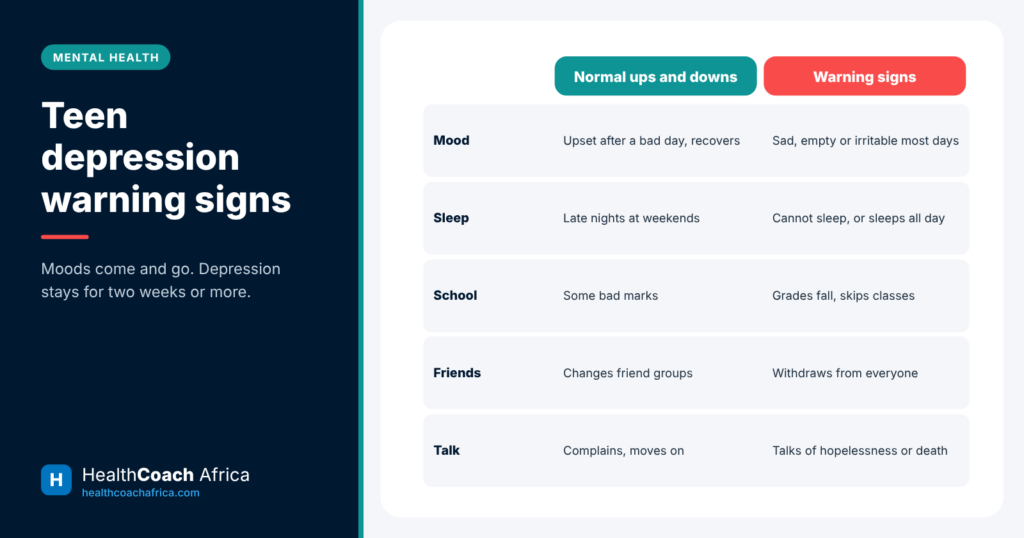
All teenagers have bad days. The difference with depression is in how long the change lasts, how severe it is and how much it affects daily life. Signs that last for two weeks or more, or that interfere with school, friendships or family life, deserve attention.
Emotional teen depression warning signs
Persistent sadness, emptiness or hopelessness
Irritability, anger or frequent outbursts, which are often more obvious than sadness in teenagers
Loss of interest in hobbies, sport or friends
Feeling worthless, guilty or like a failure
Extreme sensitivity to criticism or rejection
Talking about death or not wanting to be alive
Behavioural and physical signs
Sleeping much more or much less than usual
Changes in appetite or weight
Tiredness and low energy
Falling grades, skipping school or difficulty concentrating
Withdrawing from family and friends, or spending long hours alone in their room
Frequent headaches or stomach aches without a clear cause
Using alcohol, drugs or codeine syrups
Self-harm, such as cutting or burning
What drives depression in teenagers
There is rarely one cause. Common contributors include:
Academic pressure, including exams such as WAEC and JAMB and high family expectations
Bullying, in person or online
Family problems, such as conflict, separation, violence or loss of a parent
Social media, which can bring comparison, cyberbullying and poor sleep
Trauma or abuse
Chronic illness, such as sickle cell disease or HIV
Family history of depression or other mental health conditions
The role of social media and sleep
Phones keep many teenagers awake late into the night. Poor sleep worsens mood, concentration and resilience. Constant comparison with others online can lower self-esteem. Agreeing family rules, such as charging phones outside the bedroom at night, helps everyone.
Teen depression warning signs at a glance
Use this quick check. Ask yourself whether you have seen these for two weeks or more:
Constant irritability or sadness
Pulling away from friends and family
Big changes in sleep or eating
Falling grades or skipping school
Talk of being worthless or a burden
One sign alone may be normal. Several together are teen depression warning signs that need action. Trust your instincts. You know your child.
How parents can respond
If you notice teen depression warning signs, start a gentle conversation:
Choose a calm moment, such as during a drive or a walk, when the young person does not feel cornered.
Say what you have noticed, without blame. For example, “You seem down lately, and I am worried about you.”
Listen more than you talk. Avoid lecturing or comparing them to others.
Take their feelings seriously, even if the cause seems small to you.
Offer help, including seeing a doctor or counsellor together.
If they do not want to talk at first, keep the door open and try again.
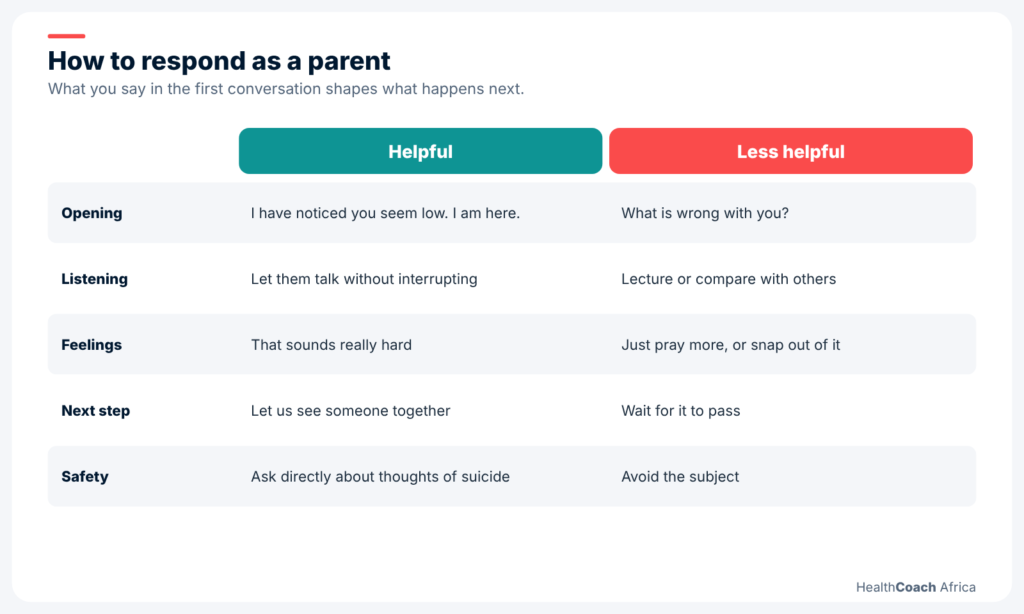
Comparison of helpful and unhelpful parent responses to teen depression warning signs
Listening first builds the trust a teenager needs to accept help.
What not to say
Phrases such as “snap out of it”, “you have nothing to be sad about” or “pray harder” can make a young person feel misunderstood and less likely to share. Faith and family values can be a great source of strength, but they work best alongside professional care, not instead of it.
Looking after yourself as a parent
Supporting a teenager with depression is stressful. Parents may feel guilty, frightened or exhausted. Talk to your partner, a friend or a counsellor. Learn about depression so that you understand what your child is going through. Keep routines steady at home. Make time for your own rest. A calm, supported parent is better able to help.
The role of schools
Teachers often notice changes before parents do. Falling grades, withdrawal, frequent absence and irritability are important clues. Schools can help by training staff to recognise mental health problems, providing access to counsellors, tackling bullying firmly and creating a culture where students can ask for help without shame.
HUBPHARM PHARMACIST’S NOTE If a teenager is prescribed an antidepressant, parents should hold and give the tablets, especially in the first weeks, when some young people feel more agitated before they feel better. Chat confidentially with a HubPharm pharmacist about safe storage, side effects to watch for and what to do if a dose is missed.
Treatment works
Depression in teenagers is treatable. Options include:
Talking therapy, such as cognitive behavioural therapy, which helps young people change unhelpful thinking patterns and build coping skills
Family support and therapy, which improves communication at home
Medicine, 1 which a doctor may prescribe for moderate to severe depression, with careful monitoring
Healthy routines, including regular sleep, physical activity and time with supportive friends
Bullying is a common trigger for depression. Signs include torn clothes, lost belongings, fear of going to school and sudden changes after using the phone. Ask directly and calmly. Keep evidence of online bullying. Report it to the school and, if needed, to the platform. A child who is bullied needs to know that adults will act.
Supporting recovery at home
Recovery takes weeks to months. Keep expectations realistic. Praise small steps, such as getting up on time or meeting a friend. Encourage regular meals and sleep. Keep medicines stored safely. Stay in touch with the school. Watch for teen depression warning signs returning, and do not hesitate to go back for help.
When it is an emergency
If a teenager talks about suicide, has harmed themselves or you believe they are in immediate danger, do not leave them alone. Remove anything they could use to harm themselves, and take them to the nearest hospital emergency department or call the national emergency number 112. Taking talk of suicide seriously saves lives.
Building protective habits
Some daily habits protect teenagers’ mental health. Encourage regular sleep. Make time for physical activity and outdoor play. Eat meals together as a family when possible. Praise effort, not only results. Limit late-night phone use. Help them build friendships and hobbies. Let them know they can always talk to you. These habits do not prevent every problem, but they make teenagers more resilient. They also make it easier to notice teen depression warning signs early.
Myths about teen depression
“It is just a phase.” Some moodiness is normal, but persistent teen depression warning signs are not.
“Talking about suicide puts the idea in their head.” Asking directly does not increase risk. It shows you care and opens the door to help.
“Depression means the child is weak or spoiled.” Depression is a medical condition, not a character flaw.
Getting help
If you see teen depression warning signs in a young person, start with a calm conversation and arrange a visit to a doctor, a psychiatric hospital or a trusted counsellor. If a doctor has prescribed medicine and you have questions about side effects or safe storage at home, message a HubPharm pharmacist in confidence. Young people and parents can also talk to Afiya on WhatsApp.
Medicines and products in this article
#
Medicine or product
What to know
1
Antidepressant medicines
Prescription only
Sometimes prescribed for moderate to severe depression in young people, with close monitoring.
To order any of these, or to ask a pharmacist a question first, message HubPharm on WhatsApp or visit hubpharmafrica.com. Prescription medicines are supplied against a valid prescription.
Low Libido in Women: 7 Common Causes and Real Solutions Few topics are harder to raise with a partner, a friend or a doctor. Yet low libido in women is one of the most common sexual health concerns worldwide. It affects women of every age,…
Depression in Nigerian Men: Breaking the Silence Many Nigerian men are raised to be strong, provide for their families and keep their problems to themselves. These values can be a source of pride. However, they also make it hard for men to…
Signs of Work Burnout: How to Recognise It and Recover Long hours, heavy traffic, financial pressure and the constant ping of work messages are part of daily life for many Nigerian workers. Over time, this pressure can lead to burnout, a state of deep exhaustion…
Asthma Attack Warning Signs: Know Them and Act Fast Asthma is one of the most common long-term conditions in Nigeria, affecting children and adults alike. Most of the time, it can be well controlled with the right inhalers. However, asthma attacks still send many…