Few topics are harder to raise with a partner, a friend or a doctor. Yet low libido in women is one of the most common sexual health concerns worldwide. It affects women of every age, including those in loving relationships. A reduced interest in sex is not a character flaw, and it is not something you must simply endure. In most cases there is a cause, and the cause can be addressed.
What counts as low libido?
There is no “normal” amount of desire. Interest in sex naturally rises and falls across a lifetime. It becomes a concern when the change lasts for several months and bothers you or strains your relationship. If it does not trouble you, it is not a medical problem. Differences in desire between partners are also common and do not mean that either person is abnormal.
How desire works
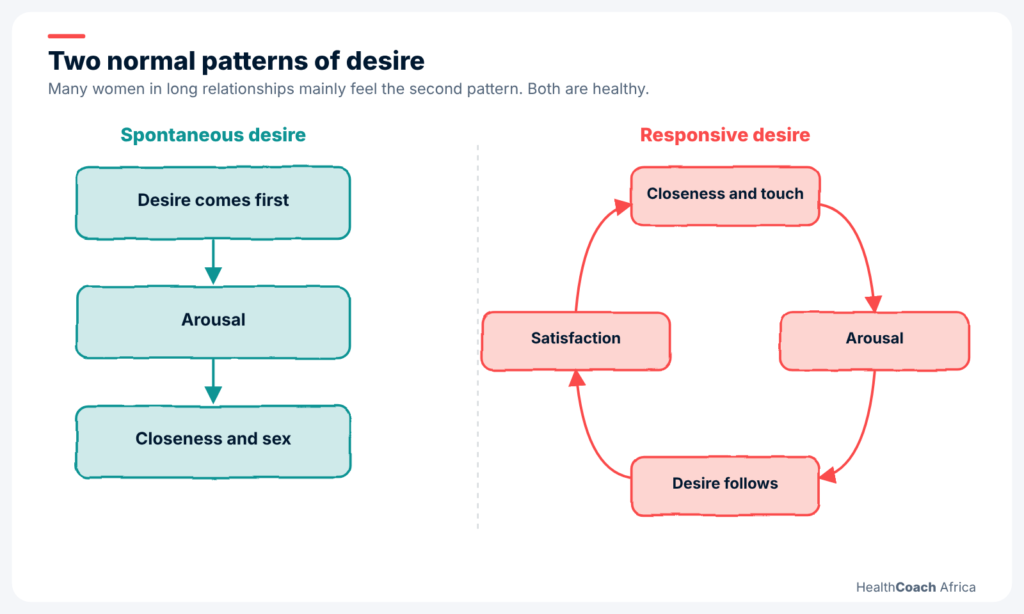
Much of the worry about low libido in women comes from a mistaken idea of how desire is supposed to feel. Many people expect it to appear suddenly, without any prompt. That pattern is called spontaneous desire, and it is common early in a relationship.
However, a second pattern is equally normal. In responsive desire, interest begins only after closeness, affection or touch has started. Many women in long relationships experience desire mainly in this way. It does not mean that anything is wrong.
Context matters as well. Privacy, energy, feeling safe and feeling valued all affect interest. Desire also differs from arousal, orgasm and comfort. A woman may want sex but find it painful, or enjoy it once it begins but rarely think about it beforehand. Naming the exact difficulty leads to the right solution.
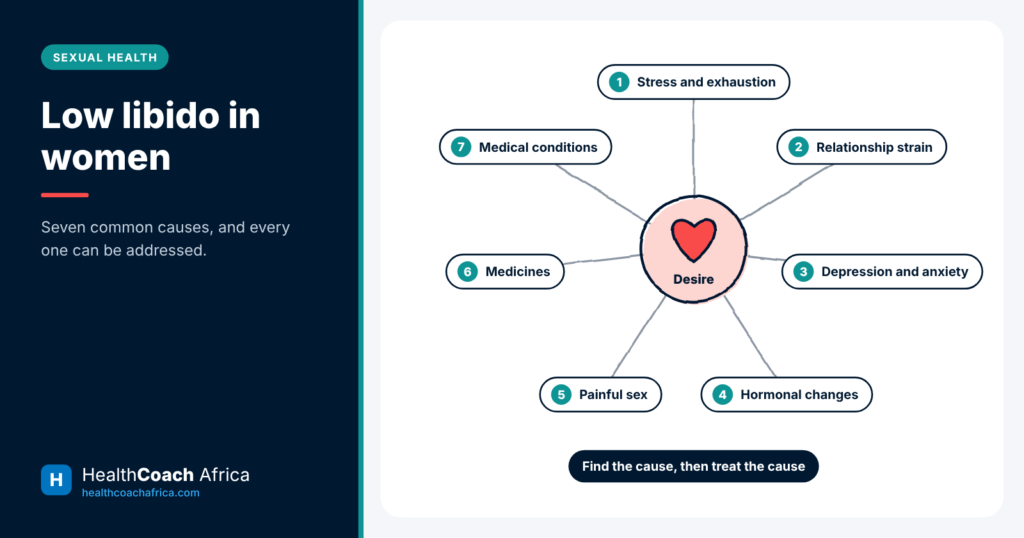
Seven common causes of low libido in women
Stress and exhaustion. Work, money worries, childcare and long commutes leave little energy. Poor sleep also lowers desire directly.
Relationship difficulties. Unresolved conflict, poor communication, broken trust or feeling pressured all reduce interest.
Depression and anxiety. Both lower desire, and so do some of the medicines used to treat them.
Hormonal changes. Desire often drops after childbirth and during breastfeeding. Around menopause, falling oestrogen causes vaginal dryness and discomfort.
Painful sex. Dryness, infections, endometriosis, fibroids and scarring after childbirth or genital cutting can all cause pain. When sex hurts, desire fades.
Medicines. Some antidepressants, blood pressure medicines and hormonal contraceptives affect libido in certain women.
Medical conditions. Diabetes, thyroid disorders, anaemia, chronic pain and heavy alcohol use are frequent culprits.
In addition, past sexual trauma, worries about body image and a strict upbringing around sex can play a part.
Low libido at different stages of life
After childbirth. Healing, broken sleep and the demands of a newborn leave little room for sex. Breastfeeding also lowers oestrogen, which causes dryness. Desire usually returns gradually over several months. Use a lubricant, and do not resume before you feel ready.
The busy middle years. Careers, children, ageing parents and financial pressure compete for attention. Many women carry most of the planning for the household, and mental overload is a powerful brake on desire.
Perimenopause and menopause. Hormone levels fluctuate and then fall. Hot flushes disturb sleep, mood may dip and the vaginal lining becomes thinner. These changes are treatable, so raise them with your doctor.
During long-term illness or after surgery. Diabetes, cancer treatment and removal of the womb or ovaries can all affect sexual feeling. Ask what to expect and what can be done.
What helps
The right response to low libido in women depends on the cause, and often more than one step is needed.
Talk to your partner. Choose a calm moment outside the bedroom and explain what you need. Many partners do not know that anything is wrong.
Have a health check. Ask your doctor to review your blood pressure, blood sugar, thyroid, blood count and medicines.
Treat pain first. Water-based lubricants and vaginal moisturisers help with dryness. For menopausal dryness, a doctor can prescribe vaginal oestrogen.
Protect rest. Better sleep, regular exercise and a fairer share of household work make a real difference.
Consider counselling. Individual, couples or sex therapy is especially useful where trauma or relationship strain is involved.
Allow more time. For many women, desire follows closeness and touch, not the other way round. That pattern is completely normal.
Never stop a prescribed medicine on your own. Instead, ask your doctor or pharmacist whether an alternative is available.
Treatments a doctor may offer
Beyond self-help, several medical options exist for low libido in women:
Changing a medicine. If a tablet is responsible, an alternative can often be found.
Vaginal oestrogen. Creams or pessaries restore moisture and comfort after menopause.
Hormone replacement therapy. This eases hot flushes, sleep problems and dryness in suitable women.
Pelvic floor physiotherapy. It helps when muscle tension makes sex painful.
Psychosexual therapy. Structured counselling, alone or as a couple, addresses anxiety, past experiences and habits that have built up.
Specialist medicines. A few medicines are licensed in other countries for persistent low desire. Their benefit is modest, they have side effects and they are not widely available in Nigeria.
Your doctor will usually begin with the simplest option that matches the cause.
Talking to your partner
This conversation is often the hardest step, yet it changes the most. A few approaches help:
Choose a relaxed time, away from the bedroom and away from an argument.
Speak about your own experience. “I feel exhausted by evening” works better than “You never help.”
Explain what makes closeness easier for you, such as rest, affection without expectation or help with the children.
Ask about your partner’s experience too. Erection or ejaculation problems on his side can affect both of you.
Agree on small changes and review them after a few weeks.
If these talks keep ending in conflict, a counsellor can guide them.
What to avoid
Herbal aphrodisiacs, “sweeteners” and vaginal tightening products are sold widely in markets and online. However, they are unregulated and unproven. Some cause burns and infections, and damage to the vaginal lining can raise the risk of HIV. Others contain hidden drugs.
Similarly, do not take a partner’s erectile dysfunction tablets. They were not designed or approved for women.
Culture, upbringing and past harm
Culture shapes low libido in women more than most people admit. Many women were raised to believe that sex is a duty, or a subject too shameful to mention. Those messages do not vanish on the wedding night. In addition, women who have experienced sexual violence may feel fear or numbness during intimacy.
Female genital cutting deserves specific mention. It can cause scarring, pain and reduced sensation. Specialist care, including minor surgery and counselling, is available and can help. None of these experiences is the woman’s fault, and she is entitled to care.
When to see a doctor
Book an appointment if:
Desire disappears suddenly
You have pain or bleeding during or after sex
You also have fatigue, hot flushes, weight change or low mood
The problem began after starting a new medicine
It is causing you distress
Doctors and pharmacists discuss these concerns every day, so there is no need to feel embarrassed. A good consultation should feel respectful and unhurried. If it does not, you are entitled to see someone else.
Frequently asked questions
Is it normal to have no interest in sex at all?
For some people, yes. If the absence of desire does not distress you, it needs no treatment.
Can the contraceptive pill lower desire?
It does in some women and not in others. If you notice a change after starting it, ask about a different method.
Will desire return when I stop breastfeeding?
Usually. Hormone levels recover, and sleep improves as the baby grows.
Do aphrodisiac foods or drinks work?
There is no good evidence that any food, herb or drink reliably increases desire.
Should my partner come to the appointment?
It often helps, particularly when the relationship or his own sexual health is part of the picture.
Moving forward
Low libido in women usually has more than one cause, so expect to combine a few changes. Begin with rest, comfort and honest conversation, and add medical help where it is needed. Progress may be gradual, but it is realistic.
Getting Pregnant After 35: What You Need to Know More women are having children later in life, after completing their education, building careers or finding the right partner. Getting pregnant after 35 is very common, and many women have healthy pregnancies and babies. However,…
Causes of Erectile Dysfunction: What Men Should Know Erectile dysfunction, often called ED or weak erection, is when a man regularly cannot get or keep an erection firm enough for sex. It is very common, especially after the age of 40, but many…
Insomnia Causes and Treatment: How to Get Your Sleep Back Lying awake at night, watching the clock and worrying about tomorrow is exhausting. Many people try to fix poor sleep with sleeping tablets bought over the counter, strong herbal mixtures or alcohol. These may help…
Diabetes in Nigeria: Why Blood Sugar Control Fails Diabetes in Nigeria does not usually fail in the clinic. Among people who reach a specialist and stay in care, control is often reasonable. It fails in the years before anyone tests you, and it…