Long hours, heavy traffic, financial pressure and the constant ping of work messages are part of daily life for many Nigerian workers. Over time, this pressure can lead to burnout, a state of deep exhaustion that affects your health, your relationships and your work. Recognising the signs of work burnout early makes recovery faster and easier. This guide explains what burnout is, how to spot it and what you can do.
What burnout is
The World Health Organization describes burnout as a result of chronic workplace stress that has not been successfully managed. It is listed in the International Classification of Diseases as an occupational phenomenon rather than a medical condition. In other words, it is linked specifically to work.
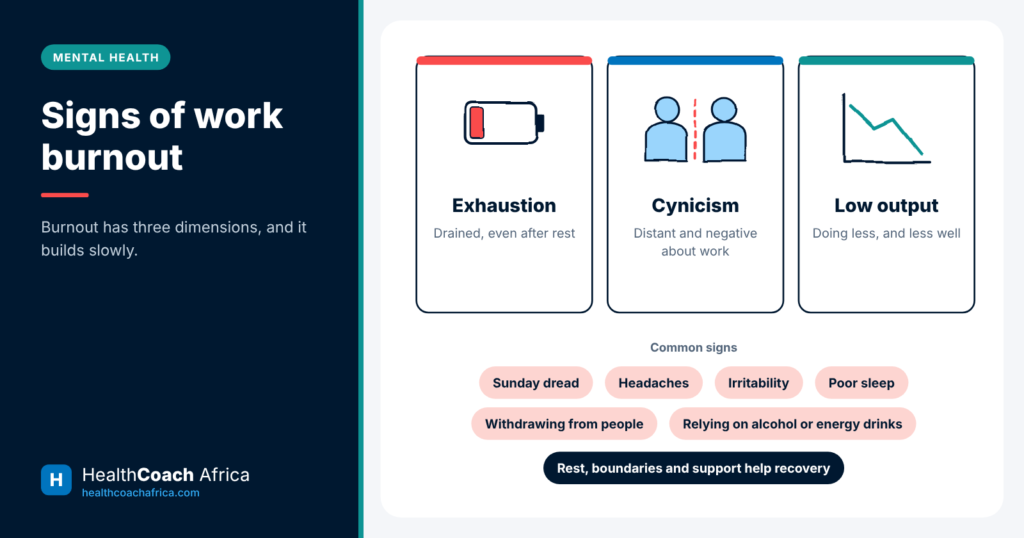
The WHO describes three dimensions:
Exhaustion. Feeling drained of energy, both physically and emotionally.
Distance from your job. Growing negative, cynical or detached about work.
Reduced effectiveness. Feeling that you achieve less and doing your job less well.
Burnout develops slowly, over months or years. That is why many people only notice it when they are already struggling.
Common signs of work burnout
The signs of work burnout show up in the body, the mind and behaviour:
Tiredness that does not improve after a weekend or a holiday
Dreading the start of each workday, often from Sunday afternoon
Headaches, stomach upsets, muscle tension or frequent colds
Difficulty concentrating and making simple decisions
Irritability with colleagues, family or customers
Feeling numb, cynical or that nothing you do matters
Withdrawing from friends and activities you used to enjoy
Using alcohol, food, energy drinks 1 or sleeping tablets 2 to cope
Not everyone has every sign. Nevertheless, if several of these have been present for weeks, it is time to take them seriously.
Burnout, stress and depression
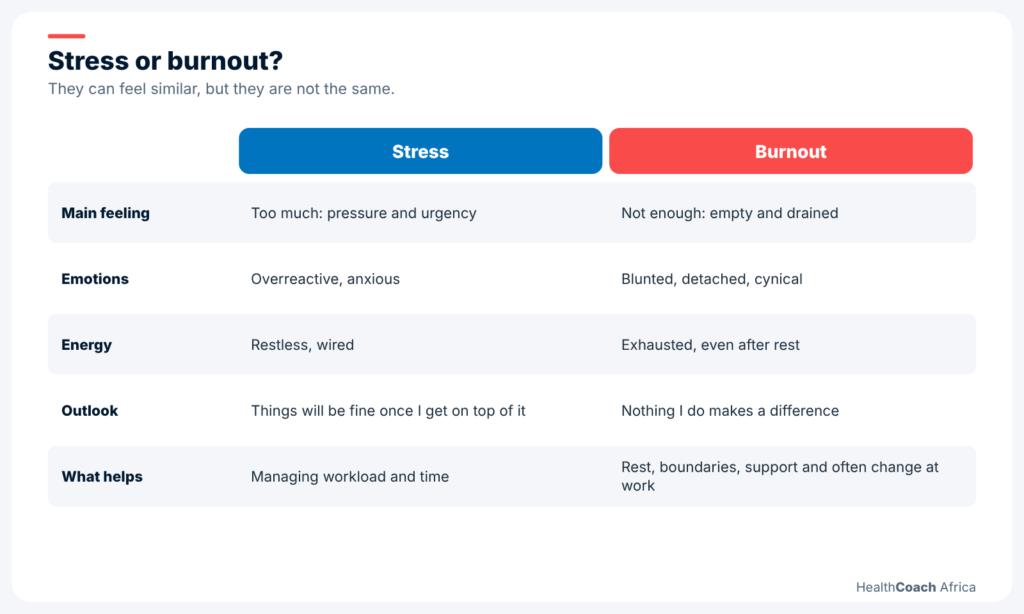
Stress usually involves too much: too many demands, too much urgency. You still feel that things would be better if you could just get on top of the work. Burnout, by contrast, is a feeling of not enough: not enough energy, not enough care and not enough hope that things will improve.
Burnout and depression share many features, such as low mood and fatigue. However, depression affects every part of life, not just work, and often includes deep sadness, guilt and loss of pleasure in everything. If you are unsure, speak to a doctor. Untreated burnout can lead to depression, and the two often overlap.
Comparison table separating ordinary stress from the signs of work burnout
Stress usually feels like too much. Burnout feels like not enough: energy, care or hope.
A quick self-check
Answer each question truthfully, thinking about the past month:
Do you feel exhausted most days, even after rest?
Has your attitude to work become negative or cynical?
Are you making more mistakes or missing deadlines?
Do you feel that your efforts go unnoticed?
Have colleagues, friends or family said that you seem different?
If you answered yes to three or more, you may be showing signs of work burnout. This checklist cannot diagnose you, but it can help you decide when to act. Repeat it every few weeks while you make changes. Keeping a short diary of your energy, sleep and mood each evening can also show patterns, such as particular days, tasks or people that drain you most.
Who is most at risk?
Anyone can burn out. However, the risk is higher in jobs with high demands and little control. Health workers, teachers, bankers, customer service staff and small business owners are often affected. Other risk factors include:
Unclear roles or constantly changing targets
Long commutes on top of long working hours
Lack of support or recognition from managers
Unfair treatment or a hostile workplace
Caring for children or older relatives alongside work
A personal tendency towards perfectionism or difficulty saying no
HUBPHARM PHARMACIST’S NOTE Many tired workers depend on energy drinks, strong painkillers or sleeping tablets bought without a prescription. Over time these can make sleep and mood worse. Chat privately with a HubPharm pharmacist about what you are taking, and we will help you cut back safely.
Practical steps to recover
Recovery takes time, but small changes add up. Start with the steps that are easiest for you.
Protect your sleep. Aim for seven to eight hours. Keep a regular bedtime and put your phone away an hour before sleep.
Set clear boundaries. Decide when you stop checking work messages, and tell colleagues. Mute notifications outside work hours.
Take real breaks. Step away from your desk for lunch. Short walks during the day help to reset your mind.
Move your body. Regular activity, even 20 to 30 minutes of brisk walking most days, reduces stress hormones and improves mood.
Reconnect with people. Spend time with friends and family who leave you feeling better, not drained.
Review your workload. List your tasks and talk to your manager about priorities, deadlines and support.
Use your leave. Annual leave exists to protect your health. Plan time off before you reach breaking point.
Burnout in health workers and carers
Health workers in Nigeria face particular pressure, with heavy patient loads, staff shortages and long shifts. Many also deal with distressing situations every day. Carers looking after a sick relative at home can feel the same strain without any break or pay.
For these groups, rest and peer support are essential. Debriefing after difficult events, sharing workloads fairly and taking regular days off help to protect against burnout. If you are a carer, ask other relatives to share the load and look for local support groups.
The role of money worries
Financial stress is one of the strongest drivers of burnout in Nigeria. Rising prices, delayed salaries and side businesses can push working hours very high. When you are always trying to earn more, rest can feel like a luxury. Yet ignoring the signs of work burnout usually lowers income in the long run, through illness, mistakes and lost jobs. Planning a budget, seeking advice on debt and protecting at least one rest day a week are practical steps that help.
What employers can do
Burnout is not only a personal problem. It reflects how work is organised. Employers can reduce the risk by setting realistic workloads, clarifying roles, recognising good work and training managers to spot the signs of work burnout in their teams. Flexible hours and access to counselling or employee assistance programmes also help.
Healthy staff are more productive, make fewer mistakes and are less likely to leave. In short, preventing burnout makes good business sense.
When to seek professional help
Speak to a doctor, psychologist or counsellor if:
The signs of work burnout last for more than a few weeks despite rest
You cannot function at work or at home
You feel hopeless or worthless, or you cry often
You rely on alcohol, drugs or sleeping pills to get through the day
You have thoughts of harming yourself
If you are thinking about ending your life, go to the nearest hospital emergency department or call the national emergency number 112 now. You do not have to face this alone.
Talking therapies such as cognitive behavioural therapy are effective for burnout and related problems. If depression or anxiety is also present, a doctor may suggest medicine as part of treatment. Learn more in our article on facts about depression.
Getting help
Burnout is a signal, not a weakness. Taking the signs of work burnout seriously protects your health and your career. If you are relying on sleeping tablets or energy supplements, or have questions about medicines your doctor has prescribed, message a HubPharm pharmacist confidentially. You can also talk to Afiya on WhatsApp at any time of day.
Medicines and products in this article
#
Medicine or product
What to know
1
Energy drinks and caffeine products
Over the counter
High caffeine intake raises heart rate and blood pressure and disturbs sleep. Limit them, especially after early afternoon.
2
Sleeping tablets
Prescription only
Short-term use only. Benzodiazepines such as diazepam can cause dependence within weeks and are dangerous with alcohol.
To order any of these, or to ask a pharmacist a question first, message HubPharm on WhatsApp or visit hubpharmafrica.com. Prescription medicines are supplied against a valid prescription.
Work-related Stress and Burnout: How to Take Care of… Work-related stress can lead to burnout if not well-managed. Zoom apathy, slack messages, office politics, work load, incessant phone calls, back-to-back meeting, working towards deadline can all contribute to work-related stress. Stress and overload in…
Nutrition During Cancer Treatment: What to Eat and Why Cancer and its treatment place heavy demands on the body. Chemotherapy, radiotherapy and surgery all increase your need for energy and protein, while side effects such as nausea and mouth sores make eating harder. Good…
Diabetes in Nigeria: Why Blood Sugar Control Fails Diabetes in Nigeria does not usually fail in the clinic. Among people who reach a specialist and stay in care, control is often reasonable. It fails in the years before anyone tests you, and it…
Tuberculosis Symptoms and Treatment: What You Need to Know Tuberculosis, or TB, is one of the oldest diseases known to humans, and it remains a major killer. Nigeria has one of the highest TB burdens in Africa, and many people with the disease have…