Many Nigerian men are raised to be strong, provide for their families and keep their problems to themselves. These values can be a source of pride. However, they also make it hard for men to admit when they are struggling. As a result, depression in Nigerian men often goes unnoticed and untreated until it causes serious harm. This guide explains how depression shows up in men, why it happens and how to get help.
Depression is an illness, not a weakness
Depression is a common medical condition that affects mood, thinking, sleep, energy and the body. The World Health Organization estimates that it affects hundreds of millions of people worldwide. It is not caused by laziness, lack of faith or a weak character.
Depression is also treatable. With the right care, most people recover or learn to manage their symptoms well. The first step is recognising that something is wrong.
How depression in Nigerian men can look different
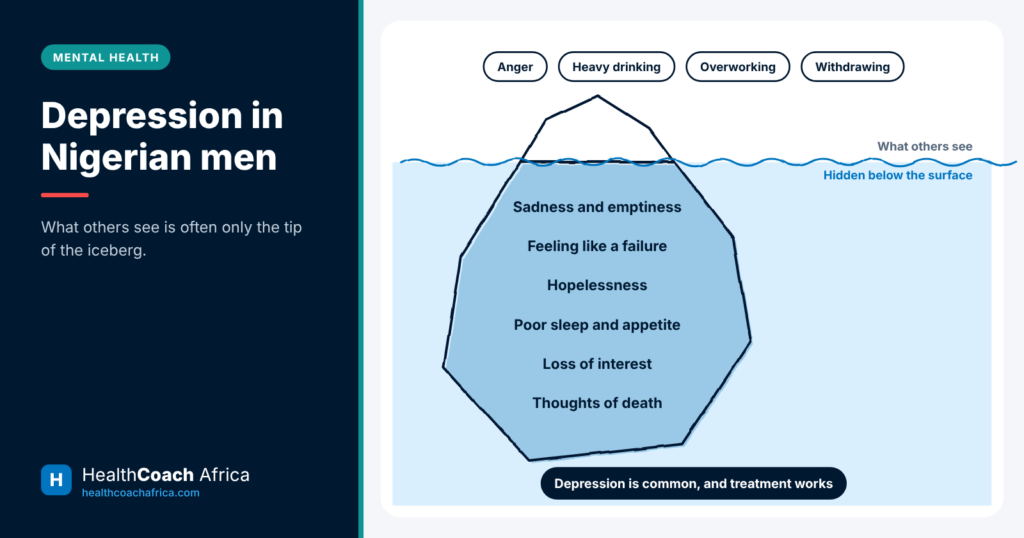
Men with depression do not always say that they feel sad. Instead, they may show:
Anger, irritability or a short temper, often over small things
Heavy drinking, smoking or drug use
Working very long hours, or losing interest in work completely
Withdrawing from family, friends and social events
Risky behaviour, such as fast driving, gambling or affairs
Physical complaints such as headaches, back pain, stomach problems and tiredness
Loss of sexual interest or erection problems
Feeling useless, a failure or a burden to others
Because these signs are not the “classic” picture, families and even health workers can miss depression in Nigerian men. Physical complaints are often treated with painkillers, while the underlying depression continues.
The core symptoms of depression
Doctors look for these symptoms lasting most of the day, nearly every day, for at least two weeks:
Low mood or a feeling of emptiness
Loss of interest or pleasure in things you used to enjoy
Poor sleep or sleeping too much
Changes in appetite or weight
Low energy and slowness
Poor concentration
Feelings of guilt or worthlessness
Thoughts of death or suicide
Having several of these is a strong reason to speak to a professional.
What drives depression in men
There is rarely a single cause. Common contributors include:
Money and work pressure. Unemployment, debt, failed businesses and the weight of being the main provider.
Relationship problems. Divorce, separation, conflict at home or the death of a loved one.
Health problems. Chronic illnesses such as diabetes, hypertension, HIV and chronic pain raise the risk of depression.
Alcohol and drugs. These may feel like relief, but they worsen mood over time.
Trauma. Violence, accidents, conflict and displacement can leave lasting effects.
Family history. Depression can run in families.
Why men do not seek help
Stigma remains a major barrier. Many men fear being called weak, mad or spiritually attacked. Others worry that people at work will find out. Some do not know that depression can be treated, or think that talking will not help.
Cost and distance also matter. Mental health specialists are mostly found in cities, and few health insurance plans cover talking therapy. Nevertheless, help is available at more levels than many people realise. General practitioners, primary health care workers and pharmacists are trained to recognise depression and can refer you on.
The danger of silence
Depression in Nigerian men is linked to suicide. Men are less likely than women to talk about suicidal thoughts and more likely to act on them using dangerous methods. Warning signs include talking about being a burden, giving away possessions, saying goodbye and a sudden calm after a period of deep distress.
If you or someone you know is thinking about suicide, go to the nearest hospital emergency department or call the national emergency number 112 now. Stay with the person and remove anything they could use to harm themselves.
HUBPHARM PHARMACIST’S NOTE Antidepressants usually take two to six weeks to work, and stopping them suddenly can cause unpleasant withdrawal effects. Many men also want to know whether they can drink alcohol. Ask a HubPharm pharmacist in confidence. Nobody else will see your question.
Treatment works
Treatment for depression usually includes one or more of the following:
Talking therapy. Approaches such as cognitive behavioural therapy help you change unhelpful thinking patterns. Problem-solving therapy is useful when practical stresses are driving low mood.
Antidepressant medicines 1 . These are prescribed by a doctor. They usually take two to six weeks to start working and should not be stopped suddenly. Side effects are often mild and short-lived.
Lifestyle changes. Regular exercise, good sleep, cutting back on alcohol and keeping in touch with people all support recovery.
Most people feel better within a few months of starting treatment. Treatment usually continues for at least six months after you feel well, to lower the chance of relapse.
Depression and physical health
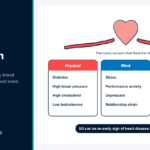
Depression and chronic physical illness feed each other. Men with diabetes, high blood pressure, heart disease or long-term pain are more likely to become depressed. In turn, depression makes it harder to take medicines regularly, eat well and stay active, so the physical illness worsens.
Treating depression therefore improves physical health as well. If you live with a long-term condition and notice low mood, poor sleep or loss of interest, mention it at your next clinic visit. Your doctor should treat both together. Screening for depression in Nigerian men with chronic illness is simple, using a short questionnaire, and it should be part of routine care.
Alcohol: the false friend
Alcohol is often the first thing men reach for when they feel low. It may bring short-term relief, but it is a depressant. Regular heavy drinking deepens low mood, disturbs sleep, damages relationships and raises the risk of suicide. It also interacts with many antidepressants.
Cutting down gradually is the first step for many men. Setting alcohol-free days each week, choosing smaller measures and avoiding drinking alone all help. Heavy drinking is a common thread in depression in Nigerian men, so tackling it often lifts mood within weeks. If you drink every day or need a drink in the morning, do not stop suddenly without medical advice, because withdrawal can be dangerous.
Starting the conversation
Many men do not know how to raise their feelings. A simple opening line helps, such as “I have not been feeling like myself lately”. It can be said to a doctor, a partner, a friend, a religious leader or a colleague. In addition, talking side by side, during a walk, a drive or a game, can feel easier for many men than sitting face to face. The aim is to take the first step, because depression in Nigerian men improves fastest when it is treated early.
How families and friends can help
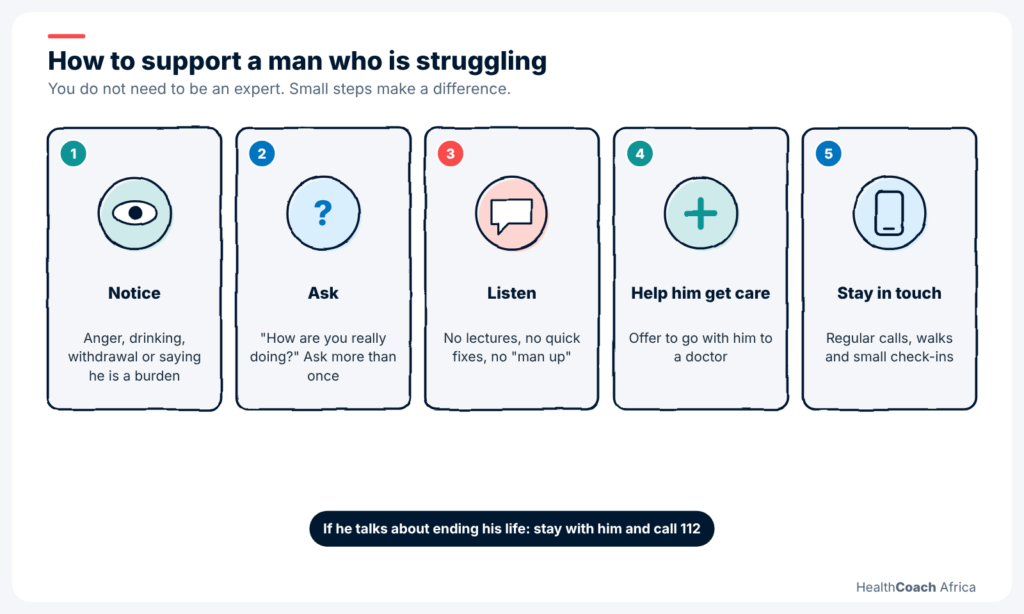
You do not need to be an expert to support someone. Ask directly how he is doing, and listen without judging or offering quick fixes. Avoid telling him to “man up” or “pray it away”. Offer to go with him to see a doctor. Small, regular acts of contact, such as a call or a walk together, matter more than you think. Learn more in our article on facts about depression.
Five-step guide for families supporting someone with depression in Nigerian men
If he talks about ending his life, stay with him and get emergency help by calling 112.
Getting help
Depression in Nigerian men is common, serious and treatable. Speaking up is a sign of strength. Start with your doctor, a psychiatric hospital or a trusted health worker. If you have been prescribed an antidepressant and have questions about side effects, interactions with alcohol or how long to take it, message a HubPharm pharmacist in confidence. You can also chat with Afiya on WhatsApp, day or night, in your own language.
Medicines and products in this article
#
Medicine or product
What to know
1
Antidepressant medicines
Prescription only
Examples include sertraline and fluoxetine. They take two to six weeks to work and should be reduced gradually, not stopped suddenly.
To order any of these, or to ask a pharmacist a question first, message HubPharm on WhatsApp or visit hubpharmafrica.com. Prescription medicines are supplied against a valid prescription.
Signs of Work Burnout: How to Recognise It and Recover Long hours, heavy traffic, financial pressure and the constant ping of work messages are part of daily life for many Nigerian workers. Over time, this pressure can lead to burnout, a state of deep exhaustion…
Diabetes in Nigeria: Why Blood Sugar Control Fails Diabetes in Nigeria does not usually fail in the clinic. Among people who reach a specialist and stay in care, control is often reasonable. It fails in the years before anyone tests you, and it…
Male Infertility in Africa: Breaking the Silence When people hear the word “infertility” in Africa, the assumption is almost always that the problem lies with women. Yet research shows that male infertility contributes to about 40–50% of all infertility cases worldwide. In…
Causes of Erectile Dysfunction: What Men Should Know Erectile dysfunction, often called ED or weak erection, is when a man regularly cannot get or keep an erection firm enough for sex. It is very common, especially after the age of 40, but many…