Tramadol and codeine are opioid medicines used to relieve pain and, in the case of codeine, to suppress coughs. Used correctly for a short time, they are helpful. However, misuse has become a serious problem in Nigeria, especially among young people, commercial drivers, artisans and students. Tramadol and codeine addiction damages health, families and futures, but recovery is possible. This guide explains the signs, the dangers and how to get help.
What tramadol and codeine are
Both medicines belong to the opioid family, the same group as morphine. They act on the brain and nervous system to reduce pain. They can also produce feelings of calm, energy or euphoria, which is why some people misuse them.
In 2018, Nigeria banned the production and import of codeine-containing cough syrups, and the drug regulator restricted high-strength tramadol. Despite this, these products are still sold illegally, often in unregistered, high-dose forms.
How dependence develops
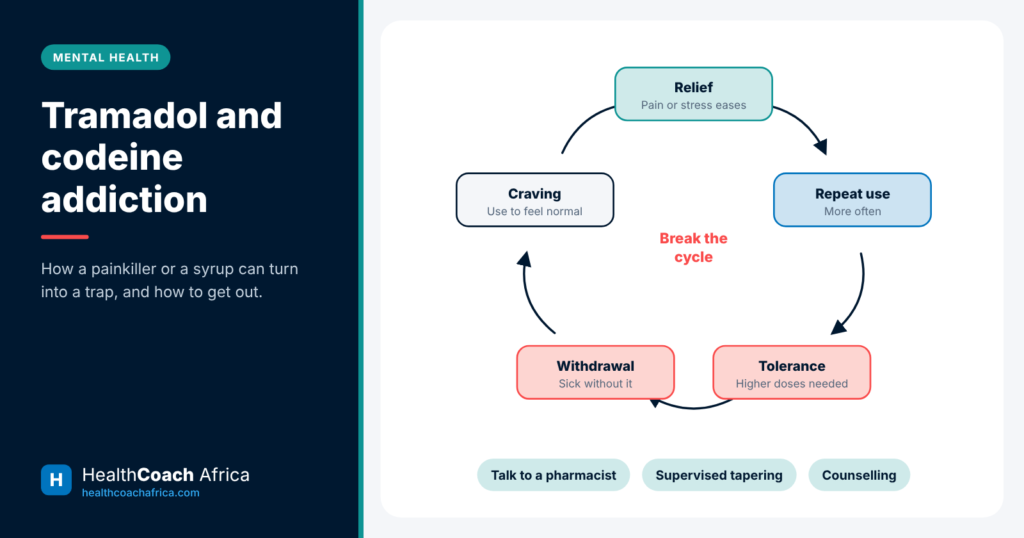
Tramadol and codeine addiction usually develops gradually:
Relief or pleasure. A person takes the drug for pain, stress, work stamina, sexual performance or fun, and likes the effect.
Regular use. They start taking it more often to feel normal or get through the day.
Tolerance. The same dose no longer works, so they take more.
Withdrawal. Without the drug, they feel unwell, anxious or restless, so they take it again to feel better.
At this stage, stopping is very difficult without help. Dependence is a medical condition, not simply a lack of willpower.
Warning signs of misuse
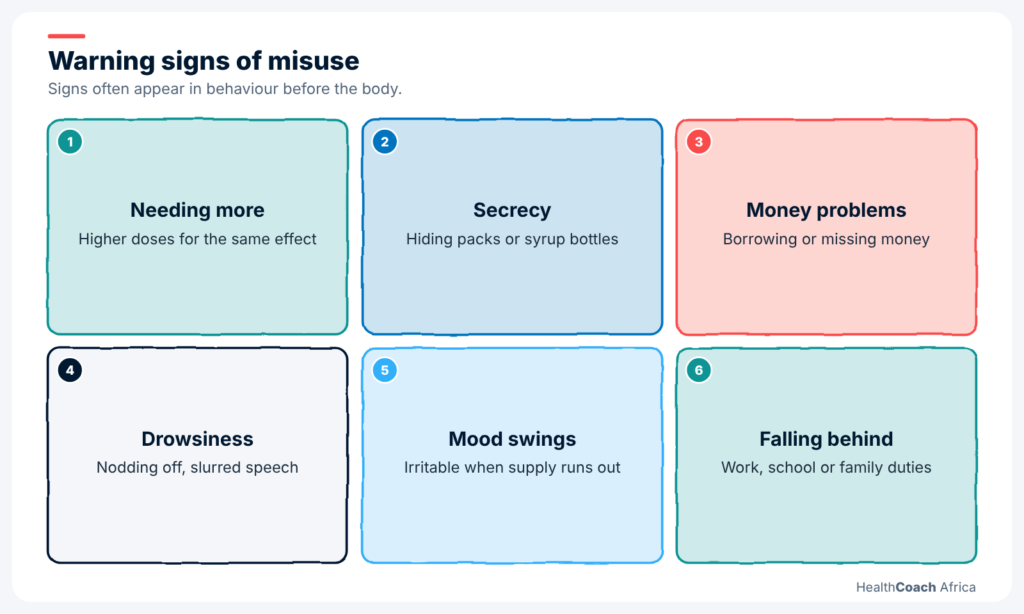
Signs that someone may be misusing tramadol or codeine include:
Taking the drug without a prescription or for longer than advised
Needing more to get the same effect
Drowsiness, slurred speech or “nodding off”
Constricted, pinpoint pupils
Mood swings, irritability or aggression
Constipation, nausea and poor appetite
Losing interest in school, work or family
Borrowing or stealing money
Hiding bottles, sachets or tablet strips
Mixing drugs with soft drinks, energy drinks or alcohol
Drug Misuse, Addiction Recovery, Youth Health
Several signs together, especially secrecy and money problems, call for a calm conversation.
Signs of withdrawal
When someone dependent on these drugs stops suddenly, they may experience:
Restlessness, anxiety and irritability
Sweating, runny nose and yawning
Muscle and bone aches
Diarrhoea, stomach cramps and vomiting
Difficulty sleeping
Strong cravings
Withdrawal is very uncomfortable but rarely life-threatening on its own. However, it often drives people back to the drug, so medical support makes a big difference.
The serious dangers
Tramadol and codeine addiction carries real risks:
Seizures. High doses of tramadol can cause fits, even in people without epilepsy.
Overdose. Too much opioid slows or stops breathing. The risk rises sharply when combined with alcohol, sleeping tablets or other sedatives.
Serotonin syndrome. Tramadol taken with certain antidepressants can cause agitation, fever, shaking and confusion.
Liver and kidney damage, especially from products that also contain paracetamol.
Mental health problems, including depression, anxiety and psychosis.
Accidents, particularly among drivers and machine operators.
Recognising an overdose
Call for emergency help immediately, using the national number 112 or the fastest transport to hospital, if someone:
Cannot be woken or is very drowsy
Has slow, shallow or no breathing
Has blue or grey lips and fingertips
Has very small pupils
Is having a seizure
Place an unconscious person on their side in the recovery position and stay with them. Naloxone 1 , a medicine that reverses opioid overdose, is used in hospitals and some emergency settings, as described by the World Health Organization.
Why people start
Understanding why people misuse these drugs helps families respond with compassion. Common reasons include:
Untreated pain 2 from injuries or hard physical work
Stress, anxiety, depression or trauma
Pressure from friends
Belief that the drug boosts energy or sexual performance
Easy access and low cost
Treating these underlying problems is part of recovery. Learn more in our article on understanding anxiety.
Tramadol and codeine addiction in the workplace
Some workers use these drugs to cope with long hours, heavy lifting or night driving. They believe the drugs give energy and reduce pain. In reality, they cause drowsiness, slow reactions and poor judgement. This leads to accidents, injuries and lost jobs. Employers can help by offering safe pain management, reasonable working hours and confidential support. Workers who need help should be encouraged to seek treatment without fear of losing their jobs.
HUBPHARM PHARMACIST’S NOTE Stopping tramadol or codeine suddenly after heavy use can trigger severe withdrawal, and with tramadol, sometimes seizures. A supervised, gradual reduction is safer. Talk privately to a HubPharm pharmacist about safer pain relief, what a tapering plan looks like and where to find a treatment centre near you. Nobody will judge you, and your conversation stays confidential.
How treatment works
Recovery from tramadol and codeine addiction usually involves:
Medical assessment of physical and mental health
Supervised withdrawal, where doses are reduced gradually and symptoms are treated
Counselling and therapy, to address the reasons for drug use and build new coping skills
Treatment of other conditions, such as depression or chronic pain
Support groups and family involvement
Follow-up to prevent relapse
Treatment is available at federal neuropsychiatric hospitals, some teaching hospitals and accredited rehabilitation centres. Avoid centres that use chains, beatings or starvation. These practices are harmful and do not work.
Tramadol and codeine addiction among young people
Teenagers and young adults are especially vulnerable. Many first try these drugs with friends, often mixed with soft drinks or energy drinks. Some believe the products are harmless because they are medicines. Parents should talk openly with young people about the risks. Know their friends and activities. Watch for warning signs such as falling grades, new friends and missing money. Early action prevents tramadol and codeine addiction from taking hold.
Recovery is possible
Many people recover from tramadol and codeine addiction and go on to live healthy, productive lives. Recovery takes time and support. It often involves rebuilding relationships, finding work and learning new ways to cope with stress. Support groups connect people with others who understand. Each day without the drug is progress.
How families can help
Stay calm and avoid shaming or threatening
Talk when the person is sober, focusing on your concern and specific behaviours
Encourage a medical assessment
Remove drugs and alcohol from the home
Support them through treatment and celebrate progress
Look after your own wellbeing too
Relapse can happen. It is a signal to adjust treatment, not a reason to give up.
Myths about tramadol and codeine addiction
“It is only a medicine, so it is safe.” Opioid medicines can cause dependence, seizures and fatal overdose when misused.
“It boosts strength and sexual performance.” Any short-term effect fades quickly. Long-term use lowers sex drive and damages health.
“People can stop whenever they choose.” Dependence changes the brain. Most people need support to stop safely.
“Rehabilitation means being locked up.” Good treatment is voluntary, respectful and based on medical care and counselling.
Using pain medicines safely
If you are prescribed tramadol or codeine, take the lowest dose for the shortest time. Never share them, and do not mix them with alcohol or sleeping tablets. Store them securely, away from children and teenagers. Return unused tablets to a pharmacy for safe disposal.
Staying well after treatment
Recovery continues long after withdrawal ends. Stress, old friends and easy access to pills can all trigger a relapse. Plan ahead for risky situations. Keep busy with work, study or skills training. Stay in touch with a counsellor or support group. A slip does not mean failure. Treat it as a signal to seek help quickly. Many people overcome tramadol and codeine addiction and rebuild their lives.
Getting help
Tramadol and codeine addiction is treatable, and asking for help is a brave first step. If you or a loved one is struggling, speak to a doctor or visit a neuropsychiatric hospital. For confidential advice on safer pain relief, tapering medicines under supervision or interactions with other drugs, message a HubPharm pharmacist. You can also talk to Afiya on WhatsApp, at any hour, without judgement.
Medicines and products in this article
#
Medicine or product
What to know
1
Naloxone
Hospital and emergency use
Reverses opioid overdose. Used by trained responders.
2
Paracetamol and anti-inflammatory gels
Over the counter
Safer first-line options for many kinds of pain.
To order any of these, or to ask a pharmacist a question first, message HubPharm on WhatsApp or visit hubpharmafrica.com. Prescription medicines are supplied against a valid prescription.
Morphine Sulfate Oral Solution 10mg/5mL: Uses,… Classification: Prescription Opioid Analgesic Drug Managing severe pain requires clear understanding and precise administration of your medication. This comprehensive Morphine oral solution guide explains how this prescription drug works, proper dosing protocols, common side effects,…
Chronic Pain Management in African Women: A… Chronic pain, characterized by persistent discomfort lasting for more than three to six months, is a global health challenge that affects millions of individuals. In the context of Africa, chronic pain poses unique considerations, and…
Lower Back Pain Relief: What Works and When to Worry Low back pain is the leading cause of disability worldwide. The World Health Organization estimates that it affected 619 million people in 2020, and almost everyone experiences it at least once. Market traders, drivers, office…
Teen Depression Warning Signs: A Guide for Parents… The teenage years bring rapid changes in the body, emotions and relationships. Mood swings, arguments and a desire for privacy are a normal part of growing up. However, some teenagers develop depression, a medical condition…