A small cut from a farm tool, a nail in the foot or a dirty wound from a motorcycle accident can seem harmless. But if tetanus germs enter the wound, they can cause a painful and often fatal disease. Tetanus cannot spread from person to person, and it is completely preventable with vaccines. Knowing tetanus symptoms and prevention steps protects adults, mothers and newborn babies. This guide explains how tetanus develops, the warning signs and how to stay protected.
What causes tetanus?
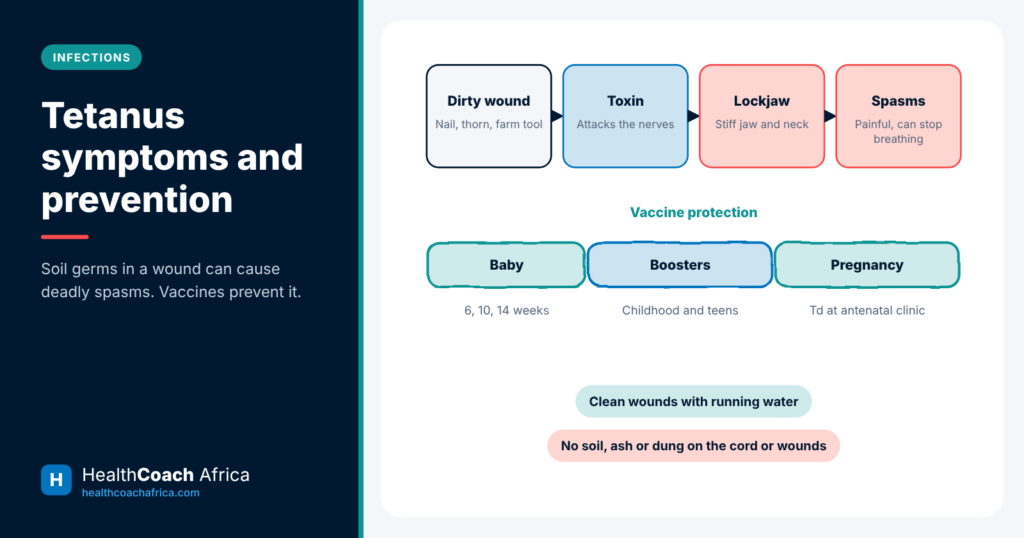
Tetanus is caused by a bacterium called Clostridium tetani. Its spores live in soil, dust and animal faeces everywhere. They can survive for years. When spores enter the body through a wound, they can grow in damaged tissue with little oxygen and release a powerful toxin. This toxin affects the nerves that control muscles.
Wounds at higher risk include:
Deep puncture wounds, such as from nails or thorns
Wounds contaminated with soil, dust or manure
Burns
Crush injuries and fractures
Animal bites
Wounds with dead tissue
Unclean injections, piercings or traditional procedures
Tetanus symptoms
Symptoms usually start between 3 and 21 days after infection, most often around 10 days. They include:
Stiffness of the jaw, often called lockjaw, making it hard to open the mouth
Difficulty swallowing
A fixed smile or raised eyebrows, caused by facial muscle spasm
Stiff neck, back and belly muscles
Painful muscle spasms, often triggered by noise, light or touch
Fever and sweating
Fast heartbeat and high blood pressure
Spasms can be strong enough to break bones and can affect the breathing muscles. Tetanus is a medical emergency.
Newborn tetanus
Newborn babies can get tetanus if the umbilical cord is cut with an unclean instrument or covered with dirty substances. Signs usually appear in the first two weeks of life. The baby stops sucking well, becomes stiff and has spasms. Newborn tetanus is often fatal.
Babies are protected when their mothers are fully vaccinated before or during pregnancy, and when delivery and cord care are clean.
Who is at higher risk?
Anyone who is not fully vaccinated can get tetanus. Higher-risk groups include:
Farmers, builders, mechanics and other workers who handle soil or tools
People injured in road accidents
People who inject drugs
Older adults who never completed vaccination
Newborns of unvaccinated mothers
Understanding tetanus symptoms and prevention is especially important for these groups.
Tetanus symptoms and prevention after childbirth
Clean delivery practices protect both mother and baby. Deliver in a health facility with trained staff where possible. Clean hands, a clean surface and a sterile blade for cutting the cord are essential. Keep the cord stump clean and dry. Do not apply dung, oil, ash or herbs to it. Mothers can also get tetanus after unsafe abortion or unclean delivery.
Treatment
Tetanus needs hospital care, often in an intensive care unit. Treatment includes:
Cleaning the wound and removing dead tissue
Tetanus immunoglobulin to neutralise1 toxin that has not yet bound to nerves
Antibiotics, such as metronidazole
Medicines to control spasms
Support with breathing if needed
A quiet, dark room to reduce triggers for spasms
Recovery can take weeks. Having tetanus does not give immunity, so survivors still need to be vaccinated.
Tetanus symptoms and prevention: vaccines
Vaccination is the most effective protection. In Nigeria:
Babies receive tetanus protection in the pentavalent vaccine at 6, 10 and 14 weeks
Older children and adults need booster doses to maintain protection, using vaccines that combine tetanus with diphtheria2
Women of childbearing age and pregnant women receive tetanus-diphtheria doses at antenatal clinics to protect themselves and their babies
According to the World Health Organization, six doses in total, three in infancy and three boosters during childhood and adolescence, give protection through adulthood. Many adults in Nigeria have not completed this schedule. If you are unsure of your status, ask a health worker.
Vaccination in pregnancy
Pregnant women who have not been fully vaccinated should receive tetanus-diphtheria vaccine during antenatal care. Two doses, at least four weeks apart, protect both mother and baby, with further doses in later pregnancies to build long-term protection. Bring your vaccination card to every antenatal visit.
Wound care
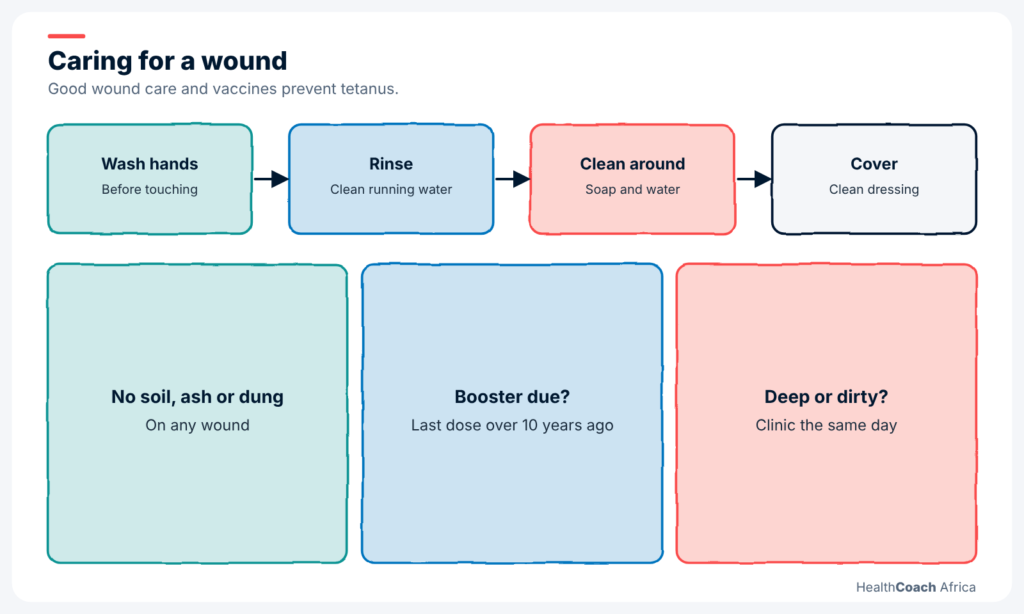
Wound care steps that support tetanus symptoms and prevention after cuts and puncture wounds
Deep, dirty wounds or an unknown vaccine history need a health worker the same day.
Good wound care lowers the risk of tetanus:
Wash your hands.
Rinse the wound well with clean running water.
Clean around it with soap and water.
Remove visible dirt carefully.
Cover with a clean dressing3.
Seek care for deep, dirty or large wounds.
Do not put soil, ash, animal dung or herbal pastes on wounds or on a baby’s umbilical cord.
HUBPHARM PHARMACIST’S NOTE
After an injury, many people are unsure whether they need a tetanus jab, or they apply herbal pastes that make infection more likely. Message a HubPharm pharmacist with a photo of the wound and your vaccination history if you know it. We will tell you whether it can be cleaned and dressed at home or needs a clinic visit for a booster or immunoglobulin, and we will deliver a well-stocked first aid kit with sterile dressings and antiseptic. Please do not wait for a deep or dirty wound.
When you need a tetanus jab after an injury
See a health worker after a wound if:
The wound is deep, dirty or caused by a rusty object, bite or burn
You have not had a tetanus booster in the last ten years
You do not know your vaccination history
You may need a booster dose and, for high-risk wounds in people who are not fully vaccinated, tetanus immunoglobulin.
Keeping your records
Keep your vaccination card, and your children’s cards, in a safe place. Write down the date of each tetanus dose. Bring the cards to clinic visits and to emergency departments after an injury. Records make it easy for health workers to decide whether a booster is needed.
Workplace safety
Employers in construction, farming and manufacturing should encourage workers to stay up to date with tetanus vaccines. Wearing boots and gloves reduces injuries. First aid kits should be available on site. Workers should learn tetanus symptoms and prevention steps and seek care for deep or dirty wounds.
Myths about tetanus
“Only rusty nails cause tetanus.” Rust itself is not the cause. Soil and dirt on any object carry the germs.
“Tetanus can be cured with herbs.” Tetanus needs urgent hospital care.
“One tetanus injection protects you for life.” Several doses and boosters are needed.
“Small wounds do not matter.” Even small wounds can lead to tetanus.
Tetanus symptoms and prevention in older adults
Many older Nigerians never received a full course of tetanus vaccines as children. They are more likely to develop severe tetanus after an injury, such as a fall in the compound or a farm wound. Encourage older relatives to ask about a booster at their next clinic visit, and to see a health worker after any deep or dirty wound.
First aid kit essentials
Keep a simple first aid kit at home, at work and in the car:
Clean water or saline for rinsing wounds
Mild antiseptic
Sterile gauze and dressings
Adhesive bandages
Gloves
Scissors and tweezers
A ready kit makes good wound care easy, which is an everyday part of tetanus symptoms and prevention.
Animal bites
Dog, cat and other animal bites carry a risk of tetanus as well as rabies. Wash the wound with soap and running water for 15 minutes and go to a health facility the same day. You may need a tetanus booster and rabies vaccines.
Booster doses for older children, adults and pregnant women.
3
Antiseptic and sterile dressings
Over the counter
For cleaning and covering small wounds.
To order any of these, or to ask a pharmacist a question first, message HubPharm on WhatsApp or visit hubpharmafrica.com. Prescription medicines are supplied against a valid prescription.
Diabetic Foot Ulcer Prevention: Protecting Your Feet… A small blister or a cut from walking barefoot seems harmless. For a person with diabetes, it can become an open wound that refuses to heal. Infection can spread quickly, and in severe cases a…
Diabetic Foot Care Tips: 8 Daily Habits That Protect… A small blister on the foot can cost a person with diabetes a leg. Researchers estimate that as many as one in three people with diabetes will develop a foot ulcer in their lifetime, and…
Diabetes in Nigeria: Why Blood Sugar Control Fails Diabetes in Nigeria does not usually fail in the clinic. Among people who reach a specialist and stay in care, control is often reasonable. It fails in the years before anyone tests you, and it…
Cholera Symptoms and Prevention: Protecting Your… Cholera outbreaks hit Nigeria almost every year, especially during the rainy season, when floods mix sewage with drinking water. Cholera can kill a healthy adult within hours through severe dehydration. Yet most deaths are preventable…