A small blister or a cut from walking barefoot seems harmless. For a person with diabetes, it can become an open wound that refuses to heal. Infection can spread quickly, and in severe cases a toe, foot or leg may need to be removed. Most of these amputations begin with a foot ulcer that could have been prevented. This guide explains why diabetic feet are at risk and sets out simple, daily steps for diabetic foot ulcer prevention.
Why diabetes puts your feet at risk
Diabetes affects the feet in two main ways.
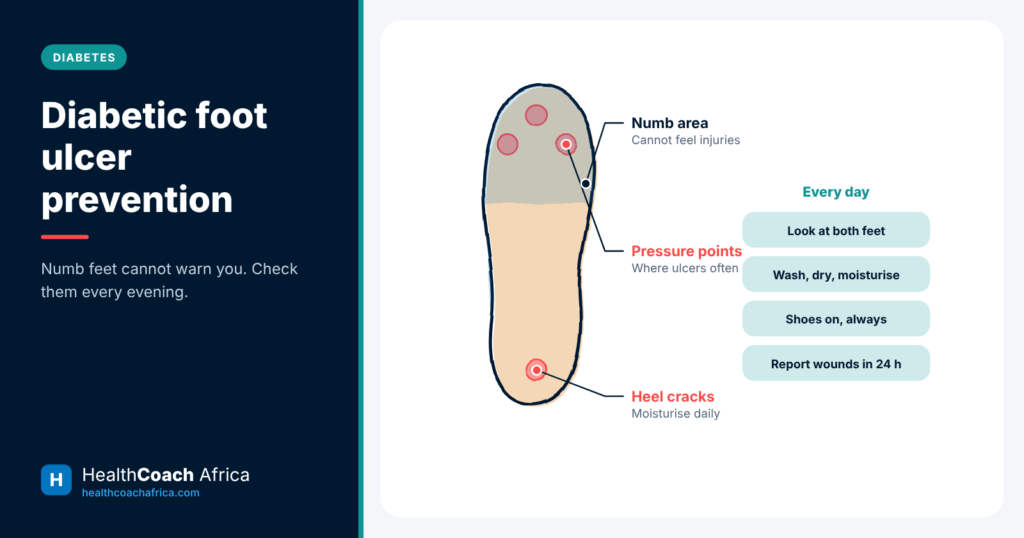
Nerve damage (neuropathy): high blood sugar damages the nerves in the feet. You may not feel pain from a stone in your shoe, a burn or a blister. Injuries go unnoticed and get worse.
Poor circulation: diabetes narrows the blood vessels in the legs. Less blood reaches the feet, so wounds heal slowly and infections are harder to fight.
Nerve damage can also change the shape of the foot, creating pressure points where ulcers form. Dry, cracked skin lets germs enter.
Who is at highest risk?
Your risk of a foot ulcer is higher if you:
Have had diabetes for many years
Have high blood sugar most of the time
Have numb, tingling or burning feet
Have had a foot ulcer or amputation before
Smoke
Have kidney disease or poor eyesight
Have corns, calluses or a change in foot shape
People with a previous ulcer are at very high risk of another. They need the most careful daily care.
Diabetic foot ulcer prevention: check your feet every day
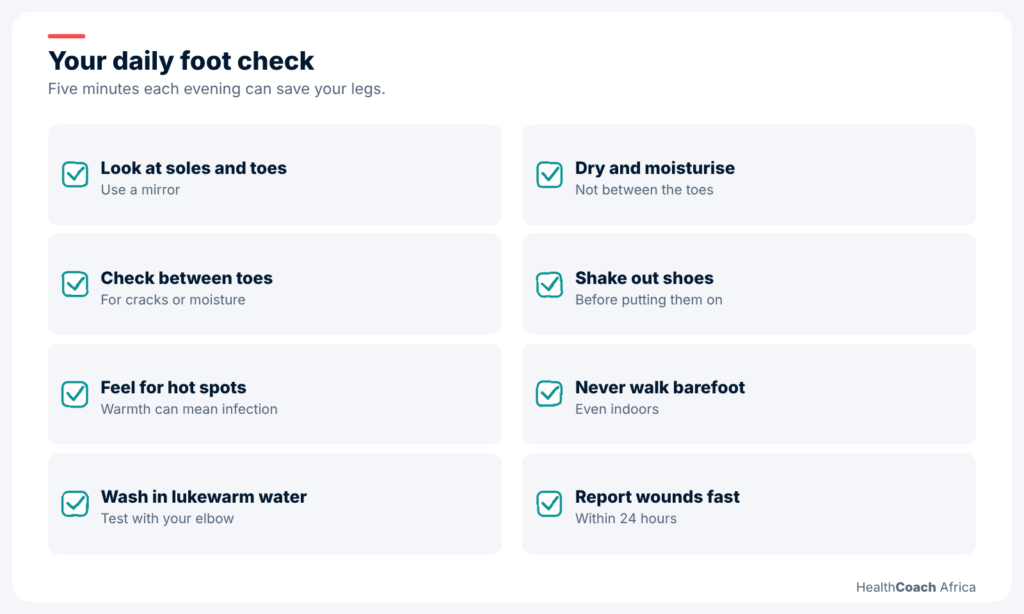
Daily checklist for diabetic foot ulcer prevention, from checking soles to choosing safe shoes
Report any new wound to a health worker within 24 hours.
Daily checks are the most important habit for diabetic foot ulcer prevention. Each evening:
Sit in good light.
Look at the top and bottom of each foot and between every toe.
Use a mirror for the soles, or ask a family member to help.
Look for cuts, blisters, redness, swelling, cracks, colour changes or discharge.
Feel for areas that are hotter than the rest of the foot.
Report any new problem to a health worker within 24 hours. Do not wait to see whether it heals.
Wash and moisturise
Wash your feet daily with lukewarm water and mild soap.
Test the water with your elbow first, because numb feet cannot sense heat.
Do not soak your feet for long, as this softens the skin.
Dry carefully, especially between the toes.
Apply moisturiser1 to the tops and soles, but not between the toes, where moisture encourages fungal infection.
HUBPHARM PHARMACIST’S NOTE
Dry, cracked heels are an easy entry point for germs, and many people with diabetes use harsh scrubs, razor blades or acid corn plasters that injure numb skin. Ask a HubPharm pharmacist for a diabetic foot-care pack with a gentle moisturiser, soft seamless socks, a nail file and sterile dressings. Send us a clear photo if you notice a new blister or crack, and we will tell you whether it can be dressed at home or needs a clinic the same day. We never recommend cutting corns at home.
Never walk barefoot
Walking barefoot is one of the main causes of foot injuries in Nigeria. Hot sand, stones, glass and thorns can injure numb feet without any pain. Wear footwear at all times, including inside the house, in the compound and at the beach. Choose soft indoor slippers with a back and a firm sole.
Avoid placing your feet near fires, hot water bottles or hot car floors.
Choosing safe footwear
Shoes are a key part of diabetic foot ulcer prevention. Choose shoes that:
Are wide and deep enough for your toes
Have soft linings without rough seams
Fasten with laces or straps so the foot does not slide
Have cushioned, firm soles
Avoid pointed shoes, high heels and slippers held only by a strap between the toes. Buy shoes in the afternoon, when feet are slightly larger. Wear new shoes for short periods at first. Always check inside shoes for stones before putting them on. Wear clean, soft socks without tight elastic.
Nail care and corns
Cut toenails straight across, not too short, and smooth the edges with a file.
If you cannot see or reach your feet well, ask a trained health worker or family member to help.
Never cut corns or calluses yourself with razor blades.
Do not use corn plasters or acid treatments, which can burn the skin.
A podiatrist or diabetes nurse can safely treat corns and thick nails.
Control the root causes
Good overall diabetes care protects your feet:
Keep blood sugar as close to target as possible
Control blood pressure and cholesterol
Stop smoking, which severely reduces blood flow to the feet
Stay active with walking, in well-fitting shoes, to improve circulation
Take medicines as prescribed
Diabetic foot ulcer prevention at work, church and mosque
Many people remove shoes during prayer, at home or when visiting relatives. If you must remove your shoes, avoid walking long distances barefoot and check your feet afterwards. Keep clean socks on where possible. On long journeys, stop regularly to stretch and move your feet. Traders who stand for long hours should wear supportive shoes and rest their feet during the day.
Caring for a foot ulcer
If you already have an ulcer, follow your health worker’s plan closely. The wound needs regular cleaning and the right dressing2. Taking pressure off the ulcer is essential, so you may be given special shoes, a cast or crutches. Keep blood sugar well controlled to help healing. Never apply herbal pastes or powders to an open wound. Attend every dressing appointment.
Danger signs that need urgent care
See a health worker the same day if you notice:
A wound, blister or cut that does not improve within a day or two
Redness, warmth or swelling spreading up the foot or leg
Pus or a bad smell
Black or blue skin on a toe or the foot
Fever with a foot wound
A sudden change in foot shape or swelling
Infections in diabetic feet can spread very quickly. Early antibiotic treatment, cleaning of the wound and taking pressure off the foot can save the limb.
Annual foot checks
Ask your doctor or nurse to check your feet at least once a year. They will test sensation using a thin nylon filament, check your pulses and look at your skin, nails and footwear. People at higher risk need more frequent checks. Ask what your risk level is and how often you should be seen.
How families can help
Family members play an important role in diabetic foot ulcer prevention. They can check the feet of older relatives or those with poor eyesight, help cut toenails safely and remind them to wear shoes. They can also watch for wounds, swelling or a bad smell and take the person to a clinic quickly. A short daily foot check together can become a simple family routine.
Myths about diabetic feet
“If it does not hurt, it is not serious.” Nerve damage hides pain. Look every day.
“Herbal pastes heal wounds faster.” Unclean pastes can cause infection. Seek medical wound care.
“Hot water improves circulation.” Hot water can burn numb feet.
“Amputation cannot be prevented.” Most amputations start with a preventable ulcer.
Questions to ask at your foot check
What is my foot risk level?
Can I feel the test filament on every part of my feet?
To order any of these, or to ask a pharmacist a question first, message HubPharm on WhatsApp or visit hubpharmafrica.com. Prescription medicines are supplied against a valid prescription.
International Working Group on the Diabetic Foot. IWGDF guidelines on the prevention and management of diabetes-related foot disease. 2023. https://iwgdfguidelines.org/guidelines-2023/
Diabetic Nerve Pain Relief: Easing Burning Feet and Tingling Many people with diabetes develop nerve damage, especially in the feet and legs. For some, it causes numbness. For others, it causes burning, tingling or stabbing pain that is worse at night and makes sleep…
Diabetic Foot Care Tips: 8 Daily Habits That Protect… A small blister on the foot can cost a person with diabetes a leg. Researchers estimate that as many as one in three people with diabetes will develop a foot ulcer in their lifetime, and…
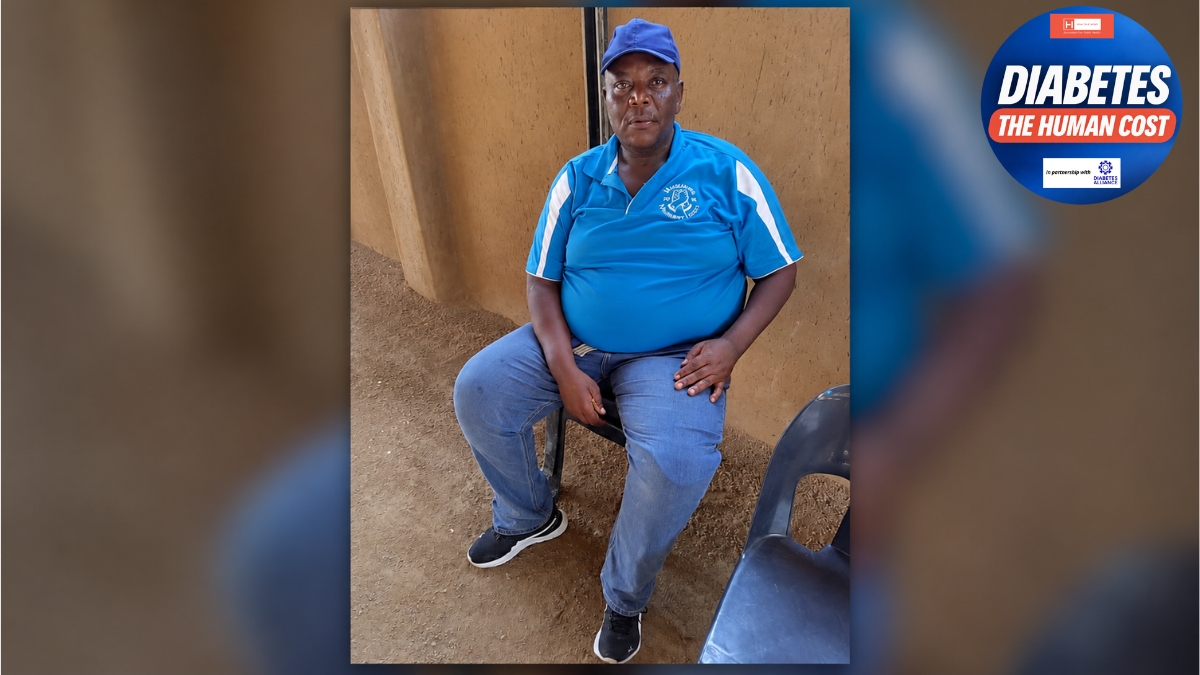
From Suspected Witchcraft to Amputation: Diabetic… PRETORIA, SOUTH AFRICA A man from Klipgat near Mabopane lost his left leg after a diabetic foot ulcer amputation followed months of traditional treatment for what he believed was sefola, a non-healing wound some attribute…
Diabetic Eye Disease Signs: Protecting Your Sight… Diabetes is one of the leading causes of preventable blindness in working-age adults. High blood sugar slowly damages the tiny blood vessels at the back of the eye, often for years before any change in…