Diabetes is one of the leading causes of preventable blindness in working-age adults. High blood sugar slowly damages the tiny blood vessels at the back of the eye, often for years before any change in vision. By the time sight is affected, the damage may be advanced. Knowing the diabetic eye disease signs, and having regular eye checks, can protect your sight for life.
How diabetes affects the eyes
The retina is the light-sensitive layer at the back of the eye. It works like the film in a camera and sends images to the brain. It has many tiny blood vessels. Over time, high blood sugar, high blood pressure and high cholesterol damage these vessels. They may leak, become blocked or grow abnormally.
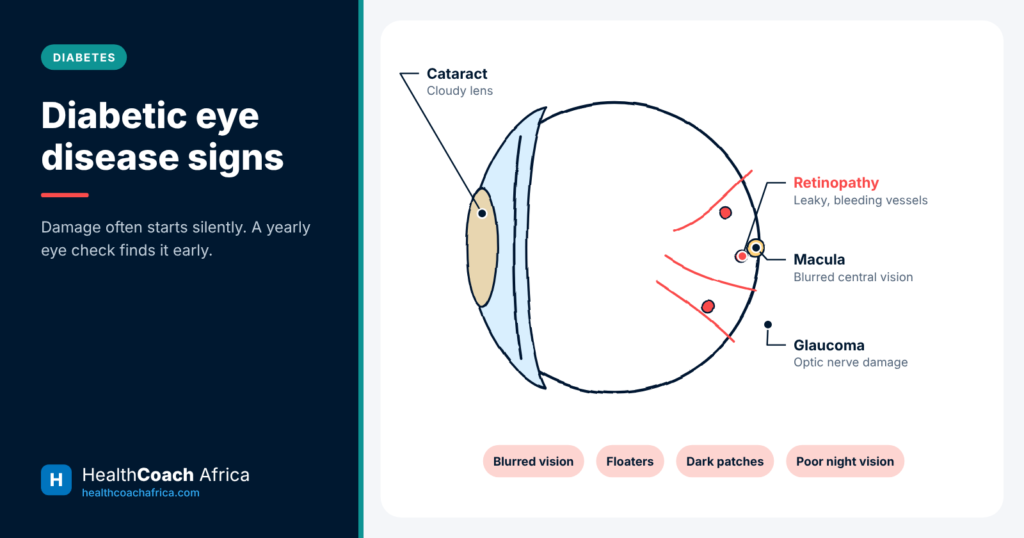
Diabetes also raises the risk of cataract, a clouding of the lens, and glaucoma, a condition that damages the optic nerve.
Diabetic retinopathy
Diabetic retinopathy is the most common diabetic eye disease. It develops in stages:
Background retinopathy: small bulges and leaks in the blood vessels. Vision is usually normal.
Pre-proliferative retinopathy: more severe changes, with areas of the retina not getting enough blood.
Proliferative retinopathy: new, fragile blood vessels grow and can bleed into the eye or pull on the retina, causing sudden vision loss.
Diabetic macular oedema
The macula is the central part of the retina that gives sharp vision for reading, recognising faces and driving. Fluid can leak into the macula and cause swelling, called macular oedema. This blurs central vision and is a common cause of sight loss in people with diabetes.
Why early damage is silent
In the early stages of diabetic eye disease, there is no pain and vision is often perfect. Many people feel they do not need an eye check because they see well. This is a dangerous mistake. Only an eye examination with dilated pupils or retinal photographs can detect early damage, when treatment works best.
Diabetic eye disease signs to watch for
See an eye doctor promptly if you notice:
Blurred or fluctuating vision
Dark spots or “floaters” drifting across your vision
Dark or empty areas in your vision
Difficulty seeing at night
Straight lines that look wavy
Faded colours
A sudden loss of vision in one eye, which is an emergency
These diabetic eye disease signs often mean the damage is already significant. Do not wait for them before having a check.
Diabetic eye disease signs in pregnancy
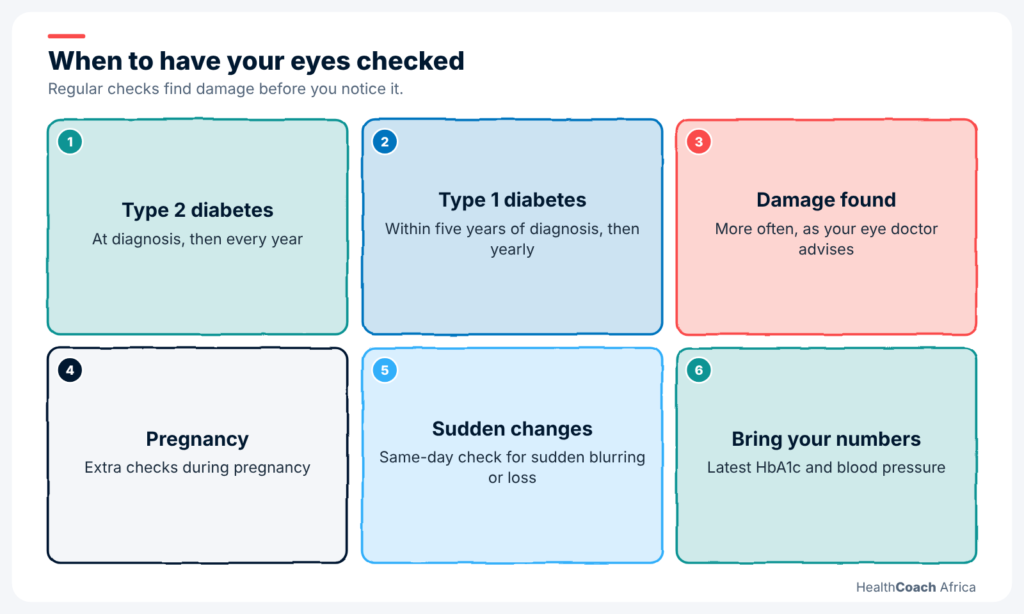
Pregnancy can make diabetic retinopathy worse, especially if blood sugar was high before conception or falls very quickly once treatment is tightened. Women with diabetes should have an eye check before pregnancy or as soon as they find out they are pregnant. Further checks are usually needed during pregnancy. Report any new diabetic eye disease signs, such as blurred vision, straight away.
Cataract and glaucoma
People with diabetes tend to develop cataracts at a younger age. A cataract makes vision cloudy, faded or glary, especially at night. It is treated with a short operation that replaces the cloudy lens with a clear artificial one.
Glaucoma damages the optic nerve, often because of raised pressure inside the eye. It usually causes no symptoms until side vision is lost. Regular eye checks measure eye pressure and look at the optic nerve. Treatment with eye drops, laser or surgery can prevent further loss.
Who is most at risk?
Anyone with diabetes can develop eye disease. The risk is higher if you:
Have had diabetes for many years
Have poorly controlled blood sugar
Have high blood pressure or high cholesterol
Have kidney disease
Are pregnant
Smoke
People with type 1 diabetes and type 2 diabetes are both at risk. Many people with type 2 diabetes already have eye changes when they are first diagnosed.
How often to have an eye check
Most adults with diabetes should have a full eye examination at least once a year. Your eye doctor may recommend more frequent checks if changes are found. Women with diabetes who become pregnant need closer monitoring, because pregnancy can speed up retinopathy.
The examination is painless. Drops are put in the eyes to widen the pupils, and the doctor looks at the retina with a special lamp or takes photographs. Your vision may be blurry for a few hours afterwards, so do not drive yourself home.
HUBPHARM PHARMACIST’S NOTE Some eye drops for glaucoma must be used at exact times, and some blood pressure tablets work best taken at night. Getting the timing right protects your eyes. Send your eye and diabetes prescriptions to a HubPharm pharmacist and we will put every drop and tablet into one easy daily schedule.
Eye check schedule to catch diabetic eye disease signs early
Ask your doctor to refer you if you have never had a dilated eye check.
Protecting your eyes every day
You can lower your risk of diabetic eye disease by:
Keeping blood sugar in your target range
Controlling blood pressure and cholesterol
Taking diabetes and blood pressure medicines as prescribed 1
At your appointment, the nurse will check how well you can read letters on a chart. Drops will widen your pupils. This takes about 20 to 30 minutes and may sting briefly. The doctor will examine the back of your eye or take photographs. You may be told your results the same day. If changes are found, the doctor will explain how often you need to return. Bring sunglasses, because bright light can be uncomfortable afterwards.
Treatments that save sight
When diabetic eye disease is found, treatment can slow or stop it:
Laser treatment seals leaking vessels or shrinks abnormal new vessels
Eye injections of medicines that reduce swelling and stop new vessel growth, given at regular intervals
Surgery, called vitrectomy, to remove blood or scar tissue from inside the eye
Cataract surgery to replace a cloudy lens
These treatments work best when started early. They usually protect remaining sight but cannot always restore what has been lost.
Questions to ask your eye doctor
Do I have any signs of diabetic eye disease?
How often should I have my eyes checked?
Do I need treatment now?
What symptoms should make me come back sooner?
Is it safe for me to drive?
Write down the answers. Share them with your diabetes doctor, so that your care is joined up. Recognising diabetic eye disease signs early, and acting on them, is the best way to keep your sight.
Avoid unproven eye remedies
Never put herbal drops, breast milk, urine or other home remedies into the eyes. These can cause serious infections and blindness. Only use eye drops prescribed 2 by a qualified eye doctor or recommended by a pharmacist.
Diabetic eye disease and daily life
Living with reduced vision can be challenging. Low-vision aids, good lighting, large-print labels and phone accessibility settings can help. Tell your family and employer what support you need. Keep driving only if your eye doctor confirms your vision meets the legal standard.
Myths about diabetes and the eyes
“If I can see well, my eyes are healthy.” Early diabetic eye disease causes no change in vision.
“Glasses will fix diabetic eye problems.” Glasses correct focusing problems, not damage to the retina.
“Eye injections are dangerous.” They are done under sterile conditions with numbing drops, and serious problems are rare.
“Laser treatment makes you blind.” Laser protects remaining sight. Untreated disease is far more dangerous.
Getting help
If you have diabetes, book an eye examination this year, even if your vision seems fine. Report any diabetic eye disease signs immediately. The NHS guide to diabetic retinopathy has more information.For help with diabetes and blood pressure medicines, glucose meters or prescribed eye drops, message a HubPharm pharmacist or ask Afiya on WhatsApp.
Medicines and products in this article
#
Medicine or product
What to know
1
Blood pressure medicines
Prescription only
Good blood pressure control slows diabetic eye damage.
2
Glaucoma eye drops
Prescription only
Lower eye pressure. Use exactly as prescribed, one drop at a time.
To order any of these, or to ask a pharmacist a question first, message HubPharm on WhatsApp or visit hubpharmafrica.com. Prescription medicines are supplied against a valid prescription.
Causes of Erectile Dysfunction: What Men Should Know Erectile dysfunction, often called ED or weak erection, is when a man regularly cannot get or keep an erection firm enough for sex. It is very common, especially after the age of 40, but many…
Nigeria Targets 25,000 Subsidised Cataract Surgeries… ABUJA, NIGERIA — Nigeria will provide 5 million reading spectacles and 25,000 fully subsidised cataract surgeries by 2027 under a new Nigeria eye care plan, the Minister of State for Health and Social Welfare, Iziaq…
Diabetic Foot Care Tips: 8 Daily Habits That Protect… A small blister on the foot can cost a person with diabetes a leg. Researchers estimate that as many as one in three people with diabetes will develop a foot ulcer in their lifetime, and…
Childhood Type 1 Diabetes: A Guide for Nigerian Families Many people think diabetes only affects older, overweight adults. However, children can develop diabetes too, and most children with diabetes have type 1. In Nigeria, childhood type 1 diabetes is often missed until the child…