Many people think diabetes only affects older, overweight adults. However, children can develop diabetes too, and most children with diabetes have type 1. In Nigeria, childhood type 1 diabetes is often missed until the child is seriously ill, because its early signs look like malaria, typhoid or worms. With early diagnosis, insulin and good daily care, children with type 1 diabetes can grow, learn, play and thrive. This guide explains what parents need to know.
What type 1 diabetes is
In type 1 diabetes, the body’s immune system attacks the cells in the pancreas that make insulin. Insulin is the hormone 1 that moves sugar from the blood into the body’s cells for energy. Without insulin, sugar builds up in the blood while the cells starve.
Type 1 diabetes is not caused by eating too much sugar, and it is not caused by anything the parents did. It is not contagious. It can start at any age, but it often appears in childhood or the teenage years.
How it differs from type 2 diabetes
Type 2 diabetes is more common in adults and is linked to excess weight and inactivity. The body still makes insulin but cannot use it well. It can often be treated with tablets at first.
Type 1 diabetes is different. The body makes little or no insulin, so insulin injections are needed from the start and for life. Tablets for type 2 diabetes do not work for type 1.
The four warning signs
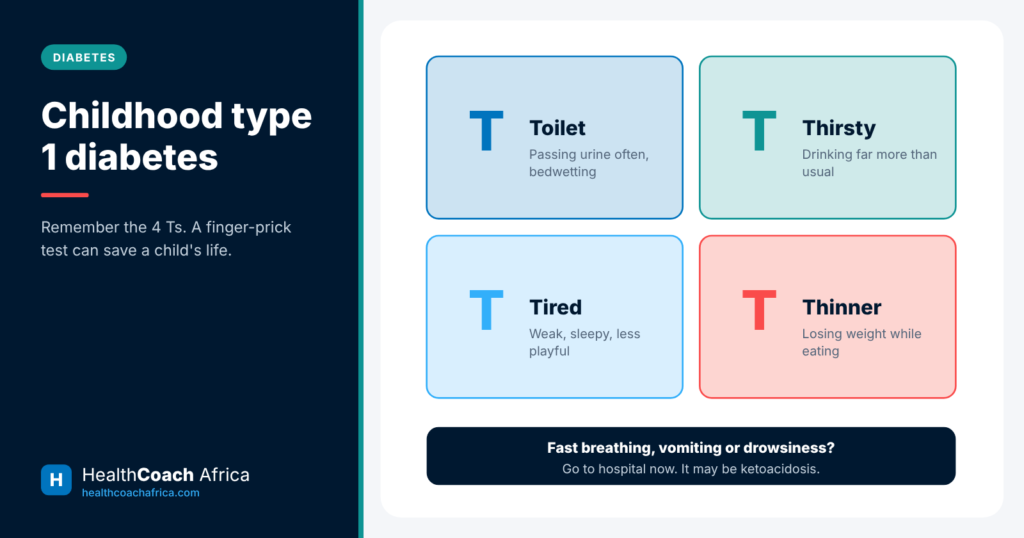
Remember the four Ts of childhood type 1 diabetes:
Toilet: passing urine more often, including at night, or bedwetting in a child who was dry
Thirsty: drinking much more than usual and still feeling thirsty
Tired: unusual tiredness, weakness or lack of energy
Thinner: losing weight even though the child is eating normally or more
Other signs include blurred vision, irritability, repeated skin infections and thrush.
Why it is often missed in Nigeria
Many children with childhood type 1 diabetes first receive treatment for malaria, typhoid or a stomach infection. Their tiredness, weight loss and vomiting are blamed on common illnesses. Bedwetting may be punished. Weeks pass, and the child becomes very sick.
A simple finger-prick blood sugar test can detect diabetes in minutes. If a child has any of the four Ts, ask the health worker to check the blood sugar.
Diabetic ketoacidosis: an emergency
When there is no insulin, the body burns fat for energy and produces acids called ketones. These build up in the blood and cause diabetic ketoacidosis, or DKA. Many children are first diagnosed with diabetes when they arrive in hospital with DKA.
Signs of DKA include:
Vomiting and abdominal pain
Deep, rapid breathing
A fruity or nail-polish smell on the breath
Drowsiness or confusion
Dehydration
DKA can kill if not treated quickly. Take the child to hospital immediately.
How it is diagnosed
The doctor will measure blood sugar and check for ketones in the blood or urine. An HbA1c test shows the average blood sugar over recent months. Other blood tests may confirm type 1 diabetes. Once diagnosed, the child usually spends a few days in hospital while the family learns how to manage insulin and blood sugar checks.
Insulin: the life-saving treatment
Children with type 1 diabetes need insulin every day. It is given by injection with a syringe or a pen, usually several times a day. Common plans combine:
Long-acting insulin, given once or twice a day to cover the body’s background needs
Rapid- or short-acting insulin, given before meals to cover the food eaten
Some families use premixed insulin twice a day. The doctor will choose a plan that suits the child and the family’s routine. Never stop insulin, even when the child is ill or not eating, without medical advice.
Checking blood sugar
Regular blood sugar checks with a glucose meter 2 show whether the insulin dose is right. Most children check before meals and at bedtime, and sometimes during the night. Write each reading in a logbook or app and bring it to every clinic visit. Continuous glucose monitors, small sensors worn on the skin, are available in some private settings.
HUBPHARM PHARMACIST’S NOTE Insulin loses strength when it gets hot, and many Nigerian homes lose power for hours. A clay pot cooler or an insulated bag with cool packs keeps the pen in use safe. Ask HubPharm about a school and home insulin kit: a cool bag, glucose tablets 3 , a spare meter and a simple low-sugar card for teachers.
Recognising and treating low blood sugar
Low blood sugar, or hypoglycaemia, happens when there is too much insulin and not enough food, or after extra activity. Signs include shaking, sweating, paleness, hunger, crankiness, confusion and, in severe cases, seizures.
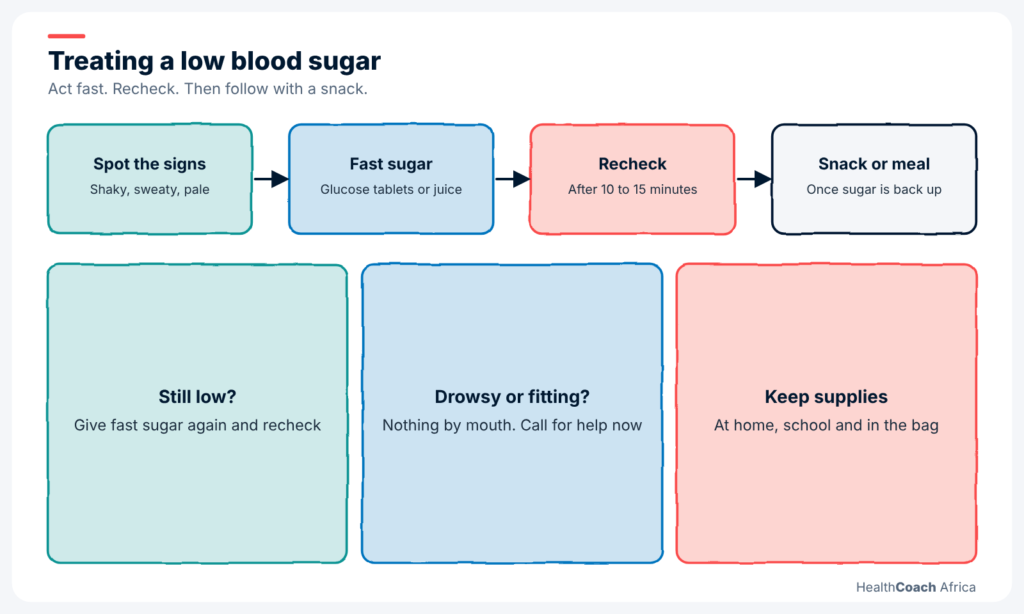
If the child is awake and can swallow, give a fast sugar source such as a small glass of juice or soft drink, or glucose tablets. Recheck after 15 minutes. Once the level is back up, give a snack such as bread or biscuits. If the child is unconscious, do not put anything in the mouth. Place them on their side and get emergency help.
Recognising and treating low blood sugar” section. Alt text: Steps to treat low blood sugar in childhood type 1 diabetes, from fast sugar to recheck
Agree the exact amounts with your child’s diabetes team and share them with the school.
Food and activity
Children with type 1 diabetes can eat the same healthy meals as the rest of the family. Regular meals and snacks, matched to insulin, help keep blood sugar stable. Limit sugary drinks, except when treating a low. Physical activity is good for children with diabetes. Check blood sugar before sport and carry a snack.
Sick-day rules
Illness can raise blood sugar even when the child is not eating. During illness:
Keep giving insulin
Check blood sugar more often
Check for ketones if possible
Give plenty of fluids
Seek medical help early if the child is vomiting, drowsy or breathing fast
Diabetes at school
Teachers need to know about the child’s diabetes. Share a simple plan that covers snacks, insulin timing, blood sugar checks and how to treat a low. Make sure the child can eat when needed and use the toilet freely. Children should not be excluded from sport or trips because of diabetes.
Childhood type 1 diabetes and growing up
Needs change as children grow. Toddlers cannot say when they feel low, so parents must watch closely for crankiness, paleness or sleepiness. School-age children can learn to recognise their own symptoms and help with checks. Teenagers face new challenges. Growth hormones raise insulin needs. Exams, sport, parties and the wish to fit in can make routines harder. Some teenagers skip doses to avoid standing out.
Talk openly with your child at every stage. Praise effort rather than perfect numbers. Give them more responsibility step by step, while staying involved. Childhood type 1 diabetes is a family journey, and good habits built early last a lifetime.
Costs and reliable supplies
Insulin, test strips, needles and clinic visits add up. Ask your diabetes clinic about support programmes for children. Some hospitals and international partners help families with insulin and testing supplies. Plan refills before you run out. Never ration insulin to save money, because missed doses can lead to DKA within days. Keep a small reserve at home, stored correctly.
Emotional support for the family
A diagnosis of childhood type 1 diabetes can feel overwhelming. Parents may feel guilty or afraid. Children may feel different from their friends. Support from diabetes nurses, other families and counsellors helps. As children grow, they can gradually take on more of their own care.
Long-term health
Good control from childhood protects the eyes, kidneys, nerves and heart later in life. Your child should have regular checks of HbA1c, height, weight, blood pressure, thyroid function and, as they grow older, eyes and kidneys. With modern treatment, children with childhood type 1 diabetes can expect to live long and full lives.
Life-saving for type 1 diabetes. Unopened pens in the fridge, the pen in use at room temperature.
2
Glucose meter and test strips
Over the counter
For checks before meals, at bedtime and when the child feels unwell.
3
Glucose tablets
Over the counter
Fast treatment for low blood sugar. Keep some at home and at school.
To order any of these, or to ask a pharmacist a question first, message HubPharm on WhatsApp or visit hubpharmafrica.com. Prescription medicines are supplied against a valid prescription.
Insulin Injection Technique Tips: Getting Every Dose Right Insulin is a life-saving medicine for people with type 1 diabetes and many people with type 2 diabetes. Yet the way insulin is injected can make a big difference to how well it works. Poor…
Malaria and Typhoid Fever: How to Tell Them Apart… "You have malaria and typhoid." It is one of the most common diagnoses given in Nigeria, and millions of people are treated for both at the same time. Yet malaria and typhoid fever are two…
Childhood Cancer Warning Signs: Early Action Saves… Cancer in children is less common than in adults, but it is a leading cause of death in children worldwide. In high-income countries, more than eight in ten children with cancer survive. In low- and…
Malaria Vaccine for Children: A Guide for Nigerian Parents For generations, Nigerian parents have relied on nets, drugs and prayer to protect their children from malaria. Now there is another tool. In December 2024, Nigeria introduced a malaria vaccine into its routine childhood immunisation…