Many people with diabetes develop nerve damage, especially in the feet and legs. For some, it causes numbness. For others, it causes burning, tingling or stabbing pain that is worse at night and makes sleep difficult. This pain can affect mood, work and quality of life. Effective diabetic nerve pain relief is possible with the right medicines, good blood sugar control and daily care.
What causes diabetic nerve pain
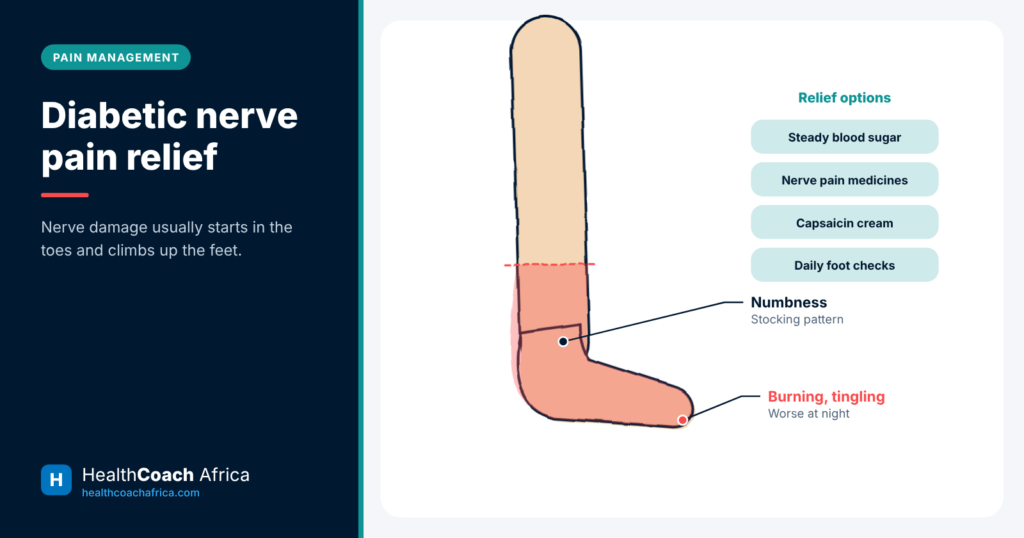
Over time, high blood sugar damages the nerves and the small blood vessels that supply them. This is called diabetic neuropathy. It most often affects the longest nerves first, which supply the feet. As it progresses, it can spread to the legs and hands.
Diabetic nerve pain relief: who is most at risk?
The risk of nerve damage rises with:
Many years of diabetes
High blood sugar over time
High blood pressure and cholesterol
Smoking
Heavy alcohol use
Kidney disease
Being overweight
Not everyone with neuropathy has pain. But anyone with these risk factors should have their feet checked at least once a year. Early checks support early diabetic nerve pain relief.
Common symptoms
Burning, tingling or “pins and needles” in the feet
Sharp, stabbing or electric shock-like pains
Pain that is worse at night
Extreme sensitivity to touch, so that even bed sheets hurt
Numbness or reduced feeling
Muscle weakness and loss of balance
Some people have both pain and numbness at the same time.
Why numbness is dangerous
When feeling is reduced, injuries to the feet may go unnoticed. A small cut, blister or burn can develop into an ulcer or infection. This is one of the main reasons for amputations in people with diabetes. Learn more about protecting your feet in our guide to preventing diabetes complications.
Diabetic nerve pain relief: what to expect
Nerve pain medicines rarely remove pain completely. A good result is a significant reduction, better sleep and improved daily activity. It may take a few weeks and dose adjustments to find the right medicine. Keep a simple pain diary, rating your pain from 0 to 10 each day. Share it with your doctor. This helps judge whether treatment is working.
Getting the diagnosis right
Your doctor will ask about your symptoms and examine your feet, testing sensation with a soft filament, a tuning fork and other simple tools. Blood tests can check for other causes of nerve damage, such as vitamin B12 deficiency, thyroid problems, kidney disease, heavy alcohol use and HIV. Metformin, a common diabetes medicine, can lower vitamin B12 levels after long-term use.
Blood sugar control comes first
Keeping blood sugar in your target range slows nerve damage and may reduce pain over time. Controlling blood pressure and cholesterol, stopping smoking and limiting alcohol also protect the nerves.
Taking nerve pain medicines safely
Start low and increase slowly, as prescribed
Take them at the same time each day
Do not stop suddenly, especially pregabalin and gabapentin
Avoid alcohol, which increases drowsiness
Be careful when driving until you know how the medicine affects you
Tell your doctor about any mood changes
Ask a pharmacist about interactions with your other medicines
Medicines for diabetic nerve pain relief
Ordinary painkillers such as paracetamol and ibuprofen often do not work well for nerve pain. Medicines that act on the nervous system are usually more effective:
Amitriptyline, 1 taken at a low dose at night. It can cause drowsiness and dry mouth.
Duloxetine, 2 taken daily. It can cause nausea at first.
Pregabalin or gabapentin, 3 which can cause dizziness and drowsiness.
These medicines are started at a low dose and increased slowly. They may take several weeks to work fully. If one does not help or causes side effects, another may be tried.
Topical treatments
Capsaicin cream 4 , made from chilli peppers, can help some people with localised pain. It may sting at first. A plaster containing lidocaine, a local anaesthetic, is used in some places.
HUBPHARM PHARMACIST’S NOTE Nerve pain medicines such as pregabalin, gabapentin and amitriptyline cause drowsiness and must be increased slowly, and stopping suddenly can cause withdrawal. Send your prescription to a HubPharm pharmacist. We will build a step-by-step dosing plan, check interactions with your diabetes tablets, and arrange vitamin B12 and foot-care supplies.
Avoid long-term opioids
Strong painkillers such as tramadol and morphine are not recommended for long-term nerve pain because of the risks of dependence, falls and other side effects. They may be used briefly in some situations under medical supervision.
Other types of diabetic nerve damage
Diabetes can also affect nerves that control internal organs. This can cause dizziness when standing, digestive problems such as bloating and constipation, bladder problems, erection difficulties and changes in sweating. Tell your doctor about any of these symptoms. Treatment is available.
Daily foot care
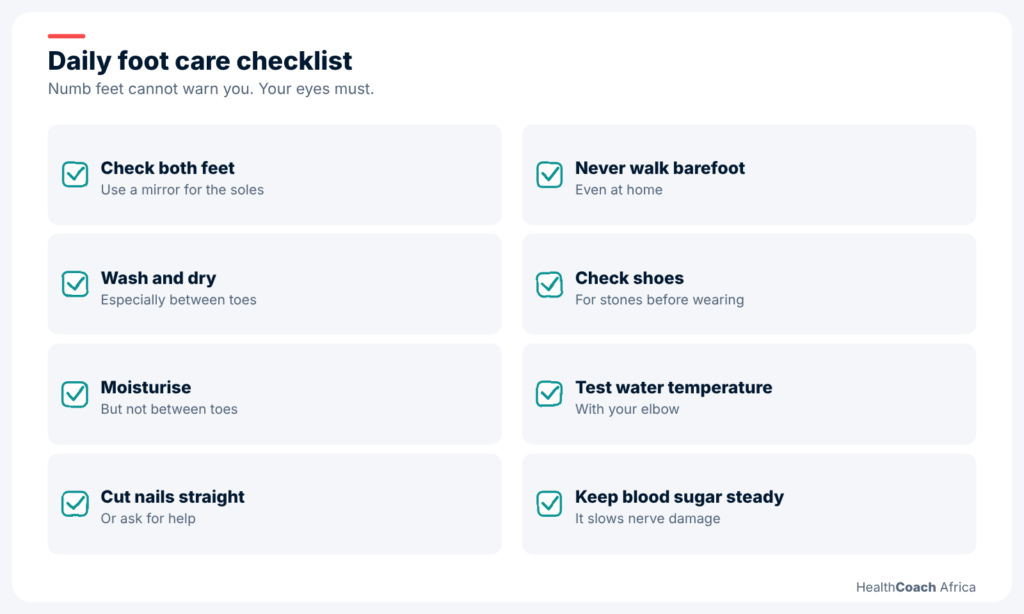
Check your feet every day for cuts, blisters, redness or swelling
Wash and dry your feet carefully, especially between the toes
Moisturise dry skin, but not between the toes
Wear well-fitting shoes and socks, and never walk barefoot
Check the inside of shoes for stones or rough areas
Test bath water with your elbow, not your feet
Avoid hot water bottles and heating pads on numb feet
See a health worker promptly for any foot wound
Daily foot care checklist to support diabetic nerve pain relief
Report any cut, blister or colour change to your health worker quickly.
Improving sleep
Nerve pain is often worse at night. A cradle or pillow under the sheets keeps them off your feet. Taking prescribed nerve pain medicines in the evening can help. Gentle stretches and a warm, not hot, bath before bed may also ease discomfort.
When to see a doctor urgently
Seek urgent care for:
A foot wound that is red, hot, swollen or smells bad
A foot that has changed shape or become very swollen
Black or blue toes
Fever with a foot wound
Sudden weakness in a leg or foot
These can signal infection or serious complications that need prompt treatment.
Footwear matters
Shoes should be wide enough for your toes, with soft linings and no rough seams. Avoid high heels, pointed shoes and slippers without backs. Buy shoes in the afternoon, when feet are slightly larger. Break in new shoes gradually. People with very numb feet or past ulcers may need specially made shoes.
Support and mood
Living with constant pain can cause low mood, anxiety and poor sleep. These, in turn, make pain feel worse. Talking to a counsellor, joining a support group and staying connected with family can help. Some nerve pain medicines also help with mood and sleep. Diabetic nerve pain relief works best when both body and mind are cared for.
Myths about nerve pain
“Nerve pain means my diabetes is hopeless.” Good control and treatment can improve symptoms and prevent worsening.
“Herbal rubs will fix the nerves.” No rub repairs damaged nerves.
“If my feet are numb, I do not need to check them.” Numb feet need more care, not less.
Combining good control with the right medicines is the most reliable route to diabetic nerve pain relief.
Staying active
Regular activity, such as walking or swimming, improves blood flow and blood sugar control. If you have numbness, choose well-fitting shoes and check your feet after exercise.
Diabetic nerve pain relief for older adults
Older adults are more sensitive to the side effects of nerve pain medicines, such as dizziness, drowsiness and confusion. These raise the risk of falls. Doctors usually start with low doses and increase slowly. Remove trip hazards at home, use night lights and wear well-fitting shoes indoors. Family members can help check feet daily if bending is difficult.
Tell every doctor about your nerve pain medicines
Some nerve pain medicines interact with other common treatments, including some antidepressants, sleeping tablets and strong painkillers. Keep an up-to-date list of everything you take. Show it to every doctor, dentist and pharmacist you visit. This simple step makes treatment safer.
Low dose at night for nerve pain. Causes drowsiness.
2
Duloxetine
Prescription only
Daily nerve pain medicine. Nausea at first.
3
Pregabalin or gabapentin
Prescription only
Increase slowly. Do not stop suddenly.
4
Capsaicin cream
Pharmacy medicine
For localised pain. May sting at first.
To order any of these, or to ask a pharmacist a question first, message HubPharm on WhatsApp or visit hubpharmafrica.com. Prescription medicines are supplied against a valid prescription.
References
National Institute of Diabetes and Digestive and Kidney Diseases. Peripheral neuropathy.
Diabetic Foot Care Tips: 8 Daily Habits That Protect… A small blister on the foot can cost a person with diabetes a leg. Researchers estimate that as many as one in three people with diabetes will develop a foot ulcer in their lifetime, and…
Diabetic Eye Disease Signs: Protecting Your Sight… Diabetes is one of the leading causes of preventable blindness in working-age adults. High blood sugar slowly damages the tiny blood vessels at the back of the eye, often for years before any change in…
Metformin Side Effects: What Is Normal and What Is Not Most people meet metformin side effects in the first fortnight, decide the drug does not agree with them, and stop it without telling anyone. That decision is usually wrong, and it is almost always avoidable,…
Diabetes in Nigeria: Why Blood Sugar Control Fails Diabetes in Nigeria does not usually fail in the clinic. Among people who reach a specialist and stay in care, control is often reasonable. It fails in the years before anyone tests you, and it…