Lying awake at night, watching the clock and worrying about tomorrow is exhausting. Many people try to fix poor sleep with sleeping tablets bought over the counter, strong herbal mixtures or alcohol. These may help for a night or two, but they rarely solve the problem. Understanding insomnia causes and treatment options helps you choose methods that work for the long term. This guide explains why insomnia happens, which habits restore good sleep and when to see a doctor.
What is insomnia?
Insomnia means having trouble sleeping, even when you have the chance to sleep. It can mean:
Difficulty falling asleep
Waking often during the night
Waking too early and being unable to get back to sleep
Feeling unrefreshed after sleep
Short-term insomnia often follows stress, illness or a change in routine. It usually improves within a few weeks. Long-term, or chronic, insomnia means poor sleep on at least three nights a week for three months or more.
How much sleep do we need?
Most adults need about seven to nine hours of sleep a night. Children and teenagers need more. Older adults often sleep more lightly and wake more often, which is normal. The best test is how you feel during the day. If you feel alert and function well, you are probably getting enough sleep.
Common insomnia causes
Many factors can disrupt sleep. Common causes include:
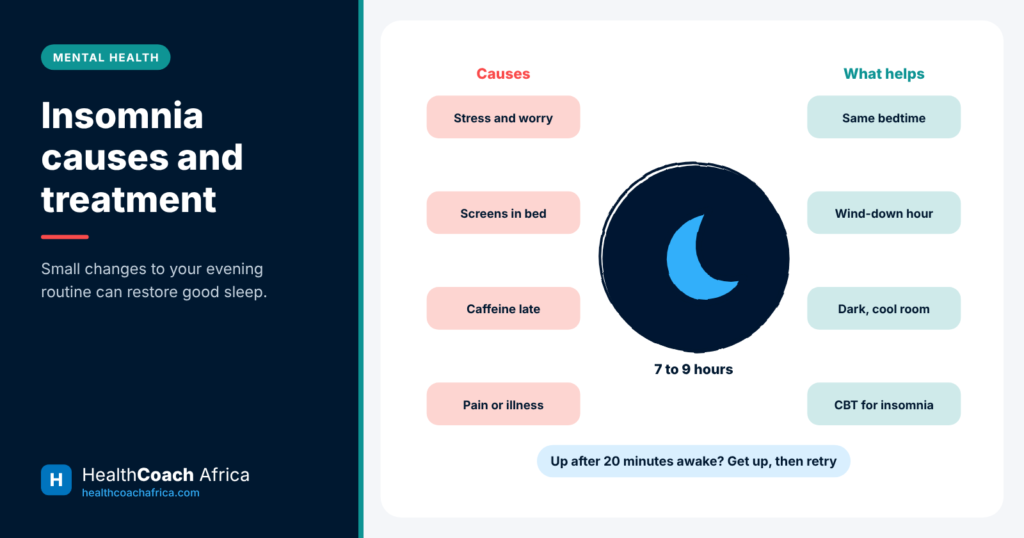
Stress and worry, about work, money, family or health
Anxiety and depression, which often affect sleep early on
Screens before bed, as phones and TVs keep the brain alert
Caffeine from coffee, tea, cola and energy drinks, especially after midday
Alcohol, which may help you fall asleep but disturbs sleep later in the night
Noise, heat and light, including generators, traffic and bright streetlights
Shift work and irregular sleep times
Long daytime naps
Heavy meals late at night
Medical causes of poor sleep
Sometimes insomnia is linked to a medical problem. Examples include:
Pain from arthritis, back problems or injuries
Needing to pass urine at night, which can be a sign of diabetes, prostate problems or heart failure
Breathing problems, such as asthma or sleep apnoea
Heartburn
An overactive thyroid
Menopause, with night sweats and hot flushes
Some medicines, such as steroids, some blood pressure tablets and decongestants
Treating the underlying cause often improves sleep. This is an important part of insomnia causes and treatment.
Sleep apnoea: a hidden cause
Sleep apnoea is a condition where breathing repeatedly stops and starts during sleep. People with it often snore loudly, gasp or choke at night and feel very sleepy during the day. It is more common in people who are overweight and in those with high blood pressure. Sleep apnoea raises the risk of heart disease and road accidents. If your partner notices loud snoring and pauses in your breathing, see a doctor.
Building healthy sleep habits
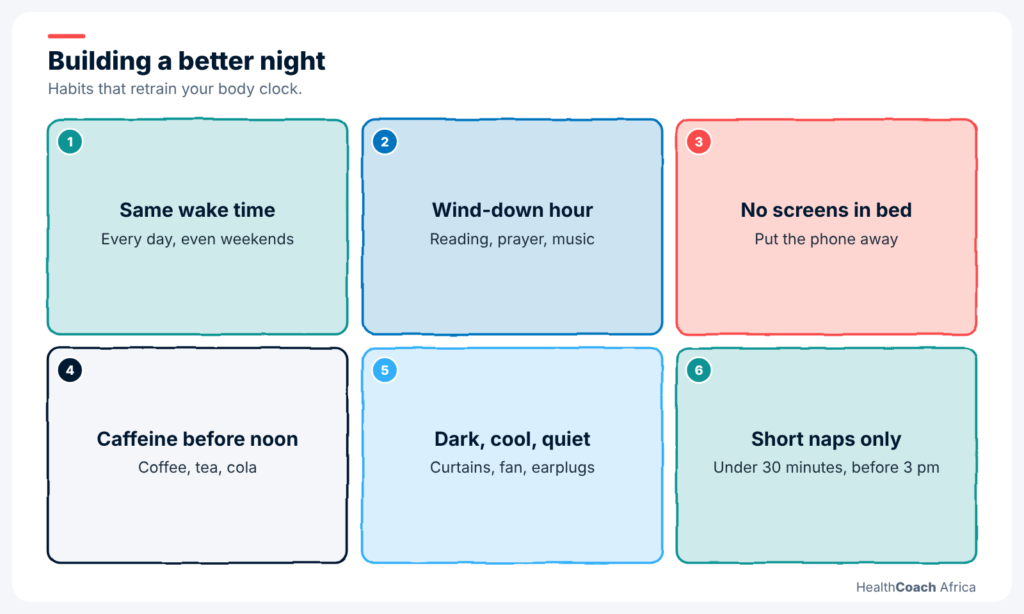
Six healthy sleep habits from insomnia causes and treatment advice, from a fixed wake time to a dark room
Give new habits two to three weeks before judging whether they work.
Good sleep habits form the foundation of insomnia causes and treatment plans. Try these steps:
Keep a regular schedule. Go to bed and get up at the same time every day, including weekends.
Create a wind-down routine. Spend 30 to 60 minutes relaxing before bed, with reading, prayer or gentle music.
Put screens away an hour before sleep.
Keep the bedroom dark, quiet and cool. Use curtains, a fan and earplugs if needed.
Limit caffeine after midday.
Avoid alcohol close to bedtime.
Be active during the day, but avoid hard exercise late at night.
Avoid long naps. If you nap, keep it under 30 minutes and before 3 pm.
If you cannot sleep
If you lie awake for more than about 20 minutes, get up. Go to another room and do something calm in dim light, such as reading. Return to bed only when you feel sleepy. This teaches your brain to link the bed with sleep, not with frustration.
Avoid checking the time repeatedly. Turn the clock away from you.
Cognitive behavioural therapy for insomnia
Cognitive behavioural therapy for insomnia, often called CBT-I, is the recommended first treatment for long-term insomnia. It is a short, structured programme. It helps you change thoughts and habits that keep insomnia going. It includes setting a regular sleep window, managing worry and retraining the link between bed and sleep.
CBT-I works for most people and its benefits last after treatment ends. It is available through some psychologists and online programmes.
HUBPHARM PHARMACIST’S NOTE
Several common medicines can keep you awake, including steroids, some blood pressure tablets, decongestants and some antidepressants taken at night. Others, such as water tablets, wake you to pass urine. Send your medicine list to a HubPharm pharmacist for a free sleep check. We will tell you whether changing the time you take a tablet could help, which over-the-counter sleep aids are safe for you, and when a doctor’s review is needed. We do not sell sleeping tablets without a prescription, because short cuts often make insomnia worse.
Sleeping tablets: use with care
Sleeping tablets may be prescribed1 for a short time during severe insomnia, usually for no more than a few weeks. They can cause drowsiness the next day, falls in older adults and dependence if used for long periods. Some people find it hard to stop them.
Do not buy sedatives without a prescription or take someone else’s tablets. Antihistamine sleep aids2 also cause next-day drowsiness and are not suitable for long-term use. Talk to a doctor or pharmacist before taking anything to help you sleep.
Insomnia causes and treatment in older adults
Older adults often sleep more lightly and wake earlier. Pain, frequent urination at night and medicines can make sleep worse. Sleeping tablets carry extra risks in later life, including confusion and falls. For older people, insomnia causes and treatment plans should focus on treating pain, reviewing medicines, staying active during the day and keeping a regular routine. Daylight in the morning helps set the body clock.
Shift work and sleep
Night shifts and rotating shifts disrupt the body clock. Health workers, security staff, drivers and factory workers are often affected. Try to keep a regular sleep time on work days. Use blackout curtains and earplugs when sleeping during the day. Avoid caffeine in the last few hours of your shift. Protect your sleep time and let family members know when you need rest.
When to see a doctor
See a doctor if:
Poor sleep has lasted more than three months
You feel very sleepy during the day or have nodded off while driving
You snore loudly or stop breathing during sleep
You feel low, anxious or hopeless
Pain or another health problem keeps you awake
A sleep diary for two weeks is useful. Write down when you go to bed, roughly when you fall asleep, how often you wake, and how you feel the next day.
Insomnia and mental health
Insomnia and mental health problems are closely linked. Poor sleep raises the risk of depression and anxiety, and these conditions also disturb sleep. Treating one often helps the other. If you feel low, worried or hopeless as well as sleeping badly, tell your doctor. Effective insomnia causes and treatment plans look at mood as well as sleep habits.
Myths about sleep
“Alcohol helps you sleep.” It disrupts sleep later in the night.
“You can catch up on sleep at weekends.” Irregular sleep times make insomnia worse.
“Sleeping tablets cure insomnia.” They treat symptoms for a short time and can cause dependence.
“Older people need less sleep.” Sleep becomes lighter with age, but older adults still need enough rest.
Short-term use only, usually a few weeks. Risk of dependence and falls.
2
Antihistamine sleep aids
Pharmacy medicine
Cause next-day drowsiness. Not for long-term use.
To order any of these, or to ask a pharmacist a question first, message HubPharm on WhatsApp or visit hubpharmafrica.com. Prescription medicines are supplied against a valid prescription.
Riemann D, et al. The European Insomnia Guideline: an update on the diagnosis and treatment of insomnia 2023. J Sleep Res. 2023;32(6):e14035. https://doi.org/10.1111/jsr.14035
Tips for Better Sleep: How to Rest Well and Beat Insomnia Good sleep is as important for health as good food and regular exercise. Yet many people in Nigeria's busy cities sleep too little, because of long commutes, noise, heat, generator fumes and late-night screen time.…
Alcohol Use Disorder Signs: When Drinking Becomes a Problem Drinking is part of many social events in Nigeria. Weddings, burials, birthdays and evenings with friends often involve beer, palm wine or spirits. For most people, drinking stays occasional. For some, it slowly grows into…
Lower Back Pain Relief: What Works and When to Worry Low back pain is the leading cause of disability worldwide. The World Health Organization estimates that it affected 619 million people in 2020, and almost everyone experiences it at least once. Market traders, drivers, office…
Contraceptive Options in Nigeria: A Guide to Making… Family planning allows women and couples to decide whether and when to have children, and how many. It improves the health of mothers and babies, supports education and careers, and strengthens families. Yet many Nigerians…