Good sleep is as important for health as good food and regular exercise. Yet many people in Nigeria’s busy cities sleep too little, because of long commutes, noise, heat, generator fumes and late-night screen time. Poor sleep affects mood, memory, blood sugar and blood pressure. These practical tips for better sleep will help you rest well, and explain when sleeplessness needs medical attention.
How much sleep do you need?
Most adults need seven to nine hours of sleep a night. Teenagers need eight to ten, and young children need even more. Older adults often sleep more lightly but still need about seven hours.
Sleep happens in cycles of about 90 minutes. Each cycle moves through light sleep, deep sleep and dreaming sleep. Deep sleep restores the body, while dreaming sleep helps with memory and emotions. Cutting sleep short means losing the later cycles, which are rich in dreaming sleep.
Why poor sleep matters
A night or two of poor sleep leaves you tired and irritable. Over months, regular short sleep is linked to:
Higher risk of high blood pressure, heart disease and stroke
Weight gain and type 2 diabetes
Depression and anxiety
Weakened immunity
Road and workplace accidents caused by drowsiness
Drowsy driving is particularly dangerous. If you feel your eyes closing behind the wheel, pull over safely and rest.
Ten tips for better sleep
Small changes to your routine can make a big difference. Try these tips for better sleep for at least two weeks before judging the results.
Keep a regular schedule. Go to bed and wake up at the same time every day, including weekends.
Get morning light. Spend time outside in daylight soon after waking. Light sets your body clock.
Cut off caffeine by early afternoon. Coffee, strong tea, cola and energy drinks can keep you awake for six hours or more.
Limit alcohol. It may help you fall asleep, but it breaks up sleep later in the night.
Eat dinner earlier. Finish heavy, spicy or fatty meals at least two to three hours before bed.
Exercise regularly. Daytime activity deepens sleep, but avoid hard workouts within two hours of bedtime.
Keep the bedroom cool, dark and quiet. Use a fan, curtains, an eye mask or earplugs where needed.
Put screens away. Stop using phones, laptops and television about an hour before bed.
Wind down. Read, pray, take a warm shower or listen to calm music to tell your body that sleep is coming.
Use the bed for sleep. Avoid working, eating or scrolling in bed, so that your brain links bed with sleep.
A simple bedtime routine
Putting these tips for better sleep together into a routine makes them easier to keep. Here is an example for someone who wakes at 6 am:
2 pm: last cup of coffee or strong tea
7 pm: finish dinner
9 pm: dim the lights, put the phone on charge outside the bedroom
9.30 pm: warm shower, prayer, reading or quiet music
10 pm: lights out
6 am: wake up at the same time, open the curtains and get some daylight
Adjust the times to suit your life. Consistency matters more than the exact hour.
If you cannot fall asleep
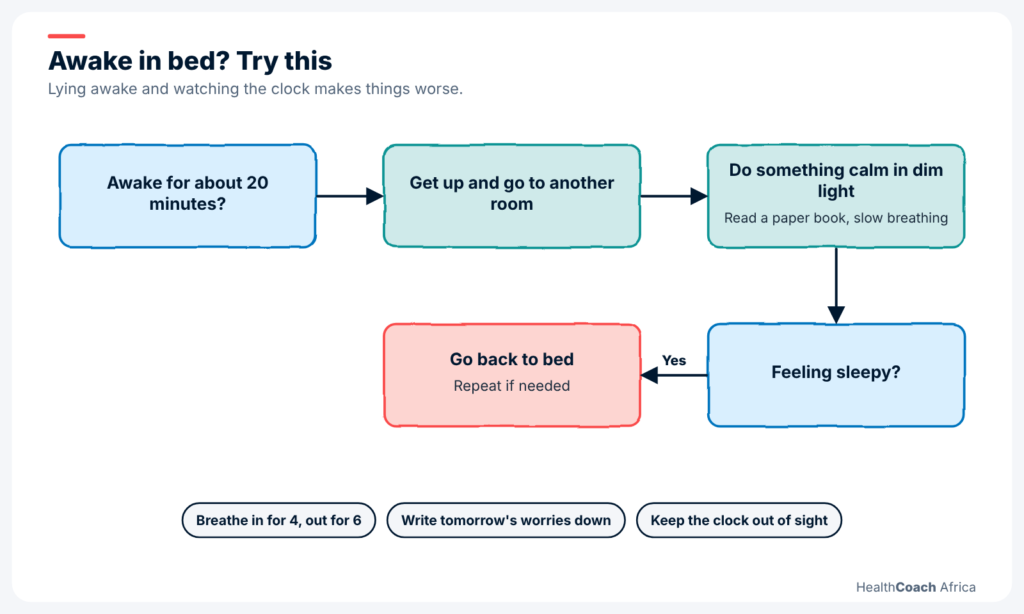
Lying awake and watching the clock makes things worse. If you have not fallen asleep after about 20 minutes, get up and go to another room. Do something calm in dim light, such as reading a paper book, until you feel sleepy. Then return to bed.
Also, write down worries or tomorrow’s tasks before bed. This helps to empty your mind. Slow breathing can calm the body as well. Breathe in for four counts, hold for a moment and breathe out for six counts, repeating for a few minutes.
Flow chart for what to do when you cannot fall asleep, part of practical tips for better sleep
Getting up after about 20 minutes awake teaches your brain that bed is for sleep.
Sleep in a hot, noisy city
Heat, noise and power cuts are real barriers to sleep in many Nigerian homes. A cool shower before bed, light cotton bedding and a fan help with heat. Rechargeable fans are useful when power fails. Earplugs or soft background sound, such as a fan or white noise from a phone placed away from the bed, can mask street noise. Blackout curtains reduce light from security lamps.
Never run a generator inside the house, in a garage or near open windows. Generator fumes contain carbon monoxide, which can kill people in their sleep without any warning.
Shift workers and new parents
Night shifts and caring for a baby disrupt the body clock. Shift workers should keep the bedroom very dark during daytime sleep, protect a regular sleep block and avoid caffeine in the last part of the shift. New parents can share night feeds where possible and nap when the baby naps. These tips for better sleep will not remove the challenge, but they can reduce the damage.
Naps: helpful or harmful?
A short nap of 20 to 30 minutes in the early afternoon can restore alertness without harming night-time sleep. Longer naps, or naps late in the day, make it harder to fall asleep at night. If you have insomnia, it is usually best to avoid naps altogether until your night-time sleep improves. Older adults who nap for long periods during the day should mention it to a doctor, because it can be a sign of poor night-time sleep or another health problem.
Understanding insomnia
Insomnia means regular difficulty falling asleep, staying asleep or waking too early, with tiredness during the day. Short-term insomnia often follows stress, illness or a change in routine. It usually improves within weeks.
When insomnia occurs at least three nights a week for three months or more, it is called chronic insomnia. The most effective treatment is cognitive behavioural therapy for insomnia, often shortened to CBT-I. It retrains your sleep habits and thoughts about sleep, and its benefits last longer than sleeping tablets. The NHS offers more detail on how it works.
HUBPHARM PHARMACIST’S NOTE Some medicines keep people awake without them realising it. Common examples are water tablets taken late in the day, steroids, some decongestants and caffeine-containing painkillers. Send a HubPharm pharmacist a list or a photo of what you take, and we will suggest better times to take each one.
Sleeping tablets: use with care
Many people buy sleeping tablets over the counter or from patent medicine shops. Tablets such as diazepam 1 can cause dependence after just a few weeks. They also cause morning drowsiness, falls in older people and dangerous effects when mixed with alcohol. Antihistamines 2 sold as sleep aids can cause confusion and constipation, especially in older adults.
If a doctor prescribes a sleeping tablet, it is usually for a short time only. Follow the dose carefully and do not stop suddenly after long use. These tips for better sleep should always come first.
When poor sleep is a sign of something else
Sometimes sleeplessness is a symptom of another condition. See a doctor if you have:
Loud snoring with pauses in breathing, choking or gasping at night, which can be a sign of sleep apnoea
An urge to move your legs at night with unpleasant sensations
Low mood, worry or racing thoughts that keep you awake
Pain, breathlessness or frequent night-time urination
Daytime sleepiness that makes it hard to stay awake at work or while driving
Anxiety and sleep problems are closely linked. Learn more in our article on understanding anxiety.
Getting help
These tips for better sleep work for most people when practised consistently. If poor sleep continues, speak to your doctor about insomnia treatment. Some medicines, including certain blood pressure tablets, steroids and decongestants, can also disturb sleep. To check whether your medicines might be keeping you awake, message a HubPharm pharmacist or ask Afiya on WhatsApp.
Medicines and products in this article
#
Medicine or product
What to know
1
Diazepam and similar sleeping tablets
Prescription only
Can cause dependence after a few weeks, morning drowsiness and falls. They are dangerous with alcohol.
2
Sedating antihistamines
Over the counter
Sold as sleep aids, but they can cause confusion, constipation and next-day drowsiness, especially in older adults.
To order any of these, or to ask a pharmacist a question first, message HubPharm on WhatsApp or visit hubpharmafrica.com. Prescription medicines are supplied against a valid prescription.
Insomnia: Effects of Lack of High Quality Sleep On… Anyone can experience insomnia. Factors such as diet, anxiety, stress or jet lag can affect your ability to experience healthy sleep. In fact, Insomnia symptoms occur in approximately 33% to 50% of the adult population…
Nigerian Diet for Diabetes: A Practical Guide to Eating Well A diagnosis of diabetes often comes with a long list of foods you are told to stop eating. Many people believe they must give up eba, rice, yam and plantain for ever. That is not…
Sleep Guidelines by Age: How much sleep do you really need Sleep is an essential aspect of our overall health and well-being. It plays a critical role in maintaining our physical, emotional, and cognitive functioning. However, the amount of sleep needed can vary based on age.…
Diabetes in Nigeria: Why Blood Sugar Control Fails Diabetes in Nigeria does not usually fail in the clinic. Among people who reach a specialist and stay in care, control is often reasonable. It fails in the years before anyone tests you, and it…