Chickenpox is a common childhood illness that causes an itchy rash of spots and blisters. Most children recover within a week or two without problems. However, chickenpox can be more serious in babies, teenagers, adults, pregnant women and people with weak immunity. Knowing chickenpox symptoms and treatment helps you care for your child at home and recognise when medical help is needed. This guide explains the signs, home care, medicines to avoid and how to prevent spread.
What causes chickenpox?
Chickenpox is caused by the varicella-zoster virus. It spreads very easily through coughs and sneezes, and through contact with fluid from the blisters. A person with chickenpox is infectious from about two days before the rash appears until all the blisters have crusted over, usually about five days after the spots first appear.
Most people only get chickenpox once. Afterwards, the virus stays in the body and can reactivate years later as shingles.
Chickenpox symptoms
Symptoms usually start 10 to 21 days after contact with an infected person. Before the rash, there may be:
Mild fever
Tiredness
Loss of appetite
Headache
Aches
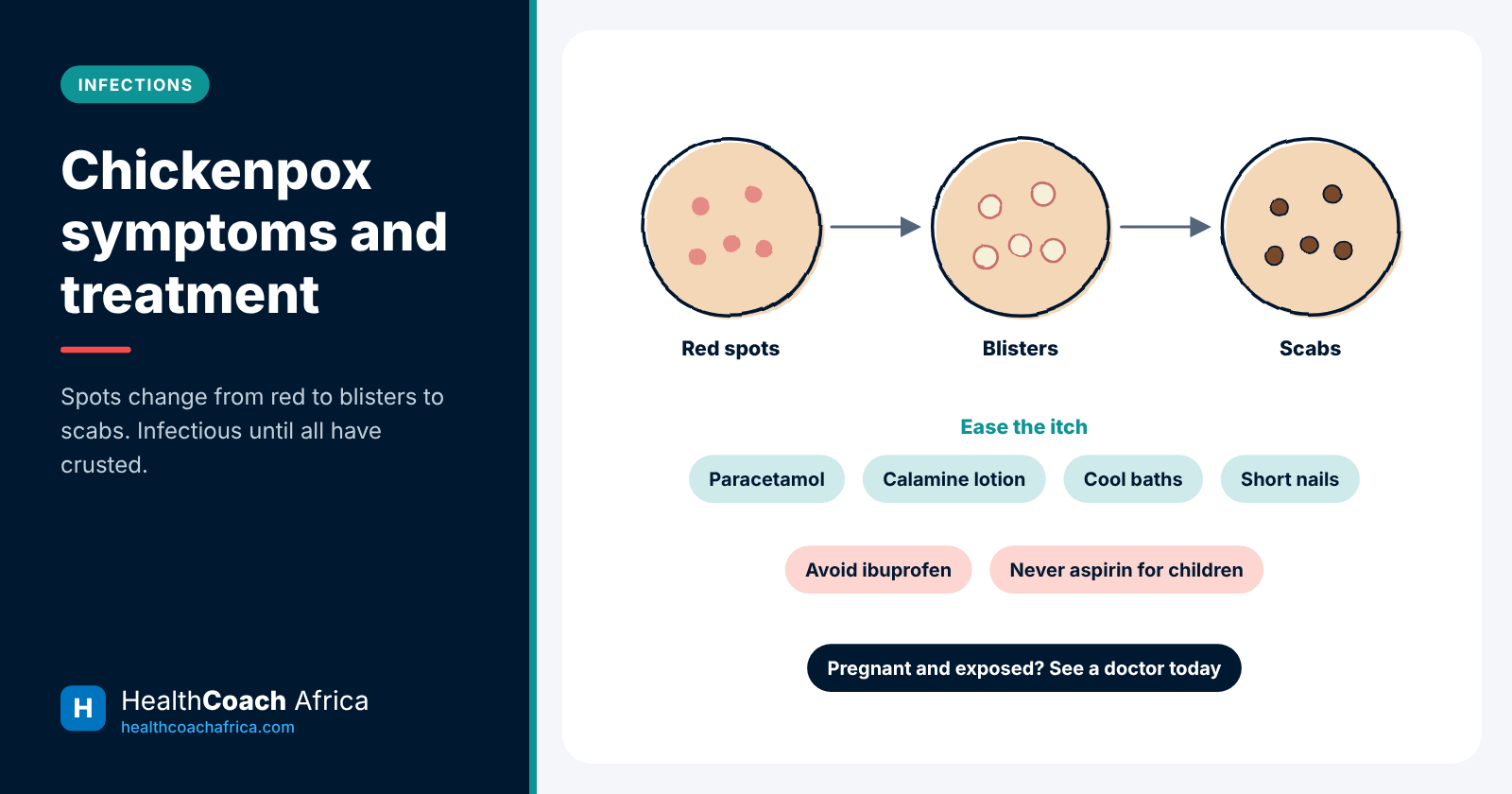
The rash then appears, often on the face, chest, back and tummy, before spreading to the rest of the body, including the scalp, inside the mouth and the genital area. It changes over a few days:
Small red spots
Raised spots that fill with clear fluid to become blisters
Blisters that burst and form scabs
New spots can keep appearing for several days, so different stages are seen at the same time. The rash is usually very itchy.
Chickenpox symptoms and treatment at home
Most children can be cared for at home. Helpful steps include:
Paracetamol for fever and discomfort1, at the correct dose for age or weight
Plenty of fluids, especially if the mouth is sore
Calamine lotion or cooling gels2 on itchy spots
Cool baths or sponging, then patting the skin dry
Loose cotton clothing
Keeping nails short and putting socks or mittens on babies’ hands at night to reduce scratching
Antihistamine medicine, if advised by a pharmacist, to ease itching and help sleep
Painkillers to avoid
Do not give ibuprofen to children with chickenpox unless a doctor advises it. It has been linked to serious skin infections in chickenpox. Never give aspirin to children under 16, because it can cause Reye’s syndrome, a rare but serious condition affecting the liver and brain.
Complications to watch for
Most children recover without problems, but complications can occur:
Skin infections from scratching, causing redness, swelling and pain
Pneumonia, more common in adults and smokers
Inflammation of the brain, which causes headache, confusion or fits
Dehydration from fever and poor drinking
Knowing chickenpox symptoms and treatment helps you notice these complications early.
When to see a doctor
Call for emergency help for breathing difficulty, fits or confusion.
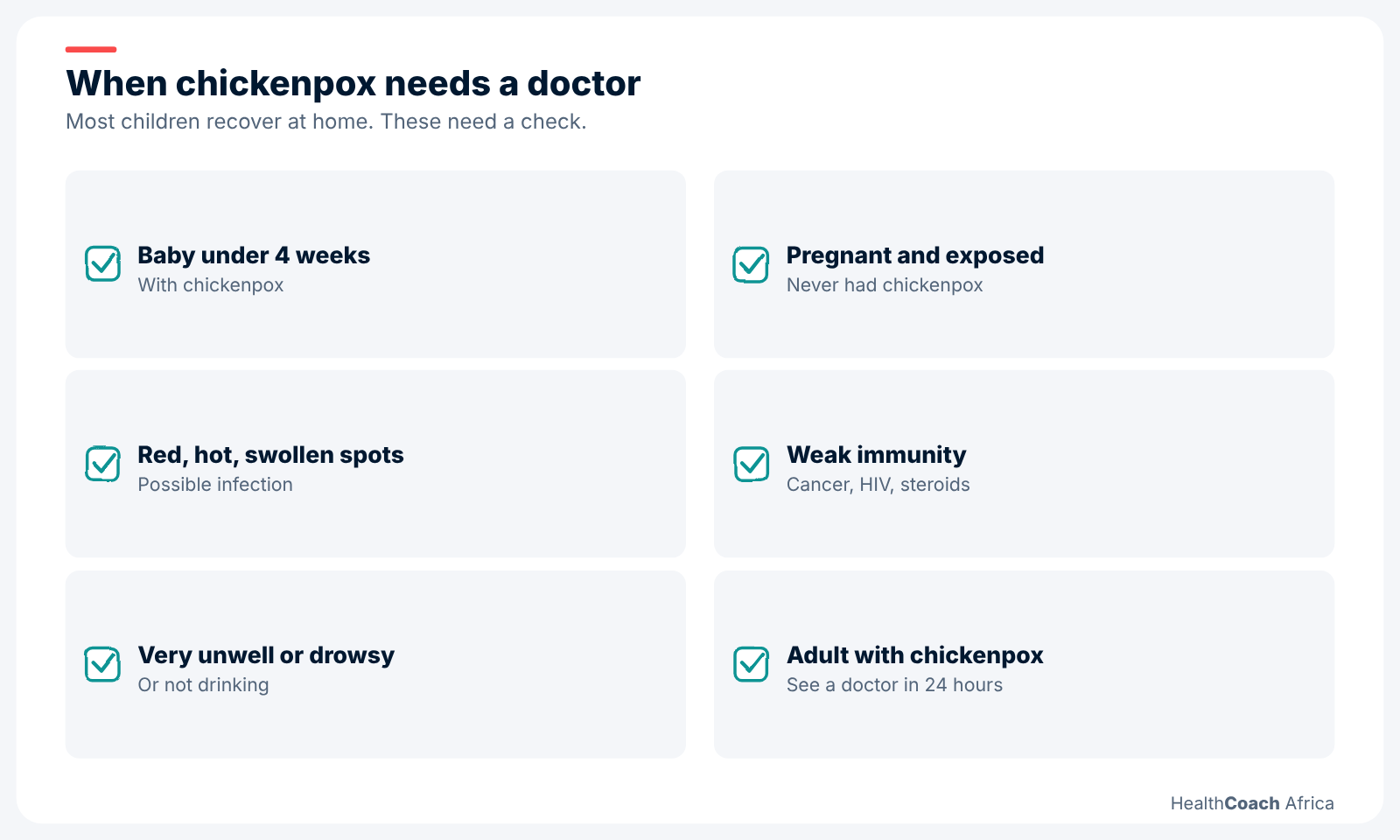
See a health worker if:
Your baby is under four weeks old and has chickenpox
The skin around blisters becomes red, hot, swollen or painful, which may mean infection
Your child is very unwell, drowsy or not drinking
There are signs of dehydration
You are pregnant and have not had chickenpox before, and you have been in contact with someone who has it
You or your child has weak immunity, for example from cancer treatment, HIV or steroid medicines
An adult develops chickenpox
Seek emergency care if there is difficulty breathing, chest pain, a severe headache, a stiff neck, confusion, fits or blisters that become filled with blood.
Chickenpox symptoms and treatment in adults
Adults often have more severe chickenpox than children, with higher fever, more spots and a greater risk of pneumonia. Adults should see a doctor early, ideally within 24 hours of the rash appearing, to discuss antiviral treatment. Smokers should seek help if they develop a cough or breathlessness. Rest, fluids and paracetamol help with symptoms.
HUBPHARM PHARMACIST’S NOTE
Parents often reach for ibuprofen because it brings fever down quickly, but it is linked to serious skin infections in chickenpox. Message a HubPharm pharmacist with your child’s age and weight. We will confirm the right paracetamol dose, recommend calamine or cooling gels and a suitable antihistamine for night-time itching, and deliver them discreetly. If you are pregnant and have been near someone with chickenpox, or an adult in the house develops it, we will tell you how quickly to see a doctor.
Antiviral treatment
Antiviral medicine, such as aciclovir3, may be prescribed for adults, teenagers, pregnant women, newborns and people with weak immunity. It works best when started within 24 hours of the rash appearing. Most healthy children do not need it.
Chickenpox in pregnancy
Chickenpox in pregnancy can be serious for both mother and baby. It can cause pneumonia in the mother. In early pregnancy, it can rarely affect the baby’s development. Around the time of birth, it can cause severe illness in the newborn.
If you are pregnant and have never had chickenpox, avoid people with chickenpox or shingles. If you have contact, see a doctor straight away. Treatment may be needed to lower the risk of serious illness.
Caring for scars
Most spots heal without scarring. To reduce the risk, avoid scratching, keep the skin clean and protect healing skin from strong sun. Some spots leave small marks that fade over months. See a health worker if a spot becomes infected, as infection increases the chance of scarring.
Back to school
Children can usually return to school once all the spots have crusted over. Tell the school, so other parents can watch for symptoms. This is especially important for classmates with weak immunity and for pregnant teachers. Sharing clear information about chickenpox symptoms and treatment helps schools respond calmly.
Preventing the spread
Keep your child at home from school or day care until all spots have crusted over
Avoid contact with pregnant women, newborn babies and people with weak immunity during this time
Wash hands often
Do not share towels or bedding
Cover coughs and sneezes
The chickenpox vaccine
A chickenpox vaccine is available in many countries and gives good protection. It is not part of Nigeria’s routine childhood immunisation schedule, but it may be available at some private clinics. Ask a health worker whether it is suitable for your child or for you, especially if you work with children or plan a pregnancy.
Shingles later in life
After chickenpox, the virus remains inactive in nerve cells. Years later, it can reactivate as shingles, a painful rash on one side of the body. Shingles is more common in older adults and people with weak immunity. Anyone who has not had chickenpox can catch chickenpox, but not shingles, from someone with shingles.
Myths about chickenpox
“It is better to catch chickenpox as an adult.” Chickenpox is usually more severe in adults.
“Scratching helps the spots heal.” Scratching can cause infection and scarring.
“You can get chickenpox many times.” Most people get it only once.
“Ibuprofen is fine for chickenpox fever.” Paracetamol is the safer choice for children.
Chickenpox symptoms and treatment in babies
Babies under one year, and especially newborns, can become seriously ill with chickenpox. Watch for poor feeding, unusual sleepiness, fast breathing or a rash that spreads quickly. See a health worker early, rather than waiting to see how the illness develops.
Keep siblings comfortable
Brothers and sisters often catch chickenpox within two to three weeks. Keep paracetamol, calamine and clean towels ready, and watch them for early spots and fever.
For fever and pain. The safer choice for children with chickenpox.
2
Calamine lotion or cooling gel
Over the counter
Soothes itchy spots.
3
Aciclovir
Prescription only
Antiviral for adults, pregnant women and people with weak immunity.
To order any of these, or to ask a pharmacist a question first, message HubPharm on WhatsApp or visit hubpharmafrica.com. Prescription medicines are supplied against a valid prescription.
Mpox Symptoms and Prevention: A Clear Guide Mpox, formerly known as monkeypox, is a viral infection that has been reported in Nigeria for many years. Since 2017, cases have been recorded across many states, and the disease has gained global attention through…
Measles Symptoms and Vaccination: What Every Parent… Measles is one of the most contagious diseases in the world. It spreads quickly among children who are not vaccinated and can cause blindness, brain damage and death. Outbreaks still occur in Nigeria, especially…
ADHD Signs in Children: Understanding Restless and… Every child is restless and distracted sometimes. But some children find it much harder than others to sit still, focus and control their impulses. They may be labelled stubborn, troublesome or lazy, and punished again…
Tuberculosis Symptoms and Treatment: What You Need to Know Tuberculosis, or TB, is one of the oldest diseases known to humans, and it remains a major killer. Nigeria has one of the highest TB burdens in Africa, and many people with the disease have…