Mpox, formerly known as monkeypox, is a viral infection that has been reported in Nigeria for many years. Since 2017, cases have been recorded across many states, and the disease has gained global attention through international outbreaks. Most people recover, but mpox can be serious, especially for young children, pregnant women and people with weakened immunity. This guide explains mpox symptoms and prevention, and when to seek care.
What mpox is
Mpox is caused by the mpox virus, which belongs to the same family as the virus that once caused smallpox. However, mpox is usually much milder than smallpox. There are different types, called clades, which vary in how severe and how easily spread they are.
How mpox spreads
According to the World Health Organization, mpox spreads mainly through close contact with someone who has mpox. This includes:
Skin-to-skin contact, including during sex
Touching sores, scabs or body fluids
Face-to-face contact, through respiratory droplets
Contact with contaminated bedding, towels or clothing
From mother to baby during pregnancy or birth
Contact with infected animals, such as rodents and monkeys, through bites, scratches or handling bush meat
Early symptoms
Symptoms usually start within one to three weeks of exposure. Early symptoms can include:
Fever
Headache
Muscle aches and back pain
Tiredness
Swollen lymph nodes in the neck, armpits or groin
Swollen lymph nodes help distinguish mpox from chickenpox.
The mpox rash
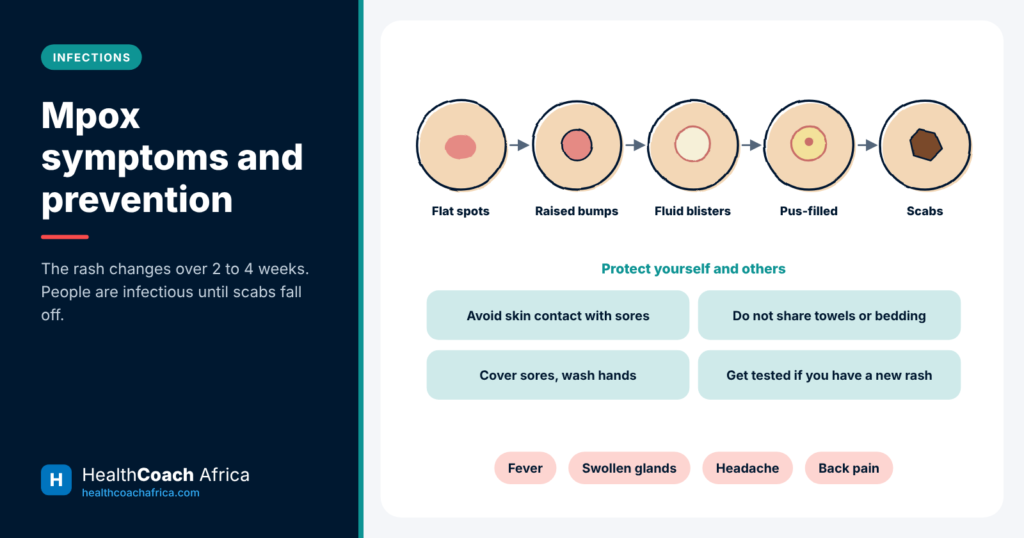
A rash usually appears within a few days of the fever, though in some people it is the first sign. It can affect the face, palms, soles, mouth, genitals and anus. The rash passes through stages:
Flat spots
Raised bumps
Fluid-filled blisters
Pus-filled sores
Crusts or scabs, which fall off
The rash can be painful or itchy. A person remains infectious until all scabs have fallen off and new skin has formed underneath.
Mpox and genital sores
In recent outbreaks, many people have had sores only around the genitals or anus. These can be mistaken for other sexually transmitted infections, such as herpes or syphilis. Anyone with new genital sores should be tested.
Mpox symptoms and prevention in children
Children can catch mpox through close contact with infected family members. They may have more widespread rash and are at higher risk of complications such as dehydration and skin infections. Keep children away from anyone with an unexplained rash. If a child develops fever and a rash, see a health worker. Keep their nails short to reduce scratching, and keep sores clean.
Who is at higher risk of severe illness?
Most people recover within two to four weeks. However, severe illness is more likely in:
Young children
Pregnant women
People living with HIV whose infection is not controlled
People with other conditions that weaken the immune system
Complications can include skin infections, pneumonia, eye infections and, rarely, brain inflammation.
Testing and diagnosis
If mpox is suspected, a health worker will take a swab from a sore and send it to a laboratory. Nigeria has testing capacity through public health laboratories. Report suspected cases to your nearest health facility, which will notify the local surveillance team.
Mpox and people living with HIV
People living with HIV whose virus is not well controlled can develop severe mpox. Taking HIV treatment every day and keeping the viral load undetectable protects against severe illness. Anyone diagnosed with mpox should be offered an HIV test. Good HIV care is an important part of mpox symptoms and prevention.
Treatment and care
Most people with mpox need supportive care:
Pain relief and fever control 1 with paracetamol
Keeping sores clean and dry, and not scratching
Saltwater rinses for mouth sores
Plenty of fluids and good nutrition
Treating any bacterial skin infection with antibiotics if needed
Antiviral medicines are sometimes used in severe cases under specialist care.
HUBPHARM PHARMACIST’S NOTE Mpox sores can be very painful, especially in the mouth and genital area, and scratching invites infection. Message a HubPharm pharmacist for a discreet home-care pack with pain relief, saltwater rinse guidance and non-stick dressings, delivered without anyone needing to visit a shop. Everything you tell us stays confidential.
Isolation at home
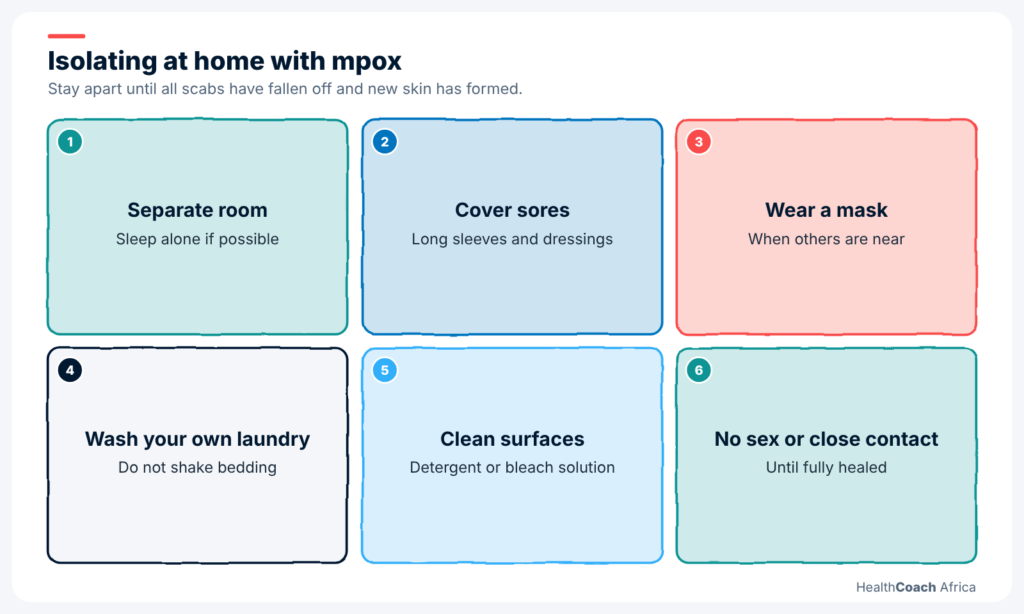
If you have mpox, stay at home in a separate room if possible until all sores have healed. Cover sores 2 with clothing or bandages. Wear a mask around others. Do not share bedding, towels, clothing or utensils. Wash your hands often. Avoid sex until fully healed.
Follow your health worker’s advice on how long to isolate.
Mpox symptoms and prevention: protecting yourself
Practical prevention steps include:
Avoiding close contact with anyone who has a rash or confirmed mpox
Not sharing bedding, towels or clothing with a sick person
Washing hands often with soap and water
Using gloves when caring for someone with mpox
Avoiding contact with wild animals and cooking bush meat thoroughly
Practising safer sex and knowing your partners’ health
Wash their bedding and clothes separately in hot water with detergent
Clean surfaces they touch with household disinfectant
Do not shake bedding, which can spread virus particles
Wear gloves and a mask when helping with sores
Wash hands often
These steps protect other family members while the person recovers.
Mpox and pregnancy
Mpox in pregnancy can be serious and may affect the baby. Pregnant women should avoid close contact with anyone who has an unexplained rash or confirmed mpox. A pregnant woman who develops fever and a rash should seek care quickly. Health workers will provide close monitoring.
Mpox and stigma
Stigma makes people hide symptoms and delay care. Mpox can affect anyone, regardless of age, gender or sexual orientation. Treating people with respect encourages them to come forward for testing and isolation. Accurate information about mpox symptoms and prevention is more effective than blame.
Caring for your skin during recovery
Keep healing skin clean and moisturised. Avoid picking scabs. Use loose cotton clothing. Seek care if sores become red, hot, swollen or filled with pus, which may signal a bacterial infection.
When to return to normal activities
You can usually return to work, school and normal activities once all scabs have fallen off and a fresh layer of skin has formed. This often takes two to four weeks. Ask your health worker before returning, especially if you work with young children or in health care. Using condoms for some weeks after recovery may be advised. Following these steps completes the cycle of mpox symptoms and prevention.
Reporting and contact tracing
When a case is confirmed, health workers may contact people who were in close contact. They will ask contacts to watch for symptoms for 21 days. This helps stop the spread. Cooperating with contact tracers, and being honest about contacts, protects your community.
Vaccines for mpox
Vaccines that protect against mpox exist. They are mainly offered to people at high risk, such as health workers and close contacts of cases, during outbreaks. Availability in Nigeria depends on national programmes.
Myths about mpox
“Mpox only affects certain groups.” Anyone can get mpox through close contact.
“Mpox is the same as chickenpox.” They are different viruses. Swollen lymph nodes are more typical of mpox.
“Mpox always kills.” Most people recover, but some groups are at higher risk.
Advice for health workers
Health workers caring for people with mpox should use gloves, gowns, masks and eye protection. Handle bedding and dressings carefully. Report suspected cases to the local disease surveillance officer. Clear guidance on mpox symptoms and prevention protects staff and patients.
Getting help
Knowing mpox symptoms and prevention helps protect you and those around you. If you develop an unexplained rash, especially with fever or swollen glands, see a health worker and avoid close contact with others. For pain relief, wound care supplies or advice on isolation at home, message a HubPharm pharmacist or chat with Afiya on WhatsApp.
Medicines and products in this article
#
Medicine or product
What to know
1
Paracetamol
Over the counter
For pain and fever during mpox.
2
Non-stick wound dressings
Over the counter
Cover sores to reduce spread and protect healing skin.
To order any of these, or to ask a pharmacist a question first, message HubPharm on WhatsApp or visit hubpharmafrica.com. Prescription medicines are supplied against a valid prescription.
Measles Symptoms and Vaccination: What Every Parent… Measles is one of the most contagious diseases in the world. It spreads quickly among children who are not vaccinated and can cause blindness, brain damage and death. Outbreaks still occur in Nigeria, especially…
Getting Pregnant After 35: What You Need to Know More women are having children later in life, after completing their education, building careers or finding the right partner. Getting pregnant after 35 is very common, and many women have healthy pregnancies and babies. However,…
Endometriosis and Getting Pregnant: What Women Need to Know Endometriosis is a common condition that causes painful periods, pelvic pain and, for some women, difficulty conceiving. Many women in Nigeria live with symptoms for years before diagnosis, because severe period pain is often dismissed…
Diabetes in Nigeria: Why Blood Sugar Control Fails Diabetes in Nigeria does not usually fail in the clinic. Among people who reach a specialist and stay in care, control is often reasonable. It fails in the years before anyone tests you, and it…