Measles is one of the most contagious diseases in the world. It spreads quickly among children who are not vaccinated and can cause blindness, brain damage and death. Outbreaks still occur in Nigeria, especially in communities with low vaccine coverage. The good news is that measles is preventable with a safe, effective vaccine. This guide explains measles symptoms and vaccination, and how to protect your family.
What measles is
Measles is caused by a virus that spreads through the air when an infected person coughs, sneezes or breathes. The virus can remain in the air and on surfaces for up to two hours. According to the World Health Organization, it is so contagious that most unvaccinated people exposed to it will become infected.
People with measles can spread it from about four days before the rash appears until four days after.
Early symptoms
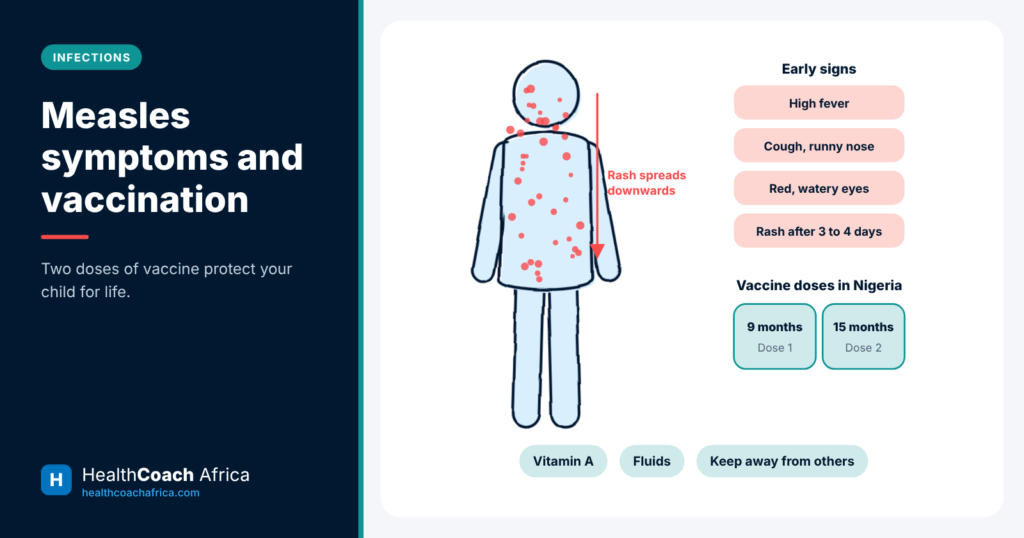
Symptoms usually begin 10 to 14 days after exposure. The first signs look like a bad cold:
High fever
Cough
Runny nose
Red, watery eyes
Small white spots inside the cheeks, known as Koplik spots
The measles rash
Three to five days after the first symptoms, a red, blotchy rash appears. It usually starts on the face and behind the ears, then spreads down to the neck, body, arms and legs. The spots may join together. The fever is often highest when the rash appears. The rash fades after about a week, sometimes leaving the skin peeling or darker.
Dangerous complications
Measles can lead to serious complications, especially in young children, malnourished children and people with weak immune systems:
Pneumonia, the most common cause of measles deaths
Severe diarrhoea and dehydration
Ear infections and hearing loss
Eye damage and blindness, especially in children with low vitamin A
Brain swelling, called encephalitis, which can cause permanent damage
Malnutrition after the illness
Measles also weakens the immune system for months, making children more vulnerable to other infections.
Measles symptoms and vaccination: why outbreaks still happen
Measles outbreaks happen when too many children in a community miss their vaccines. Reasons include distance to clinics, missed appointments, rumours about vaccines and disruption from conflict or displacement. Because measles spreads so easily, very high vaccine coverage is needed to stop outbreaks. When most children are vaccinated, even babies too young for the vaccine are protected. Understanding measles symptoms and vaccination helps parents play their part.
When to seek urgent care
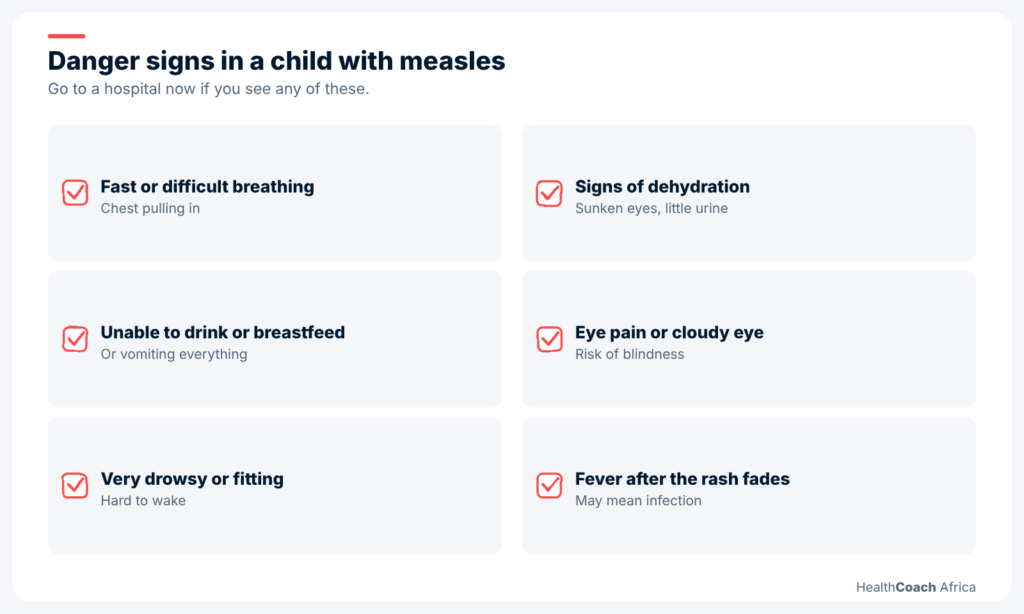
Take a child with measles to a health facility immediately if they:
Have difficulty breathing or fast breathing
Cannot drink or are vomiting everything
Have very few wet nappies or no urine
Are very drowsy, confused or having fits
Have eye pain or cloudy eyes
HUBPHARM PHARMACIST’S NOTE Children with measles lose fluids fast through fever and diarrhoea, and many parents are unsure how much ORS to give or how to dose fever medicine by weight. Message a HubPharm pharmacist with your child’s age and weight. We will give you a clear fluid and fever plan and tell you the danger signs that mean hospital now.
Danger signs in a child with measles, part of measles symptoms and vaccination guidance
Most deaths from measles come from complications such as pneumonia and dehydration.
Caring for a child with measles
There is no specific medicine that kills the measles virus. Care focuses on supporting the child:
Vitamin A: 1 health workers give vitamin A to children with measles, which reduces complications and deaths
Fluids: give plenty of water, breast milk and oral rehydration solution 2
Food: continue feeding with soft, nutritious foods
Fever: use paracetamol at the correct dose 3 for the child’s age or weight
Eyes: gently clean the eyes with clean water
Rest and isolation: keep the child away from others, especially babies and pregnant women
Antibiotics are only needed if a bacterial infection, such as pneumonia, develops.
Measles symptoms and vaccination: how the vaccine works
The measles vaccine contains a weakened form of the virus. It teaches the immune system to recognise and fight measles without causing the disease. Two doses give strong, long-lasting protection to almost everyone.
Nigeria’s measles vaccine schedule
In Nigeria’s routine immunisation schedule:
First dose: at 9 months of age
Second dose: at 15 months of age
Both doses are free at public health facilities. During outbreaks or campaigns, additional doses may be offered to children in a wider age range. These are safe, even for children who have already been vaccinated.
Nutrition and vitamin A
Good nutrition helps children fight measles. Children who are malnourished or lack vitamin A are more likely to develop severe measles, blindness and complications. Breastfeeding, a varied diet with orange and green vegetables, palm oil in moderation, eggs and fish, and routine vitamin A supplementation campaigns all help. Every child with measles should receive vitamin A from a health worker.
Recovery after measles
After measles, children may be weak and lose weight. Their immune system stays weakened for months. Offer nourishing meals, watch closely for new infections and keep up with other vaccines. Take the child back to a health worker if they develop a cough, fast breathing or diarrhoea. Recovery is part of the measles symptoms and vaccination story, because protecting other children prevents the next outbreak.
Keeping your child’s records
Keep your child’s immunisation card safe. Bring it to every clinic visit. It shows which vaccines your child has received and which are due. If the card is lost, ask the health facility to check their records. Missing doses can be caught up. Do not assume your child is protected without checking.
Is the vaccine safe?
The measles vaccine has been used for decades in hundreds of millions of children. Side effects are usually mild, such as a sore arm, mild fever or a faint rash a week or two later. Serious reactions are very rare. The risks from measles itself are far greater.
Who should not receive the vaccine
Some people should not receive the measles vaccine, or should wait. These include people with severely weakened immune systems, people with a serious allergy to a previous dose, and pregnant women. The health worker will check before vaccinating.
Adults and measles
Adults who were never vaccinated and never had measles can catch it. Health workers, travellers and young adults should check their vaccination status. Read more in our article on vaccines every adult should take.
Measles and pregnancy
Measles in pregnancy can cause miscarriage, premature birth or low birth weight. Pregnant women cannot receive the measles vaccine. Women who are planning a pregnancy should check that they are protected and, if needed, be vaccinated at least one month before conceiving. During pregnancy, avoid contact with anyone who has measles.
Measles symptoms and vaccination in schools
Schools are places where measles can spread quickly. Teachers should send home children with fever and rash, and inform the health authorities if several children are affected. Schools can check vaccination records and support catch-up campaigns. Parents should keep a child with measles at home until at least four days after the rash appears. Clear information about measles symptoms and vaccination helps schools protect every pupil.
Myths about measles
“Every child gets measles, so it is better to get it naturally.” Measles can kill or disable. Vaccination is far safer.
“The vaccine causes measles.” The weakened vaccine virus does not cause the disease in healthy children.
“One dose is enough.” Two doses give the best protection.
Measles and malnutrition
Children who are undernourished, or low in vitamin A, are far more likely to die from measles. Measles can also cause weight loss that lasts for weeks. Keep feeding a sick child small, frequent meals and continue breastfeeding. Good nutrition is part of measles symptoms and vaccination care.
Getting help
Understanding measles symptoms and vaccination helps protect your child and your community. Check your child’s immunisation card and make sure both doses are given. For oral rehydration solution, children’s fever medicine or advice on caring for a sick child, message a HubPharm pharmacist or chat with Afiya on WhatsApp.
Medicines and products in this article
#
Medicine or product
What to know
1
Vitamin A
Given by health workers
Reduces complications and deaths in children with measles.
2
Oral rehydration solution
Over the counter
Replaces fluids lost through diarrhoea and fever.
3
Paracetamol syrup
Over the counter
For fever, dosed by age or weight.
To order any of these, or to ask a pharmacist a question first, message HubPharm on WhatsApp or visit hubpharmafrica.com. Prescription medicines are supplied against a valid prescription.
Diphtheria Symptoms and Vaccination: Lessons From… Diphtheria was once a leading cause of death among children worldwide. Vaccination made it rare in many countries. However, Nigeria has faced large diphtheria outbreaks since 2022, mainly in northern states, with thousands of confirmed…
Hepatitis B in Nigeria: Testing, Vaccine and… Hepatitis B is a viral infection that attacks the liver, often silently, for decades. The World Health Organization's 2026 Global Hepatitis Report lists Nigeria among ten countries that together account for nearly 70% of deaths…
Apollo Eye in Children: Understanding the Spread and… Apollo Eye, also known as conjunctivitis, is a common eye infection that affects children. It is highly contagious and can spread easily among children, especially in close-contact settings such as schools and daycare centres. This…
Tuberculosis Symptoms and Treatment: What You Need to Know Tuberculosis, or TB, is one of the oldest diseases known to humans, and it remains a major killer. Nigeria has one of the highest TB burdens in Africa, and many people with the disease have…