Hepatitis B is a viral infection that attacks the liver, often silently, for decades. The World Health Organization’s 2026 Global Hepatitis Report lists Nigeria among ten countries that together account for nearly 70% of deaths from the disease. Estimates of the number of people living with hepatitis B in Nigeria range from about 14 million to 20 million, and most of them do not know they are infected. A cheap test and a safe vaccine can change that.
How hepatitis B spreads
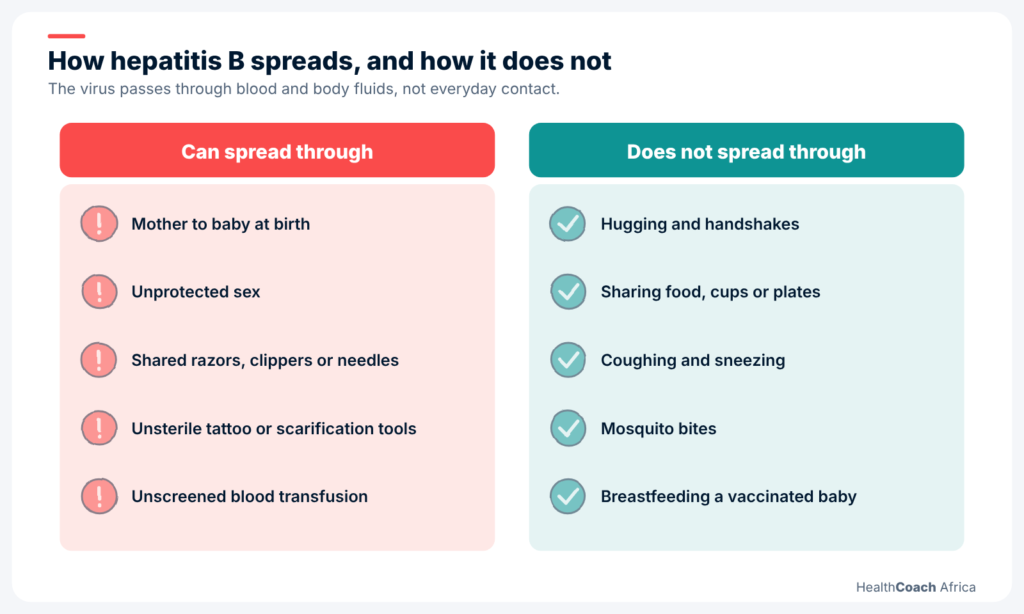
The virus spreads through blood and body fluids. The main routes are:
From mother to baby during birth
Between young children through cuts and sores
Unprotected sex with an infected partner
Sharing razors, clippers, needles or toothbrushes
Tattooing, scarification or circumcision with unsterilised tools
Unscreened blood transfusion
It does not spread through handshakes, hugging, sharing food, coughing or mosquito bites. Breastfeeding is also safe when the baby has been vaccinated.
Age at infection matters greatly. About nine in ten babies infected at birth develop lifelong infection, compared with fewer than one in twenty adults. That is why protecting newborns is the priority.
Symptoms, and why most people have none
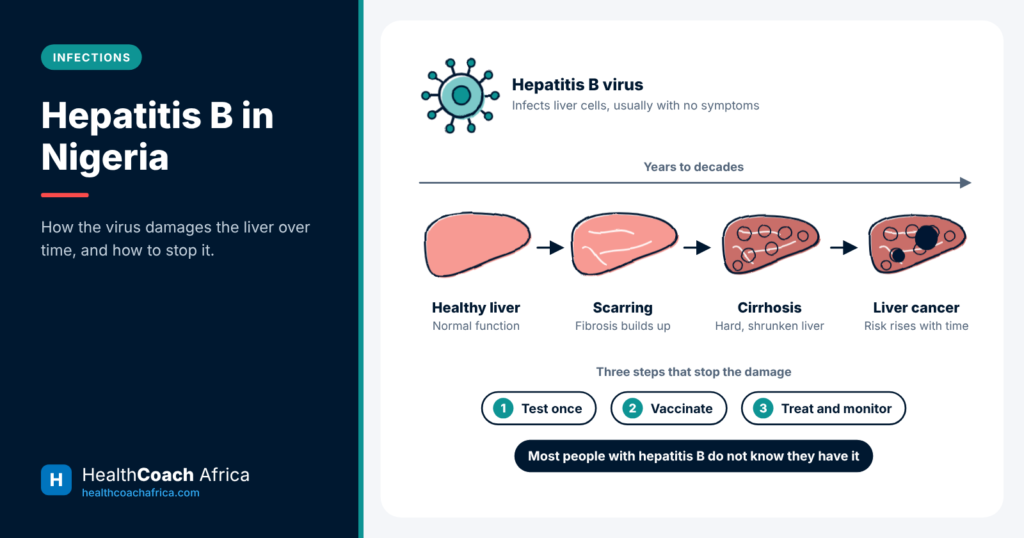
Many people feel completely well for years. When symptoms appear, they include tiredness, loss of appetite, nausea, dark urine, pain in the upper right abdomen and yellow eyes. Meanwhile, the virus can slowly scar the liver. Over time, this leads to cirrhosis or liver cancer. Because the damage is silent, testing is the only way to know your status.
Acute and chronic infection
Doctors describe two stages. Acute infection covers the first six months after the virus enters the body. Most healthy adults clear it during this period and become immune for life.
Chronic infection means that the virus is still present after six months. It can remain for decades and needs lifelong monitoring. The younger a person is when infected, the more likely the infection is to become chronic. This explains why so many adults living with hepatitis B in Nigeria were in fact infected as babies or small children.
Getting tested for hepatitis B in Nigeria
The first test is a rapid blood test called HBsAg. It is inexpensive, takes a few minutes and is available in most laboratories and hospitals. Everyone should be tested at least once, especially:
Pregnant women
Partners and household members of someone who is positive
Health workers
People living with HIV
Anyone with a family history of liver disease
If the result is positive, do not panic. Your doctor will order further tests, including liver function tests, a viral load and an ultrasound scan. Not everyone needs medicine straight away. However, everyone who is positive needs a check-up every six to twelve months.
Understanding your results
Laboratory reports use several abbreviations. This is what the main ones mean:
HBsAg positive. The virus is present in your blood now.
Anti-HBs positive. You are protected, either through vaccination or a past infection that cleared.
Anti-HBc positive. You have been exposed to the virus at some point.
HBeAg and viral load (HBV DNA). These show how actively the virus is multiplying.
ALT. This liver enzyme rises when the liver is inflamed.
Your doctor may also request an ultrasound scan or a scan that measures liver stiffness. Together, these results decide whether you need medicine now or monitoring only. If every test is negative, you have never been infected and should be vaccinated.
The vaccine protects for life
The hepatitis B vaccine is safe and highly effective. Babies should receive the first dose within 24 hours of birth, followed by the routine infant doses. In Nigeria, these are given free at 6, 10 and 14 weeks as part of routine immunisation. Adults who test negative can be protected with three doses over six months. Therefore, if your partner or a family member is positive, get tested and vaccinated.
Protecting babies during pregnancy and birth
Preventing infection at birth is the most powerful way to reduce hepatitis B in Nigeria. Every pregnant woman should therefore be tested at antenatal clinic.
If you are positive, your baby can still be protected:
The birth dose. The baby should receive the vaccine within 24 hours of delivery. If you deliver at home, take the baby to a health facility the same day.
Extra protection. Where available, an antibody injection called HBIG is given at the same time.
Treatment for the mother. Women with a high viral load may take an antiviral tablet in the last three months of pregnancy.
Completing the schedule. The baby then receives the routine doses on time.
Afterwards, the baby is tested between 9 and 12 months of age to confirm that protection has worked.
Treatment and living well
There is no complete cure yet for chronic infection. However, daily antiviral tablets such as tenofovir or entecavir control the virus and protect the liver. Treatment is usually long term, and stopping suddenly can cause a dangerous flare. For that reason, never stop without medical advice.
Pregnant women with a high viral load may be given tenofovir in late pregnancy to protect the baby. In addition, protect your liver by avoiding alcohol and herbal concoctions. Be wary of anyone who promises to “flush out” the virus, because no herbal product has been shown to cure hepatitis B.
Checking for liver cancer
Chronic hepatitis B is a leading cause of liver cancer in Africa. The cancer causes no symptoms at first, yet it is treatable when found early. Consequently, doctors recommend an ultrasound scan of the liver every six months for people at higher risk. This includes those with cirrhosis or a family history of liver cancer. Ask your doctor whether you should be on this schedule.
Everyday precautions at home
Living with the virus does not require isolation. A few sensible habits are enough:
Do not share razors, toothbrushes, nail cutters or needles
Cover cuts and sores with a plaster
Clean blood spills with diluted bleach
Use condoms until your partner has been tested and vaccinated
There is no need for separate plates, cups or cutlery. Likewise, cooking for the family, hugging and sharing a bed are all safe.
Ending the stigma
Sadly, fear and misinformation still stop many people from seeking a test for hepatitis B in Nigeria, and some lose jobs or relationships after a positive result. A positive result is not a death sentence, and it is not a reason for shame. People with hepatitis B can work, marry, have children and live long, healthy lives. With testing, vaccination of partners and regular monitoring, the risk to others is very low.
Hepatitis B, C and D are not the same
The letters cause confusion. Hepatitis C also spreads through blood, but it has no vaccine and can now be cured with tablets taken for two to three months. Hepatitis D infects only people who already have hepatitis B, so the B vaccine protects against both. Hepatitis A and E spread through contaminated food and water and usually clear on their own.
Frequently asked questions
Can hepatitis B be cured?
A complete cure is rare at present. However, treatment controls the virus so well that most people live a normal lifespan.
Can I donate blood?
No. Anyone who tests positive for HBsAg should not donate blood.
Do I need a booster dose of the vaccine?
Healthy people who completed the full course generally do not.
Can I be refused a job because of my result?
Hepatitis B does not spread through ordinary workplace contact, so there is no medical reason to exclude someone from most jobs. If you face discrimination, ask a doctor for a letter explaining this.
Should my children be tested?
Yes. Because hepatitis B in Nigeria often spreads within families, test every household member. Vaccinate those who are negative and link those who are positive to care.
A realistic path forward
Reducing hepatitis B in Nigeria does not depend on new science. It depends on three actions repeated in every family: one test, a full vaccine course and steady follow-up for those who are positive.
Getting help
Tackling hepatitis B in Nigeria starts with one test. HubPharm pharmacists can advise on testing, vaccination schedules and long-term antiviral refills, and Afiya answers questions privately on WhatsApp. Read more about the vaccines every adult should take, or see the World Health Organization’s hepatitis B fact sheet.
Please follow and like us:
Views:90
Related Posts:
Signs of Postpartum Depression Every New Mother Should Know A new baby is expected to bring joy, so many mothers hide how they really feel. Yet studies in Nigeria have found depression in anywhere from about 15% to 45% of women after childbirth, depending…
Diabetes in Nigeria: Why Blood Sugar Control Fails Diabetes in Nigeria does not usually fail in the clinic. Among people who reach a specialist and stay in care, control is often reasonable. It fails in the years before anyone tests you, and it…
Thyroid Disease in Pregnancy: Risks, Tests and Safe… The thyroid is a small gland in the neck, but during pregnancy it carries a heavy load. For the first three months, a baby depends entirely on the mother's thyroid hormone for brain development. Thyroid…
Malaria Prevention in Pregnancy: Protecting Mother and Baby Pregnancy changes the body's defences, and malaria takes advantage of this. In Nigeria, where malaria is present all year round, pregnant women face a higher risk of infection and of serious complications. Fortunately, simple and…