Diphtheria was once a leading cause of death among children worldwide. Vaccination made it rare in many countries. However, Nigeria has faced large diphtheria outbreaks since 2022, mainly in northern states, with thousands of confirmed cases and more than a thousand deaths. Most of those affected were children who had not been fully vaccinated. This guide explains diphtheria symptoms and vaccination, and how to protect your family.
What diphtheria is
Diphtheria is a bacterial infection caused by Corynebacterium diphtheriae. Some strains produce a powerful toxin, or poison, that damages tissues in the throat and can spread through the blood to the heart, nerves and kidneys.
It spreads through droplets from coughs and sneezes, close contact with an infected person, and, less often, contact with infected skin sores or contaminated objects.
Nigeria’s recent outbreaks
Between 2022 and early 2025, the Nigeria Centre for Disease Control recorded more than 40,000 suspected diphtheria cases across most states, with over 1,300 deaths. Most cases were reported from Kano, Yobe, Katsina, Bauchi, Borno, Kaduna and Jigawa. Only about one in five confirmed cases had been fully vaccinated. These figures show how gaps in childhood immunisation allow old diseases to return.
Early symptoms
Symptoms usually start two to five days after exposure:
Sore throat
Mild fever
Weakness and tiredness
Difficulty swallowing
Hoarse voice
Swollen glands in the neck
The warning sign: a grey membrane
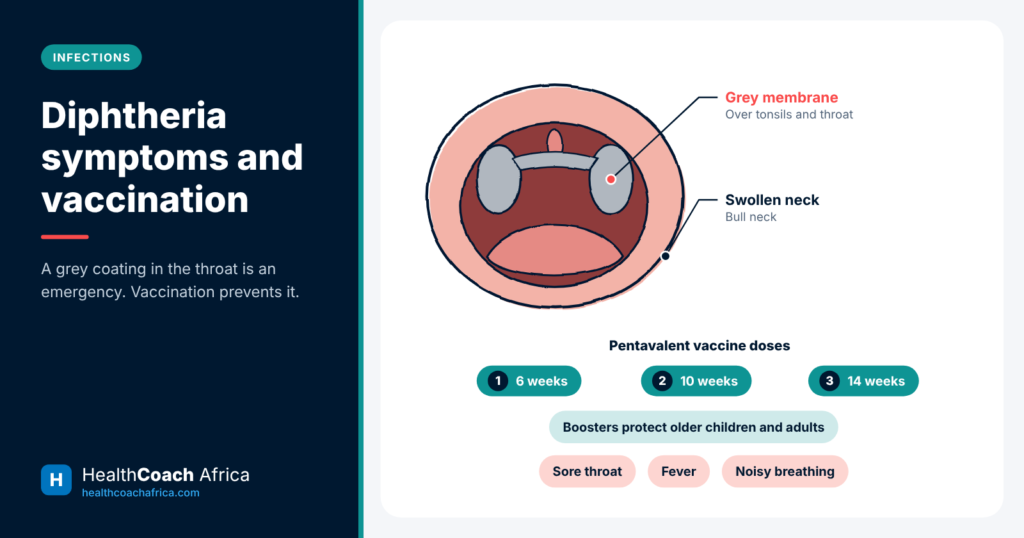
The most typical sign is a thick, grey or white coating, called a pseudomembrane, on the tonsils, throat or nose. It sticks firmly to the tissue and may bleed if scraped. As the infection progresses, the neck can swell dramatically, giving a “bull neck” appearance.
Diphtheria symptoms and vaccination: who is at risk?
Anyone who is not fully vaccinated can catch diphtheria. Children who missed their routine vaccines are most at risk. Adults whose protection has faded over time are also vulnerable. Crowded living conditions, such as camps for displaced people, overcrowded homes and schools, help diphtheria spread. Health workers caring for patients are also at risk and should be fully vaccinated.
Severe symptoms
Diphtheria becomes life-threatening when:
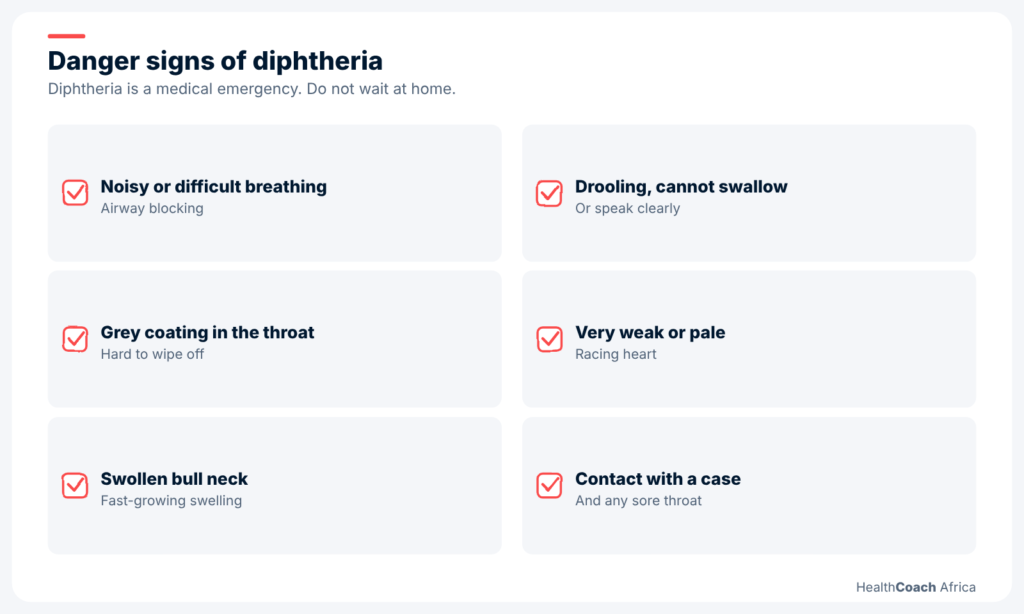
The membrane blocks the airway, causing noisy breathing or difficulty breathing
The toxin damages the heart, causing an irregular heartbeat or heart failure
The toxin affects nerves, causing difficulty swallowing, weakness or paralysis
Children under five and adults over 40 face the highest risk of death.
When to seek urgent help
Go to a health facility immediately if anyone, especially a child, has:
A sore throat with a grey coating in the throat
A swollen neck
Difficulty breathing or swallowing
Drooling or noisy breathing
Tell the health worker if there are diphtheria cases in your area.
Danger signs needing urgent hospital care, from diphtheria symptoms and vaccination guidance
Early antitoxin and antibiotics save lives. Go to the nearest hospital.
How diphtheria is treated
Diphtheria is a medical emergency. Treatment includes:
Diphtheria antitoxin, 1 which neutralises the toxin. It must be given as early as possible.
Antibiotics, such as penicillin or erythromycin 2 , to kill the bacteria and stop spread
Support for breathing, sometimes including a breathing tube or tracheostomy
Isolation, to prevent spread to others
Antitoxin supplies have been limited during outbreaks, which makes prevention even more important.
HUBPHARM PHARMACIST’S NOTE Contacts of a diphtheria case are often given a short course of antibiotics, such as erythromycin or azithromycin, and stopping early leaves them unprotected. Message a HubPharm pharmacist if you have been given preventive antibiotics. We will explain the dose, the side effects and how to fit it around meals and other medicines.
Protecting close contacts
Household members and other close contacts of a person with diphtheria are at high risk. They may be given antibiotics to prevent infection and a vaccine booster if their vaccination is incomplete. Health workers may take throat swabs to check for the bacteria.
Diphtheria symptoms and vaccination: the vaccine
The diphtheria vaccine contains an inactivated form of the toxin, called a toxoid. It teaches the body to neutralise the real toxin. In Nigeria, it is part of the pentavalent vaccine, 3 which also protects against whooping cough, tetanus, hepatitis B and Haemophilus influenzae type b.
Nigeria’s vaccination schedule
Children should receive the pentavalent vaccine at:
6 weeks
10 weeks
14 weeks
Booster doses of diphtheria-containing vaccines are recommended later in childhood and adolescence. Adults may need boosters, especially during outbreaks. The vaccines are free at public health facilities.
Diphtheria symptoms and vaccination: a family checklist
Check every child’s immunisation card for three doses of the pentavalent vaccine
Ask about booster doses for older children and teenagers
Ask whether adults in the household need a booster
Watch for sore throat with a grey coating or neck swelling
Seek care immediately if these appear
Follow advice for contacts if a case is confirmed nearby
Catch-up vaccination
Children who missed doses can still be vaccinated. During outbreaks, health authorities may run campaigns offering vaccines to children and adults in affected areas. Check your child’s immunisation card and ask your health worker about any missed doses.
Caring for someone at home after treatment
After hospital treatment, recovery can take weeks. Heart and nerve problems can appear even after the throat improves. Watch for breathlessness, chest pain, a racing heartbeat, difficulty swallowing or weakness in the arms and legs. Seek care immediately if these appear. Complete all prescribed antibiotics. Make sure the patient receives a full course of diphtheria vaccine after recovery, because having the disease does not always give lasting protection.
Health workers and diphtheria
Health workers are on the front line during outbreaks. They should be fully vaccinated, use masks when examining patients with sore throats, isolate suspected cases and report them quickly. Recognising diphtheria symptoms and vaccination gaps early allows faster response.
Myths about the pentavalent vaccine
“Too many vaccines overload a baby’s immune system.” Babies’ immune systems handle many challenges every day. Combined vaccines are safe and reduce the number of injections.
“Vaccines cause infertility.” There is no evidence for this claim.
“If my child is healthy, they do not need vaccines.” Vaccines protect healthy children from becoming sick. Diphtheria symptoms and vaccination facts show why every dose matters.
Skin diphtheria
Diphtheria can also infect the skin, causing sores or ulcers that heal slowly. Skin diphtheria is usually less severe than the throat form. However, it can spread the bacteria to others. Any slow-healing sore in someone who has been near a diphtheria case should be checked.
Travel and diphtheria
Before travelling to areas with active outbreaks, check that you are fully vaccinated. Ask about a booster if your last dose was many years ago. Children travelling to see relatives during holidays should have all routine doses first.
What communities can do
Communities can help end outbreaks. Religious and traditional leaders can encourage vaccination. Parents can share accurate information. Schools can check vaccination records. Everyone can help by reporting suspected cases quickly. Knowledge of diphtheria symptoms and vaccination spreads protection as fast as rumours spread fear.
Is the vaccine safe?
Diphtheria-containing vaccines have been used safely for decades. Side effects are usually mild, such as pain or swelling at the injection site, mild fever or irritability.
Myths about diphtheria
“Diphtheria is a disease of the past.” Nigeria’s recent outbreaks show it can return when vaccination falls.
“A sore throat is never serious.” A sore throat with a grey membrane and swollen neck is an emergency.
Recovery can take weeks. The toxin can affect the heart and nerves, so doctors may advise rest and heart checks. Having diphtheria does not always give lasting protection. Survivors should complete their vaccines once they recover. Learn the diphtheria symptoms and vaccination steps for your whole family.
Getting help
Knowing diphtheria symptoms and vaccination facts can save lives. The WHO diphtheria fact sheet has more information. Check your family’s vaccine records today. For advice on catch-up vaccines, antibiotics prescribed for contacts or fever care, message a HubPharm pharmacist or ask Afiya on WhatsApp.
Medicines and products in this article
#
Medicine or product
What to know
1
Diphtheria antitoxin
Hospital use only
Neutralises the toxin. Given as early as possible.
2
Erythromycin or penicillin
Prescription only
Treats infection and protects close contacts.
3
Pentavalent vaccine
Free at public facilities
Protects against diphtheria and four other diseases. Given at 6, 10 and 14 weeks.
To order any of these, or to ask a pharmacist a question first, message HubPharm on WhatsApp or visit hubpharmafrica.com. Prescription medicines are supplied against a valid prescription.
Measles Symptoms and Vaccination: What Every Parent… Measles is one of the most contagious diseases in the world. It spreads quickly among children who are not vaccinated and can cause blindness, brain damage and death. Outbreaks still occur in Nigeria, especially…
Rheumatic Heart Disease Prevention: Protecting… Rheumatic heart disease is a preventable condition that still damages the hearts of many children and young adults in Africa. It begins with something as common as a sore throat. When a particular bacterial throat…
Liver Cancer in Nigeria: Causes, Warning Signs and… Liver cancer is one of the leading causes of cancer death in Nigeria. It often affects people in their thirties, forties and fifties, at the most productive time of their lives. Sadly, most patients are…
Hepatitis B in Nigeria: Testing, Vaccine and… Hepatitis B is a viral infection that attacks the liver, often silently, for decades. The World Health Organization's 2026 Global Hepatitis Report lists Nigeria among ten countries that together account for nearly 70% of deaths…