Liver cancer is one of the leading causes of cancer death in Nigeria. It often affects people in their thirties, forties and fifties, at the most productive time of their lives. Sadly, most patients are diagnosed when the cancer is advanced and treatment options are limited. Yet a large share of liver cancer in Nigeria can be prevented. This guide explains the causes, the warning signs and the steps that protect your liver.
What the liver does
The liver is the largest organ inside the body. It sits under the ribs on the right side of the abdomen. It processes nutrients, stores energy, makes proteins that help blood clot, clears toxins and medicines, and produces bile to digest fat.
The liver is very resilient. It can keep working even when much of it is damaged. This is one reason why liver disease often causes no symptoms until it is advanced.
The main type of liver cancer
Most primary liver cancers, meaning cancers that start in the liver, are hepatocellular carcinoma. This cancer grows from the main liver cells. It usually develops in a liver that has already been damaged for many years by infection, toxins or scarring.
Cancer can also spread to the liver from other organs, such as the bowel or breast. That is called secondary or metastatic liver cancer and is treated differently.
Hepatitis B: the leading cause
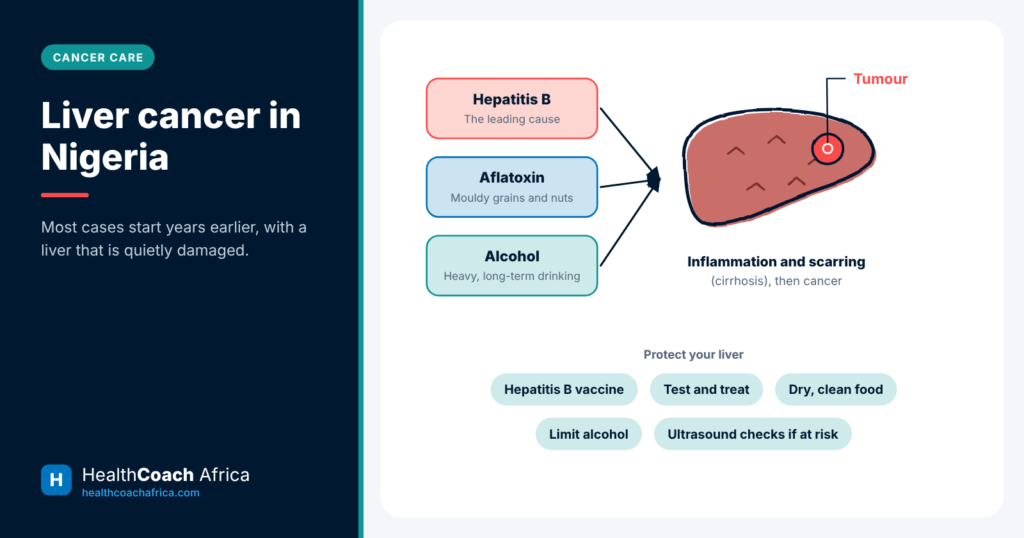
Chronic hepatitis B infection is the most important cause of liver cancer in Nigeria. The virus is common in the country, and many people were infected at birth or in early childhood. Most of them feel well and do not know they carry it.
Over decades, the virus causes inflammation, scarring and sometimes cancer, even without cirrhosis. The World Health Organization notes that hepatitis B can be prevented with a safe and effective vaccine, and that treatment can slow liver damage. Testing is the first step.
Other important causes
Hepatitis C, another virus spread mainly through blood, which can now be cured with tablets
Aflatoxin, a poison made by moulds that grow on groundnuts, maize and other grains stored in warm, damp conditions. Aflatoxin and hepatitis B together raise the risk sharply.
Heavy alcohol use, which leads to scarring and cirrhosis
Fatty liver disease, linked to obesity and type 2 diabetes
Cirrhosis from any cause
Some herbal mixtures that contain liver toxins
Warning signs of liver cancer in Nigeria
Early liver cancer rarely causes symptoms. When symptoms appear, they may include:
A dull pain or discomfort under the right ribs
A lump or swelling in the upper abdomen
Loss of appetite and feeling full quickly
Unexplained weight loss
Yellowing of the eyes and skin, called jaundice
A swollen abdomen caused by fluid
Tiredness and weakness
Fever without a clear cause
People who already have hepatitis B or cirrhosis should report any of these promptly.
Why liver cancer in Nigeria is often found late
Several factors delay diagnosis. Most people with hepatitis B have never been tested. Early cancer causes no pain. Symptoms such as tiredness and poor appetite are often blamed on malaria, ulcer or stress. Many patients first try herbal treatment. Some cannot afford scans. By the time jaundice or a swollen abdomen appears, the cancer is often large.
Changing this pattern is the key to reducing deaths from liver cancer in Nigeria. Regular testing for people at risk, and quick referral when symptoms appear, can find tumours while treatment still works.
Who needs regular checks?
Because early liver cancer is silent, people at high risk should be checked regularly, even when they feel well. This is called surveillance. It is usually recommended for:
People with cirrhosis from any cause
People with chronic hepatitis B, especially men over 40, women over 50, and anyone with a family history of liver cancer
People with hepatitis C and advanced scarring
Surveillance usually means an ultrasound scan of the liver every six months, sometimes with a blood test called alpha-fetoprotein. Finding a small tumour gives the best chance of effective treatment.
How liver cancer is diagnosed
Doctors use a combination of tests. Ultrasound often detects a mass first. A CT or MRI scan with contrast dye then shows its features, size and spread. Blood tests assess liver function and alpha-fetoprotein levels. In some cases, a small tissue sample is needed. Tests for hepatitis B and C are also done.
Treatment options
Treatment depends on the size and number of tumours, how well the liver is working and the patient’s general health:
Surgery to remove part of the liver, for small tumours in a healthy enough liver
Ablation, which destroys small tumours with heat through a needle
Embolisation, which blocks the blood supply to the tumour and may deliver chemotherapy directly
Liver transplant, an option for some patients, though it is rarely available in Nigeria
Targeted and immune therapies, medicines that can slow advanced cancer
Palliative care, which focuses on comfort and quality of life, is important at every stage.
Preventing liver cancer in Nigeria
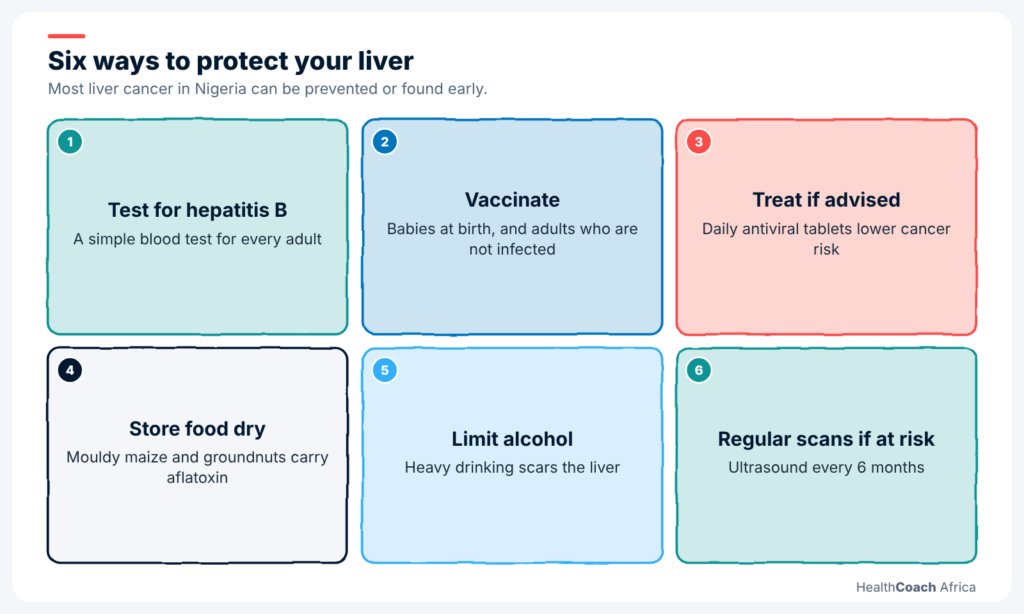
Many cases can be prevented with simple steps:
Get tested for hepatitis B and C. A blood test tells you your status.
Make sure newborns receive the hepatitis B birth dose within 24 hours.
Take hepatitis treatment as prescribed and attend follow-up visits.
Store grains and groundnuts dry, and throw away any that look mouldy, discoloured or shrivelled.
Limit alcohol and keep a healthy weight.
Avoid unregulated herbal mixtures that can harm the liver.
HUBPHARM PHARMACIST’S NOTE Tenofovir for hepatitis B works only when it is taken every day, for years. Running out, even for a few weeks, can let the virus rebound and inflame the liver. Ask HubPharm to set up a monthly tenofovir refill with reminders. We can also help you arrange hepatitis B tests and vaccines for your partner and children.
Preventing liver cancer in Nigeria” section. Alt text: Six steps to prevent liver cancer in Nigeria, from hepatitis B testing to safe food storage
Hepatitis B testing and vaccination are the most powerful steps for most families.
Hepatitis B treatment lowers the risk
Not everyone with hepatitis B needs medicine. However, people with active liver inflammation or scarring benefit from antiviral tablets such as tenofovir 2 . These medicines suppress the virus and reduce the risk of cirrhosis and cancer. They are usually taken long term, so regular supply matters.
Living with hepatitis B
A positive hepatitis B result can be frightening. However, most people with hepatitis B live long, healthy lives with good monitoring. Your doctor will check your liver enzymes, the amount of virus in your blood and your liver scan. Some people need treatment, while others need only regular checks.
Protect your liver by avoiding alcohol and unnecessary herbal products. Make sure your partner and children are tested and vaccinated. Do not share razors or toothbrushes. Attend every follow-up visit. These steps lower your personal risk of liver cancer in Nigeria and protect your family.
Aflatoxin: a hidden risk in stored food
Aflatoxin is produced by moulds on poorly dried and poorly stored crops. Groundnuts, maize, rice and dried peppers are common sources. You cannot see aflatoxin, but mould, discolouration and shrivelled grains are warning signs. Buy from clean, dry stores. Sort grains and groundnuts before use. Keep food in dry, ventilated containers off the floor. Discard anything mouldy.
Myths about liver cancer
“Liver disease only affects heavy drinkers.” In Nigeria, hepatitis B is a far more common cause.
“I feel well, so my liver is fine.” The liver rarely causes symptoms until damage is advanced.
“Bitters and herbal cleanses protect the liver.” Some herbal products can damage it.
Getting help
Knowing the causes of liver cancer in Nigeria puts prevention in your hands. Ask your doctor or nearest health facility for a hepatitis B test today. If you are living with hepatitis B and need help with tenofovir supplies, monitoring tests or vaccines for your family, message a HubPharm pharmacist or ask Afiya on WhatsApp.
Medicines and products in this article
#
Medicine or product
What to know
1
Hepatitis B vaccine
Vaccine
Prevents hepatitis B. Given at birth to babies and to adults who are not infected.
2
Tenofovir
Prescription only
Antiviral tablet for chronic hepatitis B. Taken daily, usually long term. Do not stop without advice.
To order any of these, or to ask a pharmacist a question first, message HubPharm on WhatsApp or visit hubpharmafrica.com. Prescription medicines are supplied against a valid prescription.
Fatty Liver Disease Symptoms: The Silent Condition… Fatty liver disease is becoming one of the most common liver conditions in the world, and Nigeria is no exception. It is closely linked to rising rates of obesity, type 2 diabetes and high blood…
Colorectal Cancer Early Signs: What Your Bowel Is… Colorectal cancer, also called bowel cancer, affects the colon and the rectum. It is one of the most common cancers worldwide, and doctors in Nigeria are seeing more cases, including in people under 50. Many…
Breast Cancer Warning Signs: What Every Woman Should Check Breast cancer is the most common cancer in Nigeria. Sadly, many women reach hospital only when the disease is advanced and harder to treat. Knowing the breast cancer warning signs, and acting on them quickly,…
Tuberculosis Symptoms and Treatment: What You Need to Know Tuberculosis, or TB, is one of the oldest diseases known to humans, and it remains a major killer. Nigeria has one of the highest TB burdens in Africa, and many people with the disease have…