Rheumatic heart disease is a preventable condition that still damages the hearts of many children and young adults in Africa. It begins with something as common as a sore throat. When a particular bacterial throat infection is not treated, it can trigger rheumatic fever, which can permanently damage the heart valves. Rheumatic heart disease prevention is simple and cheap, but it depends on early action. This guide explains how.
From sore throat to heart damage
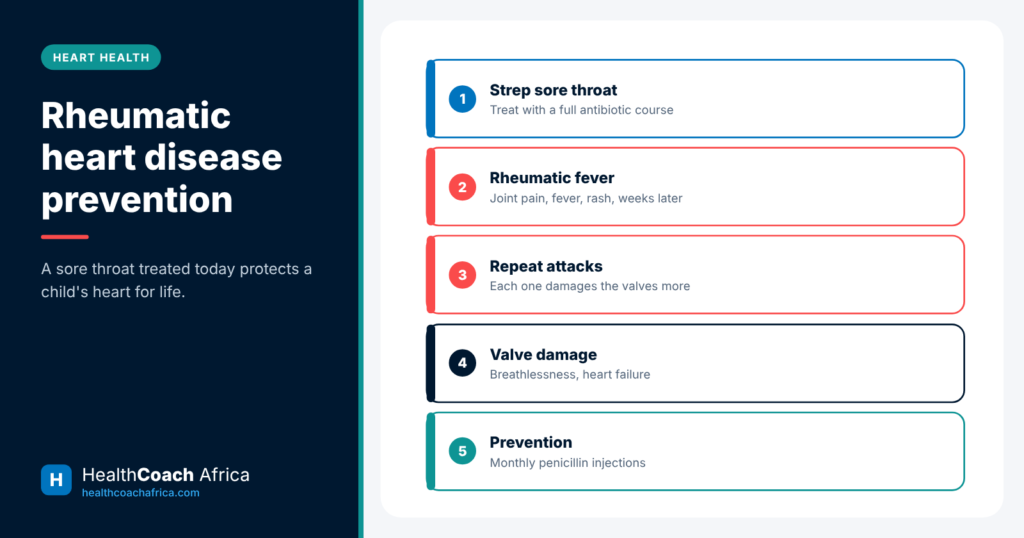
The story often starts in childhood, usually between the ages of 5 and 15:
A child gets a throat infection caused by group A streptococcus bacteria, often called strep throat.
The infection is not treated with the right antibiotic.
Two to four weeks later, the immune system attacks the body’s own tissues. This is called acute rheumatic fever.
Rheumatic fever inflames the heart, joints, skin and brain.
Repeated attacks scar the heart valves, leading to rheumatic heart disease.
Why it matters
The World Health Organization describes rheumatic heart disease as a major cause of heart disease in children and young adults in low- and middle-income countries. Damaged valves can lead to heart failure, stroke, irregular heartbeat and death. Women with rheumatic heart disease face serious risks during pregnancy.
Who is most at risk?
Rheumatic fever is linked to poverty and overcrowding, which allow strep infections to spread. Risk is higher in children who:
Live in crowded homes or attend crowded schools
Have limited access to health care
Do not complete antibiotic treatment for sore throats
Have had rheumatic fever before
Signs of strep throat
Strep throat often causes:
Sudden sore throat and pain when swallowing
Fever
Red, swollen tonsils, sometimes with white patches
Tender, swollen glands in the neck
Headache and stomach ache, especially in children
Cough, runny nose and hoarseness are more typical of viral infections, which do not cause rheumatic fever.
Step 1 of rheumatic heart disease prevention: treat strep throat
Treating strep throat properly prevents most cases of rheumatic fever. Penicillin, given as a single injection of benzathine penicillin 1 or as amoxicillin 2 or penicillin tablets for ten days, is the usual treatment. Completing the full course is essential, even when the child feels better after a few days.
Do not rely on leftover antibiotics or the wrong medicine from a roadside seller. If a child has a sore throat with fever and swollen tonsils, have them checked by a health worker.
Signs of rheumatic fever
See a doctor promptly if, a few weeks after a sore throat, a child develops:
Painful, swollen joints that move from one joint to another
Fever
Chest pain, breathlessness or a fast heartbeat
Jerky, uncontrolled movements of the face, arms or legs
A pink, ring-shaped rash or small lumps under the skin
Making penicillin injections easier
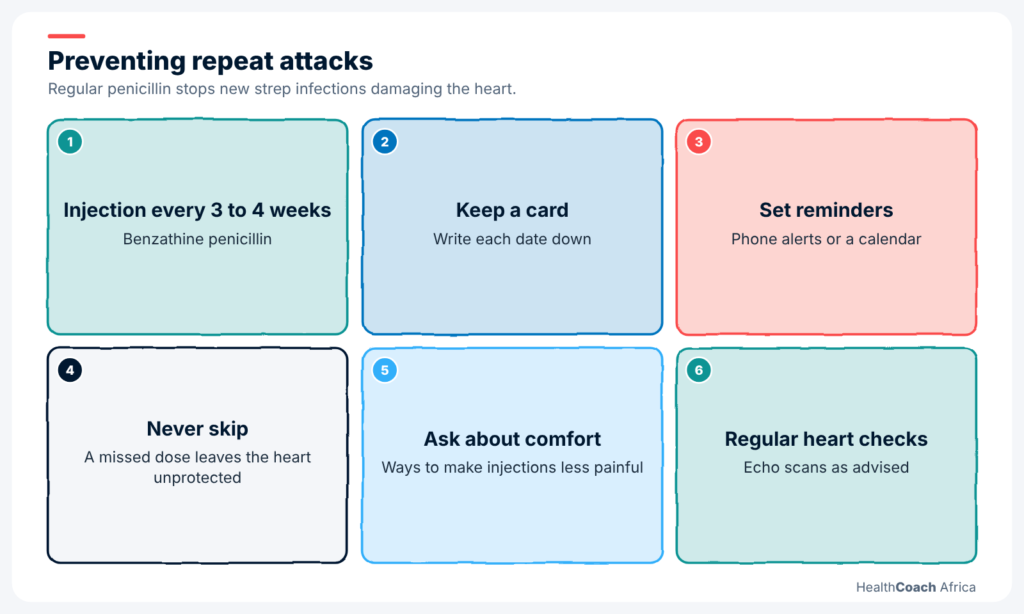
Regular injections can be painful and inconvenient, and many young people stop them. Practical steps help. Keep a calendar or phone reminder. Ask the clinic to record each dose in a card. Warm the injection to room temperature and inject slowly to reduce pain. Some clinics mix a small amount of local anaesthetic with the penicillin. Families, schools and community health workers can help young people stay on track.
Step 2: prevent repeat attacks
People who have had rheumatic fever are at high risk of further attacks, each of which causes more heart damage. Secondary prevention means regular antibiotics to stop new strep infections. This usually involves an injection of benzathine penicillin every three to four weeks for many years, often until age 21 or longer if the heart is affected.
This is one of the most important parts of rheumatic heart disease prevention. Missing injections allows new infections and more valve damage.
HUBPHARM PHARMACIST’S NOTE Benzathine penicillin injections every three to four weeks are the backbone of protection, but stock-outs and forgotten dates are common. Ask HubPharm to keep your child’s penicillin supply and reminder schedule. We will send a message before each injection is due and help you find a clinic to give it.
Monthly penicillin plan for rheumatic heart disease prevention after rheumatic fever
Your doctor will advise how many years to continue the injections.
Diagnosing rheumatic heart disease
Rheumatic heart disease is diagnosed with an echocardiogram, an ultrasound scan of the heart. It shows how well the valves open and close. Some programmes use portable echo machines to screen schoolchildren and find early disease before symptoms appear.
Symptoms of rheumatic heart disease
Damaged valves may cause no symptoms for years. Later, symptoms include:
Breathlessness, especially on exertion or when lying flat
Tiredness
Swollen ankles
Palpitations
Chest pain
Fainting
Treatment for damaged valves
Treatment includes continued penicillin injections, medicines to manage heart failure and irregular heartbeat, and blood thinners when needed. Some people need surgery to repair or replace a valve, or a balloon procedure to widen a narrowed valve. People with mechanical valves need lifelong blood thinners. Some heart medicines are similar to common blood pressure medications.
Rheumatic heart disease and pregnancy
Pregnancy places extra strain on the heart. Women with rheumatic heart disease should see a heart specialist before becoming pregnant and attend specialist antenatal care. Some heart medicines, including warfarin, need to be changed during pregnancy.
Rheumatic heart disease prevention in schools
Schools play a key role. Teachers can spot children with sore throats and fever and encourage treatment. Health education helps children understand why finishing antibiotics matters. Some programmes screen pupils with portable heart scans. Children with known rheumatic heart disease may need adjusted activity and support to attend clinic appointments.
Dental care matters
People with damaged or replaced heart valves are at risk of a heart infection called infective endocarditis. Bacteria from the mouth can enter the blood and settle on damaged valves. Good dental hygiene, regular dental check-ups and prompt treatment of tooth infections lower this risk. Tell your dentist about your heart condition.
Myths about sore throats and the heart
“A sore throat is never serious.” Untreated strep throat can lead to rheumatic fever and heart damage.
“Antibiotics can be stopped once the pain goes.” Stopping early may not clear the bacteria, so the full course is needed.
“Joint pains in children are just growing pains.” Joint pain with fever after a sore throat needs a medical check. Recognising this link is a key part of rheumatic heart disease prevention.
Community action
Rheumatic heart disease prevention works best when communities, schools and health workers act together. Improving living conditions, teaching families about sore throats, keeping penicillin available and tracking patients who need regular injections all reduce the burden.
Penicillin allergy
True penicillin allergy is less common than many people think. A rash after amoxicillin is often caused by the infection rather than the medicine. If you believe your child is allergic, tell the health worker. They will check the history and, if needed, choose another antibiotic, so that protection continues.
A simple plan for families
Treat any sore throat with fever and swollen tonsils promptly.
Finish every antibiotic course.
Watch for joint pain, fever or breathlessness in the weeks after a sore throat.
If rheumatic fever is diagnosed, keep every penicillin injection appointment.
Attend regular heart checks.
Look after teeth and gums.
Following these steps is rheumatic heart disease prevention in action. Each step is simple, and together they protect a child’s heart for life.
Life after valve surgery
People who have had a heart valve repaired or replaced still need care. Many must continue penicillin injections to prevent new attacks of rheumatic fever. Those with mechanical valves take a blood thinner for life and need regular blood tests. Good dental care lowers the risk of a heart valve infection. Rheumatic heart disease prevention does not stop after surgery.
Getting help
Treat sore throats with fever in children promptly, and make sure the full antibiotic course is completed. If your child has had rheumatic fever, keep up with every penicillin injection. For reliable supplies of benzathine penicillin, injection reminders or advice on heart medicines, message a HubPharm pharmacist or chat with Afiya on WhatsApp.
Medicines and products in this article
#
Medicine or product
What to know
1
Benzathine penicillin
Prescription only, injection
Treats strep throat and prevents repeat rheumatic fever when given every 3 to 4 weeks.
2
Amoxicillin
Prescription only
Ten-day course for strep throat when injections are not used.
To order any of these, or to ask a pharmacist a question first, message HubPharm on WhatsApp or visit hubpharmafrica.com. Prescription medicines are supplied against a valid prescription.
Childhood Cancer Warning Signs: Early Action Saves… Cancer in children is less common than in adults, but it is a leading cause of death in children worldwide. In high-income countries, more than eight in ten children with cancer survive. In low- and…
Lassa Fever Warning Signs: Early Action Saves Lives Lassa fever is a viral illness that is found in West Africa, and Nigeria reports more cases than any other country. Each year, outbreaks peak during the dry season, from about December to April. In…
Childhood Type 1 Diabetes: A Guide for Nigerian Families Many people think diabetes only affects older, overweight adults. However, children can develop diabetes too, and most children with diabetes have type 1. In Nigeria, childhood type 1 diabetes is often missed until the child…
Measles Symptoms and Vaccination: What Every Parent… Measles is one of the most contagious diseases in the world. It spreads quickly among children who are not vaccinated and can cause blindness, brain damage and death. Outbreaks still occur in Nigeria, especially…