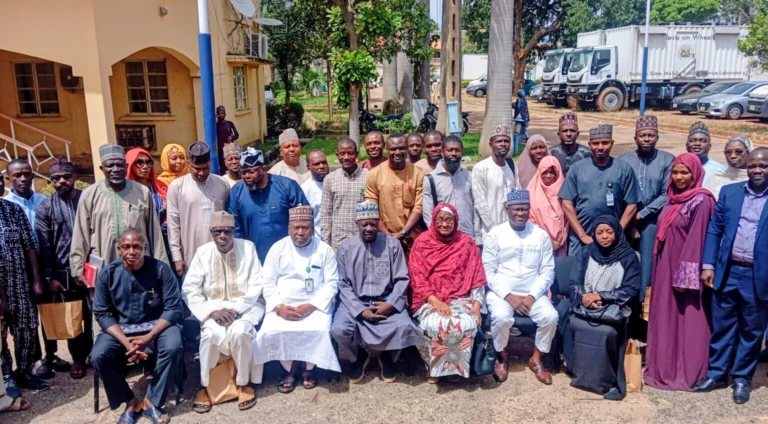
KADUNA, NIGERIA — As kaduna last-mile medicine delivery reaches over 1,000 health facilities statewide, Kaduna State’s integrated supply chain system has dramatically cut logistics costs and doubled monthly family planning access. Unveiled during a project review meeting organized by Capacity 4 Sustainable Development (C4SD) and supported by the Bill & Melinda Gates Foundation, officials confirmed that direct facility distribution has reduced turnaround times for essential pharmaceuticals from seven days down to 40 hours.
Before the implementation of the Strengthening Last-Mile Delivery and Supply Visibility project, healthcare workers in remote rural centers were frequently required to travel more than 200 kilometers to collect basic medical commodities from centralized urban depots.
Operational Benchmarks for Kaduna Last-Mile Medicine Delivery
Data presented by the Kaduna State Health Supply Management Agency (KADHSMA) and C4SD outline the operational transformations within the state’s health supply chain:
Logistics & Health Metric
Baseline Status
Current Project Benchmark
Direct Facility Coverage
Fragmented depot pickups
>1,000 health facilities receiving direct deliveries
On-Time Delivery Rate
Below 60% fulfillment
>95% on-time delivery rate achieved statewide
Request Turnaround Time
7 days average delay
~40 hours average request fulfillment window
Transport Cost Share
~9% of total commodity value
Reduced to 2% of total commodity value
Monthly Family Planning Access
Technical Mechanics: Kaduna Last-Mile Medicine Delivery
Understanding the supply chain innovations behind why kaduna last-mile medicine delivery has improved rural primary care relies on three core operational pillars:
Programmatic Integration and Zonal Warehousing: Instead of operating isolated distribution channels for HIV, malaria, maternal care, tuberculosis, and reproductive health, Kaduna consolidated five public health programs into a unified distribution model. Four strategic zonal pharma-grade warehouses in Ikara, Sabon Gari, Zaria, and Kafanchan now service local health clusters.
Drug Revolving Fund (DRF) Recapitalization: To prevent stock-outs between government allocations, the project recapitalized DRFs across 99 primary healthcare centers and five secondary hospitals. DRFs allow clinics to sell essential medicines at regulated prices, immediately utilizing cash receipts to re-order inventory from KADHSMA without administrative delays.
Turnaround Logistics and Last-Mile Visibility: By deploying digital supply visibility tools, regional logistics managers monitor real-time consumption rates at the facility level, enabling automated restocking orders that reduced request-to-delivery cycles from seven days down to 40 hours.
Peer-Learning Interest, Governance, and Sustainability Challenges
Kaduna’s integrated logistics model has drawn national interest, with five Nigerian states currently participating in a peer-learning study tour managed by KADHSMA Executive Secretary Mrs. Aisha Isyaku to replicate the framework subnationally.
Co-designed in late 2024 and piloted in March 2025, the Gates Foundation-supported grant has been formally extended through September 2029. Speaking on behalf of Health Commissioner Hajiya Ummu Ahmed, Director of Health Planning and Research Dr. Sunday Joseph reaffirmed the administration’s commitment to absorbing operational costs into the state budget. C4SD Programme Director Pharmacist Kolo Yakubu stressed that long-term success hinges on establishing complete state financial ownership before donor funding expires in 2029.
Primary Healthcare Impact, Chronic Care, and Sector Outlook
In public health systems across Sub-Saharan Africa, frequent drug stock-outs at the primary care level drive patients toward unregulated informal drug vendors, risking exposure to counterfeit or substandard medications. For patients managing chronic conditions such as hypertension, diabetes, or HIV, uninterrupted access to monthly drug refills at neighborhood clinics prevents disease progression and severe clinical complications.
By bringing essential medicines directly to primary health centers rather than forcing clinical staff to abandon patient care for long transport trips, Kaduna’s model demonstrates how solving last-mile logistics builds patient trust in public health infrastructure as kaduna last-mile medicine delivery sets a regional benchmark.
Why It Matters: Reliable last-mile drug delivery guarantees that life-saving chronic and primary care medications remain on rural clinic shelves, establishing the functional foundation of a public healthcare system patients can trust.
Gates Cambridge Scholarship 2027 2028 Applications… Securing postgraduate funding for advanced health research or global health policy at the University of Cambridge is one of the most impactful milestones for international medical, clinical, and public health scholars. The Gates Cambridge Scholarship…
Bill & Melinda Gates Foundation Announces $800k… Securing non-dilutive research and development grant funding is essential for African laboratories, reference centers, and universities striving to democratize genomic surveillance. The Gates Pathogen Sequencing Grants opportunity offers significant financial backing to pioneer affordable, operationally…
Malaria Prevention for Travellers: Staying Safe on Your Trip Every year, many people travel to Nigeria for business, holidays, weddings, funerals and family visits. These include Nigerians who live abroad and return home. Malaria is present throughout Nigeria, all year round. Travellers who have…
UNFPA Supports Treatment of 104 VVF Patients in Kaduna The United Nations Population Fund (UNFPA) has provided crucial support for the treatment of 104 patients suffering from Vesico Vaginal Fistula (VVF) in Kaduna State. VVF, also known as obstetric fistula, is a distressing condition…