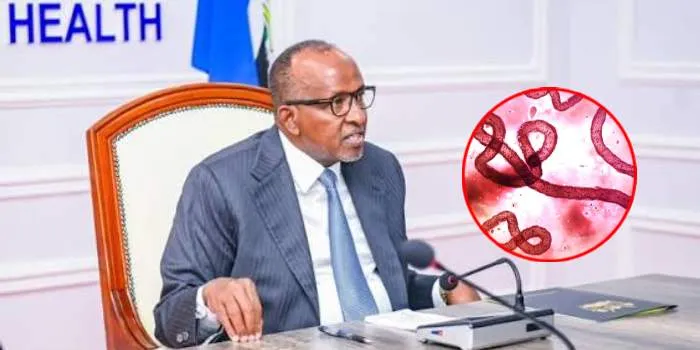
NAIROBI, KENYA — Kenya has recorded its sixth Ebola recovery and gone 18 days without a new infection, moving closer to the Kenya Ebola recovery countdown that must be completed before the outbreak can be declared over, Kenyans.co.ke reported on 6 November.
Health Director-General Dr Patrick Amoth said the latest patient, a man, tested negative and was discharged. One patient remains in treatment. Kenya has confirmed nine infections in total, including two deaths, since the outbreak began in October.
How the Kenya Ebola recovery countdown works
The 42-day countdown begins only after the last patient leaves the treatment centre free of the virus, the Ministry of Health said. Forty-two days is twice the longest incubation period for Ebola, and if no new case is confirmed in that time, the outbreak can be declared over under WHO guidance.
The ministry said the countdown is separate from the 21-day monitoring period for contacts. According to the update, 66 contacts have completed 21 days of monitoring and returned home, and another 52 are expected to finish quarantine by 11 November.
Kenya confirmed its first imported case on 6 October 2026. The last confirmed infection was recorded on 19 October, and later cases were found among people already in quarantine, the ministry said.
One chain of transmission
All nine cases come from one known chain of transmission, and the ministry said there has been “no spread in the community.” Containing an outbreak within a single traced chain is a sign that contact tracing and quarantine have worked.
WHO’s latest Disease Outbreak News report, published on 6 November, noted that four health and care workers were among the eight secondary cases in Kenya’s cluster. Health workers are at high risk in the early days of an outbreak, before Ebola is suspected and full protective measures are in place.
Health workers in the Kenya cluster were infected before the outbreak was recognised, a pattern seen in many Ebola outbreaks. Since then, Kenya has trained more than 4,900 health workers and deployed 349 rapid response teams, according to earlier Ministry of Health figures, to reduce that risk.
Kenya will continue screening travellers at all 26 points of entry, where more than 760,000 people have been screened, the ministry said. The public can report suspected cases or seek information through the toll-free line 719, the USSD code *719# and the WhatsApp line 0700 719 719.
Travel bans and their cost
Several countries continue to impose travel restrictions on Kenya. Kuwait and Saudi Arabia recently barred more than 350 Kenyans from entering, according to the report.
Kenya has called the restrictions punitive, and Africa CDC has backed its call for them to be lifted. WHO advises against travel or trade restrictions with affected countries, saying screening, contact tracing and isolation are more effective and that bans can discourage countries from reporting outbreaks.
For many Kenyan workers, travel to the Gulf is a source of income, and bans affect families who depend on remittances. Tourism and trade are also sensitive to outbreak news.
The ministry hopes the Kenya Ebola recovery countdown will help persuade countries to lift restrictions. A formal declaration that the outbreak is over would remove the main justification for travel bans and support the recovery of travel, trade and labour migration.
What recovery means for survivors
Ebola survivors who meet discharge criteria have cleared the virus from their blood and are not expected to spread it through sweat or saliva. However, WHO says the virus can persist in some body fluids, including semen, for months, so male survivors are advised on safe sex and testing.
Survivors may also experience long-term effects such as joint pain, fatigue, eye problems and hearing loss, as well as stigma in their communities. Follow-up care and psychological support help them recover and return to work and family life.
Communities also play a role. Accepting survivors back into workplaces, churches, markets and schools reduces stigma and encourages people to report symptoms early in future, rather than hiding illness for fear of discrimination.
The Bundibugyo strain behind the regional outbreak has no approved vaccine or specific treatment. WHO has recommended two new vaccine candidates for clinical trials in the DRC, and trials of treatments are under way.
Kenya’s progress contrasts with the situation in the DRC, where WHO says the outbreak is the largest in the country’s history. Health officials said Kenya’s experience shows the value of rapid detection, isolation and contact tracing.
If the last patient recovers and no new cases emerge, the Kenya Ebola recovery countdown will begin. The ministry urged Kenyans to stay alert and report symptoms early until the outbreak is formally declared over.
Why it matters: Kenya kept Ebola within one chain of transmission, showing how fast detection and tracing can stop wider spread.
Kenya Discharges Five Ebola Patients, Africa CDC… NAIROBI, KENYA — Kenya Ebola patients discharged on Tuesday included five people who had recorded repeated negative tests, while 46 contacts completed their 21-day quarantine, the Africa Centres for Disease Control and Prevention (Africa…
Kenya Issues Ebola Safety Guidelines for Workplaces… NAIROBI, KENYA — Kenya’s Ministry of Health has issued Ebola workplace safety guidelines urging employers and employees to promote awareness, early reporting and hand hygiene, as the country continues to monitor contacts linked to its outbreak,…
Pilot and Wife Test Negative in Adamawa Ebola Scare,… YOLA, NIGERIA — The Adamawa suspected Ebola cases, a 34-year-old pilot and his wife, a medical doctor, have tested negative for the virus after two rounds of testing, Nigeria’s disease control agency said, leaving the…
Kenya Calls Saudi Ebola Travel Ban Punitive, Asks… NAIROBI, KENYA — Kenya has asked Saudi Arabia to lift a Saudi Ebola travel ban that suspends travel to and from the East African country, describing the measures as “disproportionate and not supported by scientific…