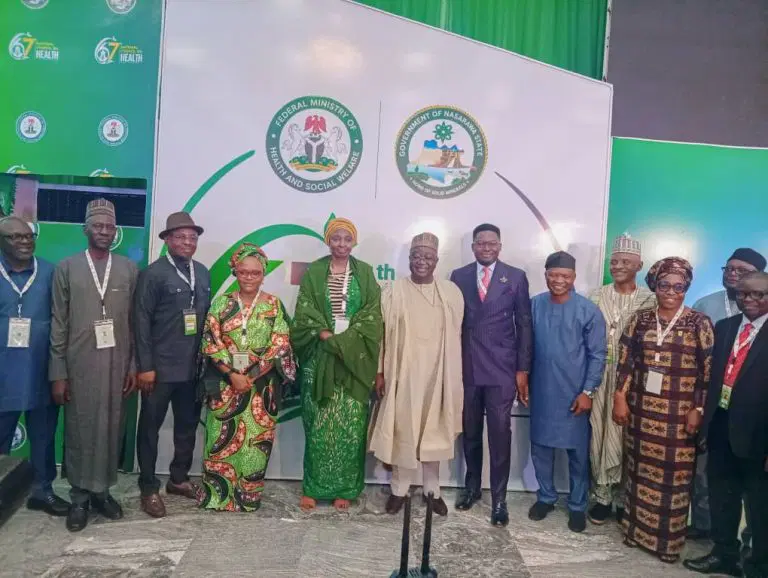
The 67th National Council on Health has opened its technical session in Lafia, Nasarawa State, with the state government urging health leaders to turn commitments into measurable results at the grassroots, Vanguard reported.
Nasarawa State Governor Abdullahi Sule, represented by Deputy Governor Dr Emmanuel Akabe, called on delegates to “translate commitments and policy decisions into measurable outcomes,” according to a statement signed by Ado Bako, Assistant Director of Information and Public Relations at the Federal Ministry of Health and Social Welfare.
How the National Council on Health works
The National Council on Health is Nigeria’s highest policy-making body on health, bringing together the federal health ministry, state commissioners for health and other stakeholders.
Permanent Secretary Daju Kachollom, who chairs the Technical Committee, said the two-day technical session on 16 and 17 November lays the groundwork for the main Council meeting on 19 and 20 November, which Coordinating Minister of Health and Social Welfare Prof. Muhammad Ali Pate will chair.
The committee will review the implementation of resolutions from the 66th Council, consider memoranda from the federal government, state governments and other ministries, and draft recommendations, Kachollom said. “The Secretariat will subsequently consolidate the Technical Committee’s recommendations,” she said.
This year’s theme is “From Commitments to Results: Delivering Quality and Equitable Healthcare for All Nigerians.”
The National Council on Health meets once a year, rotating between states. Its technical session allows officials and experts to scrutinise proposals in detail before they are presented to the Council, which is made up of the minister and the 36 state commissioners for health, along with the FCT.
Four pillars and priority threats
Memoranda are organised under the four pillars of the Health Sector Strategic Blueprint: effective governance; efficient, equitable and quality health systems; unlocking value chains; and health security, according to the statement.
Submissions cover the National Health Act, multisectoral health interventions, clinical research and the country’s capacity to detect, prevent and respond to public health threats such as cholera, Lassa fever, cerebrospinal meningitis and measles.
Each author has five minutes to present. The ministry adopted an electronic documentation system, with meeting documents preloaded onto tablets for participants.
Memoranda typically propose new policies, guidelines or programmes, and those approved by the National Council on Health become resolutions that the federal and state governments are expected to implement in the following year.
A first for Nasarawa
Nasarawa Commissioner for Health Dr Gwamna Gaza described the meeting as “a historic opportunity for the state to host health sector leaders from across the country for the first time.” He urged delegates to contribute actively, noting that they also benefit from the policies being formed.
Sule described the state’s selection as a privilege and pledged support for national health reforms.
He said hosting the meeting was also a chance to showcase the state’s peaceful environment, hospitality and economic potential.
Why the Council matters now
The Council meets as Nigeria faces several health pressures at once: a diphtheria outbreak in the north, a rising Lassa fever fatality rate, continued vigilance against Ebola and the approach of the dry season, when meningitis and Lassa fever typically increase.
As general background, decisions taken at the National Council on Health guide how states implement federal policy, including on primary health care, health insurance, immunisation and the health workforce. Because health is a shared responsibility between federal, state and local governments in Nigeria, the Council is an important forum for aligning priorities.
Health advocates have often called for Council resolutions to be tracked more closely, since implementation varies widely between states. This year’s theme reflects that concern.
As general background, the Health Sector Strategic Blueprint, also known as the health sector renewal agenda, has been the government’s framework since 2023. It emphasises primary health care revitalisation, expanding health insurance, local manufacturing of health products and stronger preparedness for outbreaks.
For patients, the most visible results of Council decisions are often at the primary health care level: whether local clinics are open, staffed and stocked with essential medicines, and whether vaccines and maternal services are available close to home. Delegates in Lafia were urged to keep that grassroots impact in view.
The outcome of the main National Council on Health meeting, expected on 20 November, will show which priorities the federal and state governments have agreed to pursue in the coming year, including on primary health care, which HealthCoach Africa has covered in its reporting on new health centres in northern Nigeria.
Why it matters: The Council sets health priorities for federal and state governments, and its resolutions shape services from primary care to outbreak response.
Mental Health Challenges in Nigeria: Funding,… The World Health Organization (WHO) has consistently emphasized the critical importance of mental health, making it a global concern for the past three years through their World Mental Health Day themes. In 2021, the WHO…
Federal Government Reports 55 Percent Implementation… LAFIA, NIGERIA The Federal Government has implemented 55 per cent of the resolutions adopted at the 66th National Council on Health, according to a health council resolutions scorecard presented at the technical session of the…
WhatsApp AI Health Assistants in Africa: What Actually Works Ask a Nigerian where they get health advice and the honest answer is often a WhatsApp group. That habit is why the WhatsApp AI health assistant has become one of the most watched ideas in…
Healthy FIFA World Cup Qatar 2022; Creating a Legacy… With Qatar soon to take the centre stage of world sports, the World Health Organization and the Qatar Ministry of Public Health are driving efforts to help make this year’s celebration of football, the “world’s…