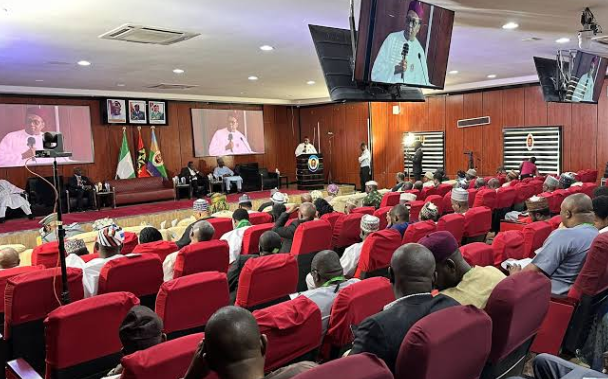
ABUJA, NIGERIA — Policymakers, legislators, and medical professionals will convene in Abuja from 13 to 15 October 2026 to address systemic failures that prevent national healthcare frameworks from improving patient outcomes, Premium Times reported on 8 September 2026. The high-level assembly targets the health policy execution gap, focusing on institutional barriers that stall reforms before clinical delivery takes effect.
Convened by OneBarrow International Limited, the national conference highlights that structural execution—rather than policy formulation—remains the country’s primary healthcare delivery challenge.
Nigerian health leaders and policymakers gathering at a national conference in Abuja. Source: Nigerian Medical Association
Core Objectives Addressing Health Policy Execution Gap
Held under the theme “From Policy to Impact: Care Coordination as the Core Engine of Health Equity” at the Nigeria National Merit Award House in Maitama, Abuja, the event emphasizes multidisciplinary care delivery. OneBarrow Chief Executive Yemi Ajao noted that every medical cadre must play an integrated role to achieve tangible health access.
Summit Component
Key Focus & Strategic Objectives
Event Location & Venue
Maitama, Abuja (Nigeria National Merit Award House)
Key Stakeholders
Health Minister Muhammad Pate, House Chairman Amos Magaji, Education Minister Tunji Alausa
Primary Output
Actionable policy communiqué & national implementation roadmap
Core Delivery Engine
Multidisciplinary care coordination across all health sectors
Overcoming Barriers Behind Health Policy Execution Gap
Care coordination is now recognized as the pivotal engine for managing Nigeria’s growing chronic disease burden. At present, patients routinely navigate fragmented care tiers—moving between community retail pharmacies, primary health centers, and tertiary hospitals without unified health records or an accountable provider network.
By placing delivery operators at the center of systemic reform, stakeholders aim to establish clear accountability structures and bridge the persistent gap between policy design and frontline health delivery.
Why It Matters: Resolving the health policy execution gap shifts national focus from creating policies to empowering delivery operators, ensuring that healthcare frameworks deliver real clinical impact.
Nigeria Health Watch Hosts Abuja Conference on… ABUJA, NIGERIA — Nigeria Health Watch is hosting its 2026 Future of Health Conference in Abuja on Thursday, bringing together health leaders, policymakers, researchers and investors to discuss how to scale proven health innovations, Premium…
Nigerian Patients Left to Navigate Fragmented Care… ABUJA, NIGERIA — Public health stakeholders, government officials, and medical practitioners gathered at the 2026 Health Equity Conference in Abuja have warned that fragmented care in nigeria leaves vulnerable patients navigating disconnected hospitals, private laboratories,…
African Legislators Unite in Support of Robust… Accra, Ghana – November 10, 2023 – In an unprecedented gathering, African lawmakers convened for the continent's inaugural parliamentary meeting on health security. The consensus reached during the 8–10 November 2023 meeting in Accra focused…
Professor Mojisola Adeyeye: The Pharmacist Who… When Professor Mojisola Adeyeye walked into NAFDAC headquarters in November 2017, she inherited an agency with a debt of more than three billion naira, laboratories that did not work and a reputation that its own…