NEW YORK, UNITED STATES — MTN Group and the Bill & Melinda Gates Foundation have unveiled a $25 million initiative to integrate artificial intelligence decision-support tools into primary maternal healthcare across Nigeria. Spearheading the nigeria ai maternal health programme, the initiative aims to support 500,000 pregnant women and train 5,000 frontline health workers by 2030.
Announced at Semafor’s Next Three Billion event during the UN General Assembly, the Nigeria Maternal Health Multiplier initiative establishes Nigeria as the lead market for global rollout. The five-year project combines AI-enabled mobile apps for clinical decision support, affordable smartphones with data bundles, and upgraded internet connectivity across 500 primary healthcare facilities nationwide.
Key Programmatic Goals & System Capabilities
The initiative targets critical gaps across Nigeria’s primary healthcare network:
Programmatic Element
Targeted Deployment Scope (2026–2030)
Funding Commitment
$25 million co-investment from MTN and Gates Foundation
Beneficiary Reach
500,000 pregnant women supported across primary care
Workforce Enablement
5,000 health workers equipped with AI decision support apps
Facility Infrastructure
500 primary health centers upgraded with internet connectivity
Transforming Primary Care via Nigeria AI Maternal Health Programme
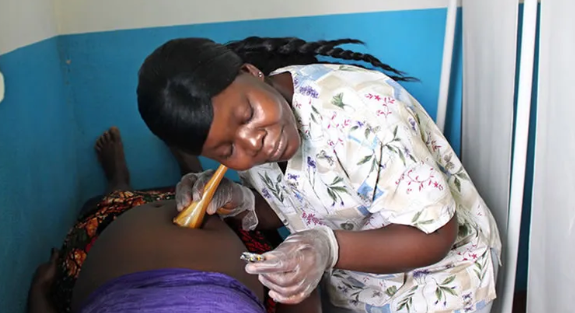
Implementing the nigeria ai maternal health programme addresses severe systemic challenges in a nation accounting for nearly 30 percent of global maternal deaths. Frontline health workers at rural health centers often operate without specialist guidance or reliable diagnostic tools. By providing phone-based AI tools, clinicians can identify early obstetric danger signs, deliver localized language guidance, and improve antenatal care compliance.
However, leaders emphasize that technology must integrate directly into existing public health systems. Coordinating Minister of Health and Social Welfare Dr. Muhammad Ali Pate noted that working within existing structures is vital to reach underserved mothers. While mobile tools improve early complication recognition, long-term impact ultimately depends on expanding emergency referral transport, facility blood supplies, and continuous rural network connectivity.
Why It Matters: Early recognition of obstetric complications via AI decision tools can significantly reduce high maternal mortality rates across primary healthcare centers.
Can AI on a Phone Cut Maternal Deaths? Inside… What is Nigeria’s new $25 million AI maternal health initiative? The Nigeria Maternal Health Multiplier is a four-year, $25 million joint initiative launched on September 22, 2026, by the MTN Group Foundation and the Bill…
Healthy FIFA World Cup Qatar 2022; Creating a Legacy… With Qatar soon to take the centre stage of world sports, the World Health Organization and the Qatar Ministry of Public Health are driving efforts to help make this year’s celebration of football, the “world’s…
Diabetes in Nigeria: Why Blood Sugar Control Fails Diabetes in Nigeria does not usually fail in the clinic. Among people who reach a specialist and stay in care, control is often reasonable. It fails in the years before anyone tests you, and it…
AI in Healthcare: A Strategic Guide for African… How should healthcare organizations in Africa approach emerging artificial intelligence solutions? In an era where artificial intelligence (AI) is rapidly advancing in the realm of healthcare, African health organizations are presented with the challenge of…