LAGOS, NIGERIA — The Nigerian Medical Association (NMA) has called on the Federal Government to establish internationally competitive remuneration packages and enforce workplace safety guarantees to curb the relentless scale of doctors migration in nigeria. Delivering the keynote address at a press conference for the 2026 Physicians’ Week in Lagos, NMA President Prof. Afekhide Ernest Omoti—represented by Lagos State NMA Chairman Prof. Sharafadeen Kehinde Okunade—warned that patriotism alone cannot sustain the healthcare workforce without professional dignity, structural safety, and decent working conditions.
Centered on the theme “Securing the future of medicine in Nigeria,” the association emphasized that severe physician deficits, physical assaults on health staff, and structural burnout are accelerating workforce depletion across federal and state tertiary hospitals.
Workforce Benchmarks and Doctors Migration in Nigeria
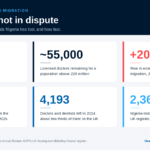
Disclosures provided by medical union leadership and health policy researchers highlight critical operational metrics facing Nigeria’s clinical workforce:
Workforce Category
National Parameters & Medical Association Data
National Practice Demographics
<4% of practicing doctors serve rural communities across Nigeria
Laboratory scientist stabbed at Federal Medical Centre, Abeokuta
Government Policy Strategy
Doubled university admission quotas & retrained ~80,000 frontline staff
Technical Mechanics of Clinical Burnout and System Retention
Understanding the structural drivers behind doctors migration in nigeria underscores why expanding university admissions without reforming working conditions fails to stop brain drain:
The Exhaustion Fallacy and Diagnostic Errors: Prof. Omoti criticized a pervasive workplace culture that equates physical exhaustion with professional dedication. Prolonged sleep deprivation and excessive call hours severely impair cognitive function, driving clinical diagnostic errors and compromising patient safety.
MDCN Registry Inaccuracies: Because many Nigerian physicians who have migrated to the United Kingdom, North America, or the Gulf region continue to pay annual dues to retain their Medical and Dental Council of Nigeria (MDCN) practicing licenses, official registry figures understate the true severity of local shortages.
Workplace Violence and Physical Threats: Increasing incidents of physical intimidation, verbal abuse, and violent assaults by distressed patient relatives—such as the recent stabbing at FMC Abeokuta—create hostile clinical environments that drive young clinicians to seek safer employment overseas.
Digital Health Curriculum, Diaspora Knowledge Transfers, and AI Policy
To modernize domestic medical education, the NMA called on university medical faculties and postgraduate colleges to integrate digital health, data science, artificial intelligence, and telemedicine into core curricula. However, Prof. Omoti stressed that adopting clinical AI tools must be accompanied by strict regulatory safeguards to protect patient data confidentiality and maintain physician accountability.
The association also proposed structured institutional frameworks enabling Nigerian doctors practicing in the diaspora to contribute clinical expertise, academic research, and medical infrastructure investments back home without requiring permanent physical relocation.
Emergency Capacity, Mental Healthcare, and Patient Safety
Prof. Okunade highlighted that expanding emergency department bed capacity across municipal public hospitals must be matched by competitive doctor retention strategies; otherwise, newly opened wards will remain understaffed and non-functional.
Furthermore, the NMA called for establishing confidential mental health support programs, routine health screenings, and mandatory rest periods for medical personnel. Sustaining the health and well-being of doctors is essential to improving health outcomes, reducing hospital wait times, and securing the future of medicine across Nigeria.
Why It Matters: Nigeria is training health workers faster than ever, but failure to provide competitive pay and safe workplaces causes doctors to emigrate, leaving patients to suffer the consequences of an understaffed health system.
Tinubu Urges West African Physicians to Tackle… ABUJA, NIGERIA — As tinubu urges west african physicians to formulate actionable strategies against severe medical brain drain across Sub-Saharan Africa, President Bola Ahmed Tinubu has tasked the West African College of Physicians (WACP) with…
NMA Advocates for Scrutiny of Medical Education in… The Nigeria Medical Association (NMA) has called for a thorough investigation into the quality of medical education provided to Nigerian students studying medicine abroad, particularly in Ukraine. Dr. Uche Rowland Ojinmah, the NMA National President,…
Nigeria Health Worker Migration: We Cannot Outpay… In 2019, my wife and I welcomed our first daughter. Ten of our closest friends and colleagues, pharmacists like both of us, came to celebrate her naming. Last week I found the photographs from that…
Experts Urge Higher Pay and Investment to Fix… ABUJA, NIGERIA — Stressing that efficiency measures alone cannot resolve Nigeria's critical staffing shortages, health policy experts are calling for immediate structural reforms and higher investment to tackle the nation's severe healthcare workforce deficit. This…