JOHANNESBURG, SOUTH AFRICA — As regulators struggle to curb the proliferation of unauthorized weight-loss injections across informal retail channels, the South African Health Products Regulatory Authority (SAHPRA) has warned that the illicit trade in compounded and fake GLP-1 receptor agonists risks spiraling out of control. Investigations produced by the Bhekisisa Centre for Health Journalism reveal that unregistered versions of drugs like semaglutide and experimental compounds like retatrutide are being openly distributed through wellness gyms, beauty salons, and unregulated online portals.
With SAHPRA receiving roughly 600 formal complaints regarding illegitimate pharmaceutical sales this financial year alone, health authorities and industry leaders are pushing for stricter enforcement against illicit compounding operations that bypass national safety standards.
Operational Benchmarks for Regulators Struggle to Curb
Data compiled from SAHPRA compliance filings, Gauteng High Court rulings, and pharmaceutical task group briefings detail the regulatory baseline:
Regulatory & Legal Category
Public Health & Industry Benchmarks
Annual Illicit Medicine Complaints
~600 formal complaints lodged with SAHPRA this financial year
High Court Precedent (June 2026)
iDexis pharmacy ordered to stop manufacturing bulk semaglutide
Licensed Market Availability
First generic semaglutide launched on SA retail shelves in August 2026
Updated SAPC Guidance Timeline
Revised compounding guidelines expected February or March 2027
Technical Mechanics: Regulators Struggle to Curb
Understanding the legal and pharmaceutical parameters behind why regulators struggle to curb unauthorized weight-loss treatments involves analyzing compounding boundaries and cold-chain safety risks:
Compounding versus Unlicensed Manufacturing: Under South African pharmacy legislation, compounding is strictly defined as the custom preparation of a medicine by a licensed pharmacist for an individual patient based on a valid prescription. Bulk preparation without documented patient-specific demand constitutes illegal manufacturing, which requires a Good Manufacturing Practice (GMP) license that compounding facilities do not possess.
The Retatrutide Risk Profile: Retatrutide—an experimental triple-hormone receptor agonist (GIP, GLP-1, and glucagon)—remains in clinical trials and has not been approved by any medicine regulatory authority globally. Open sales of black-market retatrutide expose consumers to unvalidated molecules, unverified salt formulations (such as semaglutide sodium), and dangerous dosing errors.
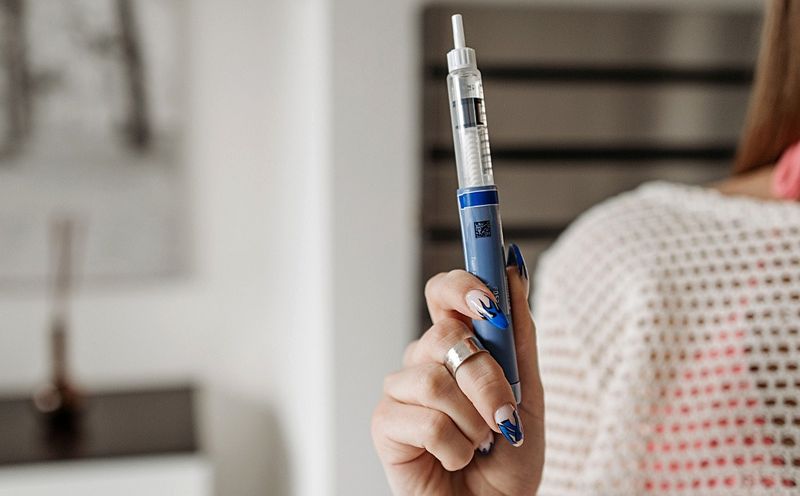
Cold-Chain Logistics and Sterility Risks: Injectable GLP-1 therapies are biological preparations requiring strict temperature-controlled storage ($2^\circ\text{C}$ to $8^\circ\text{C}$). Informal supply networks lacking cold-chain infrastructure expose patients to degraded active ingredients, bacterial contamination, non-sterile injection vectors, or substituted active compounds such as insulin.
Court Injunctions, Agency Coordination, and Regulatory Timelines
In June 2026, the Gauteng High Court ruled against iDexis, a Tshwane-based compounding pharmacy, ordering it to cease semaglutide production after enforcement officers seized large batches of compounded injectables. SAHPRA Chief Executive Boitumelo Semete-Makokotlela emphasized that high-volume batch preparation circumvents national drug registration protocols.
However, pharmaceutical sector leaders warn that enforcement momentum is stalling due to weak inter-agency coordination. Representatives from the South African Revenue Service (SARS) and the Border Management Authority (BMA) noted that law enforcement officers often lack specialized training in pharmaceutical crime. Furthermore, industry stakeholders argue that waiting until early 2027 for updated South African Pharmacy Council (SAPC) guidelines leaves the market vulnerable compared to nations like Australia, which implemented total bans on compounded GLP-1 products.
Consumer Protection, Registered Alternatives, and Sector Outlook
To counter black-market demand, regulators are urging consumers to purchase weight-loss therapies exclusively through registered pharmacies upon presentation of a valid medical prescription. SAHPRA highlighted key warning signs of counterfeit products, including missing package inserts, absent printed expiry dates, dented or unsealed packaging, and social media sales promising dramatic weight-loss results without clinical oversight.
Expanding access to legally registered generics and affordable authorized GLP-1 alternatives remains essential to protecting public health while regulators struggle to curb black-market drug networks across Southern Africa.
Why It Matters: Rapid consumer demand for GLP-1 weight-loss injections is outpacing regional enforcement, exposing patients to dangerous drug contaminants, incorrect dosages, and unapproved experimental chemicals.
NAFDAC raises alarm over proliferation of… The Director-General of the National Agency for Food and Drug Administration and Control (NAFDAC), Prof. Moji Adeyeye, has voiced her concerns over the alarming proliferation of substandard and falsified medicines, highlighting the imminent dangers posed…
New Diabetes Drug Shows Greater Potential for Weight… A recent review of research has unveiled that a groundbreaking diabetes drug surpasses its blockbuster competitor, semaglutide (popularly known as Ozempic), in promoting weight loss and lowering blood sugar levels. This promising discovery has sparked…
Medicine Traceability in Nigeria: How a Barcode… A fake antimalarial looks exactly like a real one. The box, the blister and the colour of the tablet can all be copied. What cannot be copied easily is a unique digital identity that is…
Counterfeit Medicines in Africa: Deadly Impact & Solutions The counterfeiting of drugs in Africa is a growing public health crisis, endangering millions of lives and undermining healthcare systems. From fake antibiotics that fail to treat infections to counterfeit antimalarial medicines that fuel resistance,…