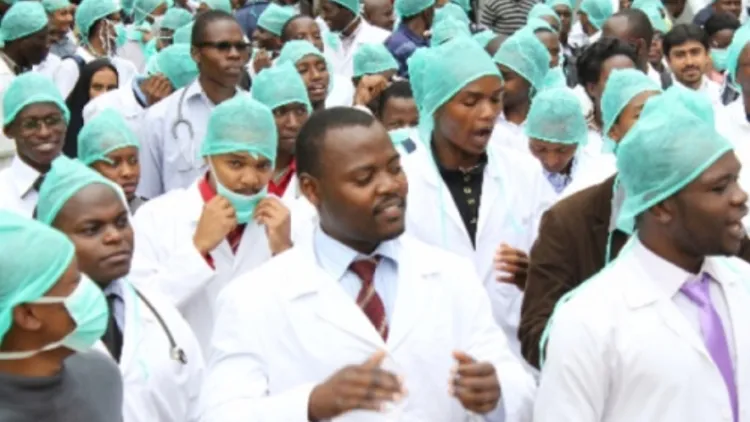
ABUJA, NIGERIA — Mobilizing clinical safeguards to protect frontline medical personnel, resident doctors order ebola readiness audits across all tertiary health facilities nationwide as subnational governments reactivate regional isolation infrastructure. In an official circular issued by the Nigerian Association of Resident Doctors (NARD), national leadership instructed hospital center presidents to complete comprehensive safety evaluations within 72 hours, designate specialized focal officers, and verify local personal protective equipment (PPE) reserves.
Concurrently, Plateau State Health Commissioner Nicholas Ba’amlong announced in Jos that state health authorities have reactivated municipal isolation centers and heightened entry-point screening to prevent potential viral entry.
National Operational Benchmarks and Subnational Readiness
Data compiled from NARD directives, Plateau State Ministry of Health disclosures, and NCDC national directives outline current clinical preparedness parameters:
Operational Preparedness Category
National & Subnational Benchmarks
NARD Hospital Audit Window
Mandatory 72-hour clinical audit across all tertiary centers
10 council resolutions approved, including a State Health Trust Fund
Technical Mechanics Behind Clinical Audits and Triage Safeguards
Understanding the biosecurity dynamics behind why resident doctors order ebola inspections highlights core infection control protocols required within busy emergency departments:
High-Risk Ward Triage and PPE Allocation: Resident doctors represent the primary clinical workforce evaluating undifferentiated fever cases in emergency and outpatient units. Prioritizing fluid-impermeable gowns, N95 respirators, face shields, and double-gloving protocols in high-risk departments reduces accidental exposure before viral hemorrhagic fever is clinically suspected.
Pre-Laboratory Isolation Directives: Following NCDC guidelines, clinicians are directed to immediately isolate febrile patients exhibiting relevant travel histories without waiting for diagnostic PCR confirmation. Because Nigeria’s index patient passed through two private facilities before suspicion arose, early isolation prevents nosocomial exposure to healthcare staff.
Subnational Surveillance and Health Trust Funding: Plateau State’s reactivation of isolation infrastructure relies on subnational emergency financing mechanisms. Approving a dedicated State Health Trust Fund and emergency response capital ensures local rapid response teams can sustain contact surveillance without operational delays.
Frontline Protection Advocacy and Historical Outbreak Lessons
NARD emphasized that the commitment of resident doctors to patient care must be matched by guaranteed workplace safety, calling on the Federal Ministry of Health and the NCDC to ensure equitable distribution of protective supplies. The association urged members to maintain high clinical index of suspicion without triggering unnecessary public alarm.
The memory of the 2014 Ebola outbreak—during which Dr. Stella Adadevoh and frontline colleagues contracted the virus while containing the index case in Lagos—continues to drive physician demands for verified, audit-backed hospital readiness rather than verbal administrative assurances.
Institutional Infrastructure Audits, Subnational Coordination, and Sector Outlook
While Plateau State has alerted local government areas bordering neighboring states, official reports note that NARD’s 72-hour audit will provide the most accurate assessment of hospital readiness directly from practicing ward clinicians.
Rehabilitating broken isolation units, maintaining transparent PPE supply chains, and establishing focal oversight officers across all teaching hospitals remain essential to protecting health personnel as resident doctors order ebola preparedness checks across the federation.
Why It Matters: Frontline doctors and nurses face the highest clinical exposure risk, making verified protective equipment reserves and operational isolation units critical to protecting both healthcare staff and patients.
Plateau Revitalises 105 Primary Health Centres,… JOS, NIGERIA — Executive health authorities in Plateau State have launched a comprehensive health system expansion, confirming that plateau revitalises 105 primary health centres alongside approving the immediate recruitment of 1,300 clinical and administrative health…
Ghana MP Demands Proof of Ebola Preparedness, Urges… ACCRA, GHANA — Challenging health authorities to demonstrate operational readiness following regional outbreak reports, ghana mp demands proof of biosecurity preparedness and transparent accounts of health emergency allocations. In a formal press statement issued in…
Plateau Diphtheria Surge Triggers Mandatory Bus Masking JOS, NIGERIA — The plateau diphtheria surge triggers emergency transit protocols across Jos as health authorities confirm 148 suspected cases and 23 deaths within two weeks. In response to the accelerating outbreak, state-owned transit operator…
Atiku Demands Accounts of ₦10 Billion Ebola Fund ABUJA, NIGERIA — Demanding complete fiscal transparency over national health security allocations, former Vice President Atiku Abubakar has called on the Federal Government to account for the ₦10 billion approved for Ebola emergency preparedness. The…