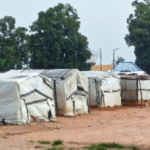
ABUJA, NIGERIA — Women at the Wassa camp for internally displaced persons (IDPs) in the Federal Capital Territory have appealed for a hospital after recent IDP camp maternal deaths, saying three women died from childbirth complications, one of them alongside her twin babies, the News Agency of Nigeria (NAN) reported on 2 November.
The women made the appeal in Abuja on Monday at the fifth anniversary of the Civitas Auxilium Foundation (CAF) and the launch of its Project RISE. The camp has also recently recorded child deaths from waterborne diseases and has no nearby hospital or secondary school, according to the report.
Behind the IDP camp maternal deaths
“We had no nearby hospital,” said Daliyah Yusuf, who spoke for the camp’s women. Hafsat Hamman, the camp’s Women Leader, said: “I appeal to the government and well-meaning Nigerians to provide a hospital or functional health centre.” Helen Luka, the camp’s women church leader, also spoke at the event.
Janet Adah, a teacher in the community, highlighted education. “We don’t have any secondary school around here,” she said.
Elizabeth Duile, Executive Director and Founder of CAF, said Project RISE is a six-month initiative in Benue and the FCT. “We aim to build practical skills of at least 100 women,” she said, in vocational trades such as catering, baking and bag making, with tools and equipment provided. She urged partners: “Don’t just celebrate with us; partner with us.”
Other speakers included representatives of the Equipping the Needy Initiative, Junior Chamber International and the Mercy Eleos Frontido Foundation.
The camp’s needs extend beyond maternity care. Residents described the absence of a secondary school and the recent deaths of children from waterborne diseases, problems that often go together where displaced communities lack basic infrastructure and depend on intermittent support from charities and volunteers.
Most maternal deaths happen during or shortly after childbirth and are linked to severe bleeding, infections, high blood pressure in pregnancy, obstructed labour and complications of unsafe abortion. Many can be prevented if a woman gives birth with a skilled attendant and can reach emergency care quickly. Twin pregnancies carry higher risks, including preterm birth and heavy bleeding after delivery, and need close monitoring.
Why displaced women face higher risks
Women living in IDP camps often face several barriers at once. They may lack money for transport and fees, live far from health facilities, have limited access to antenatal care, and depend on traditional birth attendants. Overcrowding, poor sanitation and unsafe water increase the risk of infections for both mothers and babies, and the deaths from waterborne disease reported at Wassa point to those gaps.
The IDP camp maternal deaths at Wassa come as national data show that newborn deaths in Nigeria are rising even as overall child mortality falls. Federal health officials said last week that neonatal mortality rose from 39 to 41 deaths per 1,000 live births between 2018 and 2024, while under-five mortality fell by about 17 per cent.
Nigeria accounts for a disproportionate share of global maternal deaths. A 2023 WHO progress report estimated that the country recorded 82,000 maternal deaths in 2020. Displaced women in the FCT, many of whom fled insecurity in northern and north-central states, are among the groups at highest risk.
Practical steps can make a difference quickly. Mobile clinics, community health workers and outreach antenatal services can reach camps without permanent facilities. Arrangements for emergency transport, such as agreements with local drivers or ambulance services, can get women with complications to hospital in time. Free maternal health schemes and insurance through the Basic Health Care Provision Fund can remove cost barriers if displaced women are registered.
Clean water and sanitation would also reduce deaths among children, who are especially vulnerable to diarrhoeal diseases.
Project RISE’s focus on livelihoods is linked to health. Women with their own income are better able to pay for transport, medicines and nutritious food during pregnancy, and economic empowerment programmes in humanitarian settings often include health education.
Humanitarian guidelines recommend that displaced populations have access to a minimum package of reproductive health services, including skilled birth attendance and emergency obstetric care, from the start of a crisis. Many people at Wassa and similar settlements around Abuja have lived in temporary conditions for years, which makes permanent health services more pressing.
The report did not include a response from the FCT Administration or the federal humanitarian affairs ministry. Preventing further IDP camp maternal deaths will depend on whether authorities and partners respond to the women’s request for a functioning health centre.
Why it matters: Displaced women far from care face preventable childbirth deaths, so camps need clinics, emergency transport and enrolment in free maternal schemes.
Healthy Monday Habits: Setting the Tone for the Entire Week Monday, the start of a new week, holds great potential for setting the tone for a successful and fulfilling week ahead. By incorporating healthy habits into our Mondays, we can create a positive and balanced…
Healthcare Access Crisis Deepens in Benue IDP Camps LOGO, BENUE STATE, NIGERIA — The Anyiin Internally Displaced Persons camp in Logo Local Government Area of Benue State confronts a severe idp healthcare access crisis following the closure of its primary healthcare facility. The…
University of Pretoria Mastercard Foundation… The University of Pretoria Mastercard Foundation Scholars Program represents one of the most comprehensive equity-driven funding mechanisms on the African continent. Explicitly designed to dismantle structural barriers in higher education, the program prioritizes academically gifted…
NNPC Foundation Expands Free Cancer Screening and… ABUJA, NIGERIA — The NNPC Foundation cancer screening programme has expanded from a few hundred people to thousands across Nigeria, alongside donations of radiotherapy and imaging equipment to public hospitals, an NNPC Ltd. executive said…