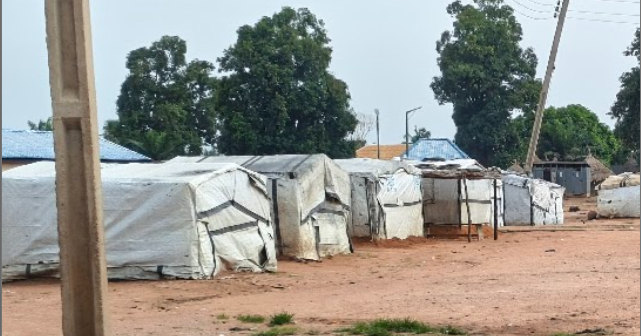
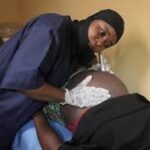
LOGO, BENUE STATE, NIGERIA — The Anyiin Internally Displaced Persons camp in Logo Local Government Area of Benue State confronts a severe idp healthcare access crisis following the closure of its primary healthcare facility. The shutdown has eliminated access to essential medical services—including antenatal care, institutional deliveries, routine childhood immunizations, and treatment for common endemic illnesses—compounding health risks for vulnerable populations displaced by armed conflict. Across Benue State, 464,543 individuals live in designated IDP camps and host communities, where maternal mortality reaches 1,189 deaths per 100,000 live births—nearly double the national average.
Only 59.1 percent of births in Benue State receive skilled attendance from qualified healthcare professionals, leaving 40.9 percent of deliveries without medical supervision when obstetric emergencies occur. Health insurance coverage among IDP populations stands at merely 2.5 percent for women, forcing expectant mothers to rely entirely on out-of-pocket payments for maternal care—costs that remain prohibitive for families with minimal economic resources. Camp chairman Julius Tema noted that the facility’s shutdown has severely limited local medical support. Pregnant women must now travel long distances to overcrowded health centers in neighboring communities, often arriving after labor complications have advanced.
Key Operational Targets and Systemic Barriers
Humanitarian partners and health authorities face systemic operational challenges in addressing the displaced population’s health needs:
Strategic Pillar
Core Obstacle & Current Reality
Required Action
Facility Infrastructure
Primary healthcare center closed due to funding lapses
Scale clean water, hygiene, and nutrition interventions
Addressing the Healthcare Crisis in Conflict-Affected IDP Settlements
Without accessible primary healthcare services within the camp, pediatric mortality from preventable childhood illnesses—including malaria, pneumonia, and diarrhea—remains elevated. Although international organizations such as UNICEF and medical NGOs deliver periodic outreach, humanitarian support remains fragmented and under-resourced relative to total population needs. Healthcare worker deployments occur inconsistently, fluctuating with temporary donor funding cycles rather than structured service plans.
Resource constraints continue to limit government efforts to reconstruct permanent healthcare infrastructure in IDP locations while security challenges persist across conflict-affected regions. Preventative interventions—including community health worker networks, maternal awareness campaigns, and malaria prevention measures—have expanded in select settlements but require broader reach. Additionally, nutrition programs addressing childhood malnutrition and mental health support services for trauma-affected displaced populations remain critically underfunded.
Why It Matters: IDP healthcare access crises in conflict-affected regions worsen maternal mortality and childhood illness, requiring sustained humanitarian health investment and facility reconstruction.
Alarming Study Reveals 13.4 Million Premature Births… A groundbreaking study published in The Lancet has unveiled a deeply concerning global health issue: an estimated 13.4 million babies were born prematurely in the year 2020, equating to one in ten infants worldwide being…
US Aid Freeze Sparks Humanitarian Crisis in Nigeria Abuja, Nigeria – Nigeria’s already fragile healthcare system faces a new crisis as the United States government freezes health support funding and the World Food Programme (WFP) announces the closure of critical nutrition clinics in…
Aid Cuts Push Millions Into Hunger in Northeast Nigeria Northeast Nigeria is facing a worsening humanitarian crisis as aid cuts by international donors intensify hunger and malnutrition across conflict-affected states like Borno, Adamawa, and Yobe. With over 4.4 million people projected to face acute…
Nigeria struggles with high maternal/child mortality Nigeria continues to battle alarmingly high rates of maternal and child mortality, a public health crisis that threatens the nation’s future. Despite efforts by the government and international partners, the country accounts for a significant…