ABUJA, NIGERIA — Nigeria will provide 5 million reading spectacles and 25,000 fully subsidised cataract surgeries by 2027 under a new Nigeria eye care plan, the Minister of State for Health and Social Welfare, Iziaq Salako, said, Premium Times reported on 3 November.
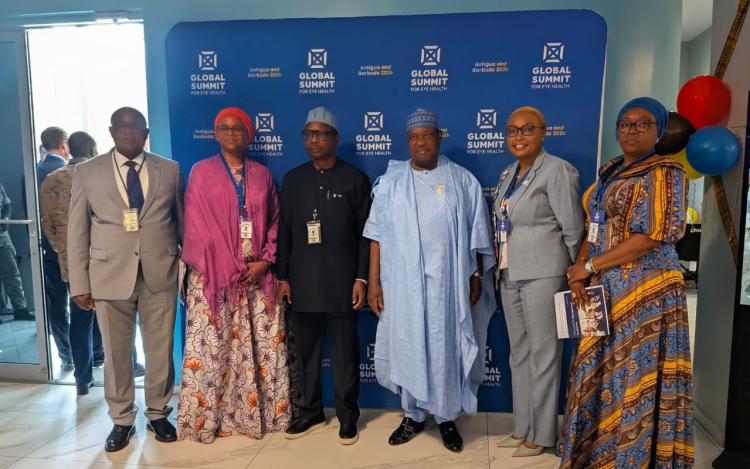
Salako announced the targets on 2 November at the Global Summit for Eye Health in St John’s, Antigua and Barbuda. He said Nigeria would also train 15,000 primary health care workers in eye care and integrate primary eye care into the Basic Health Care Provision Fund (BHCPF).
Inside the Nigeria eye care plan
The Nigeria eye care plan aims to reach 25 million or more vulnerable people, according to Premium Times. Other targets include growing the eye care workforce by 20 per cent and raising effective cataract surgical coverage by 30 percentage points by 2030.
Effective cataract surgical coverage measures not only how many people with cataract receive surgery, but how many end up with good vision afterwards. It is one of the indicators WHO uses to track whether eye services are reaching people and producing good results.
The spectacles programme is called JigiBola 2.0, or the Effective Spectacle Coverage Initiative Nigeria. It builds on the original JigiBola programme in Lagos about 25 years ago, on which Salako said he worked as a volunteer.
“When a child cannot see the chalkboard, or an artisan or farmer is blinded by cataracts,” Salako said, “an entire community pays the price.”
A global push to end avoidable blindness
The summit produced $60 million in philanthropic commitments, 15 private sector commitments worth more than $468 million and about 143 other commitments, Premium Times reported. Nigeria, Antigua and Barbuda, Bangladesh, Tanzania and China were named among beneficiary countries.
Salako also referred to SEE 2045, the WHO Global Cataract Surgery Initiative, which he described as the second elimination target for a noncommunicable disease in WHO’s history. “Let us return to our respective nations as champions of sight, holding ourselves accountable,” he told delegates.
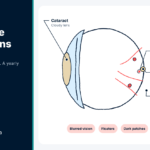
Cataract, a clouding of the eye’s natural lens, is the leading cause of blindness worldwide and is common in older adults. It develops slowly and is usually treated with a short operation that replaces the cloudy lens with an artificial one. Most patients recover good vision within days.
Uncorrected refractive error, such as short sight, long sight and the age-related loss of near vision, is the leading cause of vision impairment. It is usually corrected with spectacles that cost far less than surgery, which is why reading glasses are central to the plan.
Why cost and distance keep Nigerians from sight
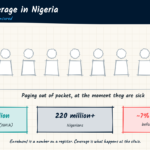
Many Nigerians with treatable vision loss never reach an eye clinic. Ophthalmologists and optometrists are concentrated in cities and teaching hospitals, while rural communities depend on primary health care centres that often lack trained eye care staff and basic equipment. Out-of-pocket costs for surgery, transport and spectacles add to the barriers.
Integrating eye care into the BHCPF could change who pays. The fund finances a basic package of services through primary health care centres and health insurance, and adding eye screening and referral would let more people be checked close to home.
Training 15,000 primary health care workers would allow nurses and community health workers to test vision, identify cataract and refer patients. Screening at schools would help catch children who need glasses before poor vision affects their learning.
Vision loss also has economic effects. People who cannot see clearly may lose work, stop driving or need a family member to care for them. Restoring sight to an older farmer or trader can return a household earner, and glasses for a schoolchild can change how well they learn.
Eye health is closely linked to chronic conditions. Diabetes can damage the retina, and high blood pressure affects blood vessels in the eye, so people with these conditions need regular eye checks as part of routine care.
People with diabetes, in particular, are advised to have a dilated eye examination at least once a year, because damage to the retina can progress without symptoms until vision is already affected. Bringing eye screening into primary care, as the Nigeria eye care plan proposes, could help catch these problems earlier among the growing number of Nigerians living with chronic conditions.
Children are another priority group. Uncorrected short sight in school-age children is easy to detect with a simple chart test and easy to correct with glasses, yet many children in low-income settings never receive an eye examination.
The Nigeria eye care plan sets a short timeline for the surgery and spectacles targets. Delivery will depend on funding through the BHCPF, the supply of lenses and surgical consumables, and whether eye surgeons and trained staff can reach the rural communities where need is greatest.
Why it matters: Cheap spectacles and short cataract operations can restore work and learning for millions, if services reach rural primary health care.
Normal Blood Pressure Reading: What Your Numbers Mean You have two numbers and no idea what they mean. Worse, you searched them and found an American page telling you that 134 over 86 is Stage 1 hypertension, while your doctor in Lagos looked…
Nigeria Says It Disbursed ₦249.6 Billion Health Fund… ABUJA, NIGERIA — Nigeria says it has disbursed ₦249.6 billion in primary health care funding through the Basic Health Care Provision Fund (BHCPF) over the past three years, and aims to extend direct financing to…
Diabetic Eye Disease Signs: Protecting Your Sight… Diabetes is one of the leading causes of preventable blindness in working-age adults. High blood sugar slowly damages the tiny blood vessels at the back of the eye, often for years before any change in…
Health Insurance Coverage in Nigeria: 23 Million… For almost two decades, health insurance coverage in Nigeria barely moved. It hovered around a few percent of the population, almost all of them federal workers and employees of large companies. Since the National Health…