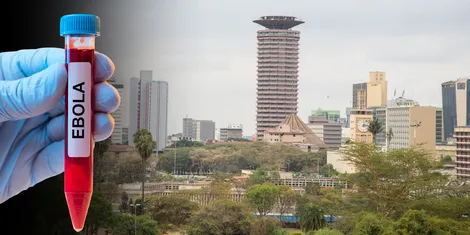
NAIROBI, KENYA — Kenya’s Ministry of Health has issued Ebola workplace safety guidelines urging employers and employees to promote awareness, early reporting and hand hygiene, as the country continues to monitor contacts linked to its outbreak, Kenyans.co.ke reported on 3 November.
“A safe workplace starts with informed employees and responsible action,” the ministry said in the advisory. “Ebola is a serious disease, but workplaces can help prevent its spread through awareness, early reporting, proper hand hygiene and adherence to Ministry of Health guidance.”
What the Ebola workplace safety guidelines ask
The Ebola workplace safety guidelines call on workers who feel unwell, especially with fever or other symptoms after possible exposure, to report early rather than come to work. They encourage employers to share accurate information with staff, provide handwashing facilities and follow official guidance on reporting suspected cases.
The ministry directed the public to its toll-free hotline, 719, the USSD code *719# and the WhatsApp line 0700 719 719 for information and to report suspected cases.
Workplaces matter in an outbreak because they bring people together for long hours, often in shared offices, factories, markets, transport hubs and canteens. Clear rules on staying home when sick, and protection from losing pay for doing so, help workers report symptoms early instead of hiding them.
Small and informal businesses, which employ a large share of Kenyan workers, may find the Ebola workplace safety guidelines harder to apply. Many have no sick pay, no handwashing stations and no human resources staff, so simple measures such as soap and water at entrances and clear posters with the hotline number can make a difference.
Contacts released as cases stay level
According to Kenyans.co.ke, 46 contacts have been released from follow-up after completing monitoring, while 52 remain under observation. No new cases had been recorded since 19 October.
The Associated Press reported on 3 November that five patients had been released and two remained in hospital, after Kenya discharged patients who had repeatedly tested negative.
The ministry said Kenya has strengthened screening at 26 points of entry, trained more than 4,900 health workers, deployed 349 rapid response teams and equipped five laboratories to test for the virus. UNICEF has provided more than 43,000 items of personal protective equipment and 25 personnel to support the response, the report said.
Kenya recorded its first Ebola infections in October, linked to the regional outbreak of the Bundibugyo strain, which began in the Democratic Republic of Congo (DRC) and has also affected Uganda. Africa CDC has reported more than 10,400 confirmed cases across the region since the outbreak was declared in May, with a mortality rate above 50 per cent.
How Ebola spreads and how workers can protect themselves
Ebola spreads through direct contact with the blood or body fluids of a person who is sick with or has died from the disease, or with contaminated objects such as bedding and clothing. It does not spread through the air like flu, and people are generally not infectious before symptoms appear.
Symptoms can include sudden fever, fatigue, muscle pain, headache and sore throat, followed by vomiting, diarrhoea and in some cases unexplained bleeding. The incubation period can be up to 21 days, which is why contacts are monitored for three weeks.
For most workplaces, proper hand hygiene with soap and water or alcohol-based sanitiser, regular cleaning of shared surfaces, and avoiding contact with anyone’s body fluids are the main protective steps. Health workers, cleaners, laundry staff and mortuary workers face higher risks and need protective equipment and training.
The Ebola workplace safety guidelines are also relevant to sectors with frequent travel, such as transport, logistics, tourism and cross-border trade. Employers in these sectors are encouraged to keep records of staff travel to affected countries and to make sure workers know how to report symptoms after returning.
Employers can also support workers by reducing stigma. Fear of being blamed or isolated can stop people from disclosing symptoms or travel, and colleagues of recovered patients may be anxious about their return. Recovered patients are not infectious through normal contact, although some body fluids, including semen, can carry the virus for months.
Travel restrictions and the economic cost
Kenya has opposed travel restrictions imposed by some countries, including Saudi Arabia, describing them as punitive. Africa CDC has backed Kenya’s call for the curbs to be lifted.
Workplace guidance is part of an effort to keep the economy running while controlling transmission. Clear rules for employers can help avoid closures and allow businesses, schools and transport to continue safely.
The ministry urged Kenyans to rely on official information. If no new cases are recorded and the remaining contacts complete their 21-day follow-up, Kenya will move closer to the 42-day countdown needed before an outbreak can be declared over, under WHO guidance.
Why it matters: Clear workplace rules on early reporting and hand hygiene help Kenya contain Ebola without shutting down jobs and businesses.
Kenya Discharges Five Ebola Patients, Africa CDC… NAIROBI, KENYA — Kenya Ebola patients discharged on Tuesday included five people who had recorded repeated negative tests, while 46 contacts completed their 21-day quarantine, the Africa Centres for Disease Control and Prevention (Africa…
NCDC Expects to Finish Monitoring 62 Ebola Contacts… ABUJA, NIGERIA — Nigeria Ebola contact monitoring is expected to end by 13 November, when the last of 62 people exposed to the country’s only confirmed case complete their follow-up period, the Nigeria Centre for…
WHO Says Ebola Survivors Can Spread Virus Through… BRAZZAVILLE, CONGO — People who survive Ebola can pass the virus on through sex if it persists in semen after recovery, but are not expected to spread it through sweat or saliva once discharged, the…
NCDC Says Allowance Followed Threats by Contacts to… Nigeria’s disease control agency began paying ₦100,000 a week to Ebola contacts in quarantine after some of them threatened to leave, and the payment was neither planned nor budgeted, the Director-General of the Nigeria Centre…