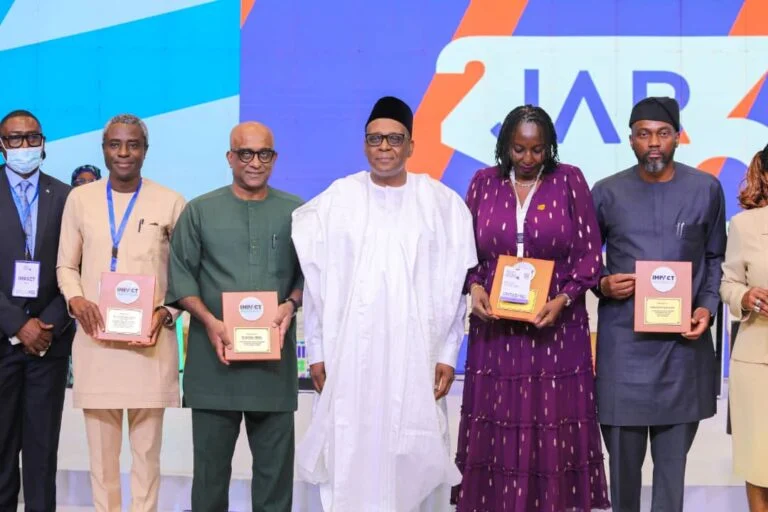
ABUJA, NIGERIA — Nigeria’s World Bank IMPACT project, a 650 million US dollar programme that shifted primary health care financing towards results, is closing with reported gains in immunisation, malaria control and child survival, the News Agency of Nigeria (NAN) reported on 13 November.
Coordinating Minister of Health and Social Welfare Muhammad Pate urged sustained commitment to reforms at the end-of-project dissemination in Abuja, held at the close of the 2026 Joint Annual Review. “The paradigm shift is that you cannot reward effort. You need to reward result,” he said. “The challenge for us is then how to sustain it, because reform is a continuous process.”
What the World Bank IMPACT project achieved
IMPACT was approved in 2020 as the first phase of a multi-phase programme and anchored on the Basic Health Care Provision Fund (BHCPF). Implementation began in February 2021 and expanded from 18 to 30 states plus the Federal Capital Territory. The project closes on 31 December.
World Bank Country Director Matthew Verghis said facility quality-of-care scores rose from 39.3 to 50.2 per cent, more than 2,600 primary health care facilities were upgraded, over 10 million insecticide-treated nets were procured and distributed, and more than 20 million US dollars was transferred directly to facilities. About 170 million US dollars was spent on routine vaccine procurement over four years, more than 15,000 health workers were engaged, and over 6,000 facilities received laptops.
“Project closure is not the end of this journey,” Verghis said.
Malaria, immunisation and child survival
Dr Muyi Aina, Executive Director of the National Primary Health Care Development Agency (NPHCDA), said 16.6 million children were fully immunised against a target of 9.3 million, and full immunisation among children aged 12 to 23 months rose from 31 to 39.7 per cent, above a 36 per cent target. Malaria prevalence fell from 22 per cent in 2021 to 15 per cent in 2025, and 5.8 million pregnant women received at least three doses of preventive malaria treatment.
Aina said 200 million vaccine doses were financed between 2023 and 2025, 3,144 solar direct-drive refrigerators were provided and 4.68 million long-lasting insecticidal nets distributed. “The IMPACT Project closes on Dec. 31, but a health centre does not,” he said.
National Malaria Elimination Programme Coordinator Dr Nnenna Ogbulafor said malaria prevalence fell from 27 per cent to 15.2 per cent. National Programme Manager Dr Amina Mohammed said under-five mortality fell from 132 to 90 deaths per 1,000 live births, and the share of febrile children receiving artemisinin-based combination therapy rose from 8.1 to 47.2 per cent. About 79,000 health workers were trained, and a vaccine storage hub was established in Lagos.
Speakers cited different baselines for some indicators. Aina gave an under-five mortality baseline of 102, while Mohammed gave 132, and malaria baselines of 22 and 27 per cent were both quoted.
Tribune reported that disbursements under the World Bank IMPACT project totalled 641.7 million US dollars, or 97.9 per cent of the financing: 525.2 million dollars for immunisation, 93.5 million dollars for malaria and 23 million dollars for a knowledge component. Penta vaccine coverage rose from 56.6 to 59.9 per cent, just above the target of 59.8 per cent.
Why results-based financing matters
Results-based financing pays facilities and states according to services delivered and quality achieved, rather than inputs such as buildings or staff numbers alone. Supporters say it encourages managers to focus on outcomes, while critics warn it can add reporting burdens and needs strong verification.
Even with the gains, full immunisation coverage below 40 per cent means most Nigerian children still miss at least one routine vaccine. Malaria prevalence of around 15 per cent remains high, and under-five mortality of 90 per 1,000 is well above global targets.
Solar direct-drive refrigerators, financed under the project, keep vaccines cold without relying on grid power or generators, which are unreliable in many rural areas. Maintaining these refrigerators and the wider cold chain will be important after the project ends.
Verghis said more than 15,000 health workers engaged through a bridge staffing arrangement were absorbed by states, according to Tribune, a sign that some project-funded roles are being taken over by government budgets.
What comes next
Later phases will build on the Health Sector Renewal Investment Initiative, the Sector-Wide Approach and the World Bank-backed HOPE programme. Pate said French Development Agency financing will support human resources for health, health insurance and primary health care revitalisation, Tribune reported.
The World Bank IMPACT project’s closure leaves states responsible for sustaining staff, supplies and facility funding. Health experts say the real test will be whether immunisation, malaria and child survival gains hold once project funds end.
Why it matters: IMPACT linked funding to results and showed gains, but immunisation below 40% means sustaining primary care funding is vital.
Nigeria’s Health Review Ends With 12 Resolutions on… ABUJA, NIGERIA Nigeria’s 2026 Health Sector Joint Annual Review closed on Thursday with 12 Joint Annual Review resolutions on health financing, workforce, primary health care, data, local manufacturing, regulation and emergency care, the News Agency…
Nigerians Still Pay 62% of Health Costs Out of… ABUJA, NIGERIA Nigeria out-of-pocket health spending fell from 71.7 per cent of total health expenditure in 2022 to 62.2 per cent in 2024, but households still pay most of the country’s health bill directly, officials…
Breast Cancer Screening in Nigeria: Where to Go and Costs Breast cancer screening in Nigeria confuses people for a simple reason: nobody tells you which test you need. A woman of 32 asks for a mammogram and is told she does not need one. A…
$300M World Bank loan to upgrade health security Abuja, Nigeria – In a significant move to strengthen Nigeria’s healthcare system, the World Bank has approved a $300 million loan to boost health security and resilience across the country. The funding comes at a…