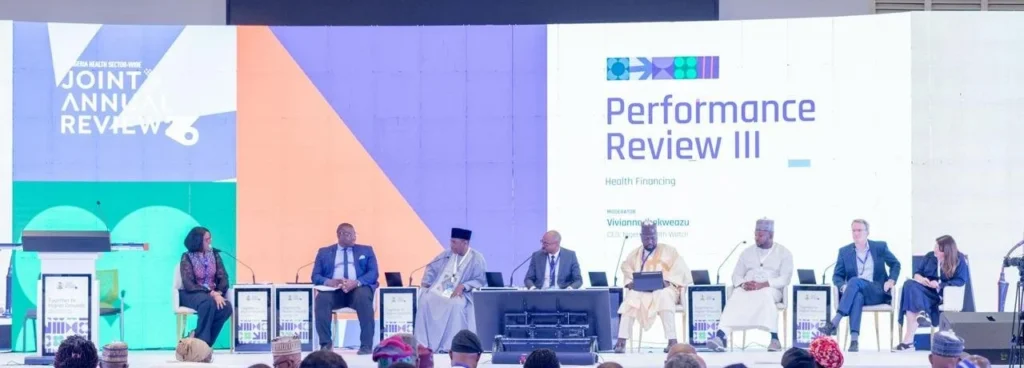
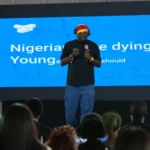
Nigeria out-of-pocket health spending fell from 71.7 per cent of total health expenditure in 2022 to 62.2 per cent in 2024, but households still pay most of the country’s health bill directly, officials said at the 2026 Joint Annual Review, the News Agency of Nigeria (NAN) reported on 11 November.
Dr Francis Ayomoh, Head of the Health Financing Division at the Federal Ministry of Health and Social Welfare, presented National Health Accounts data at a health financing panel in Abuja. Out-of-pocket spending stood at 65.7 per cent in 2023, he said.
Understanding Nigeria out-of-pocket health spending
Government health expenditure rose from 13.3 per cent of total health spending in 2015 to 26.4 per cent in 2024, and per capita government health spending from about N3,000 to N12,000 over the same period, according to the data. In 2024, the federal government funded 67 per cent of government health spending, states 27 per cent and local governments 7 per cent.
Development partners have committed 1.7 billion US dollars to health in 2026, up from 1.6 billion mapped for 2024 and 1.3 billion for 2025, Ayomoh said. He called for a review of the 2017 National Health Financing Policy and Strategy.
“In spite of this progress, it is clear that we are still not where we want to be as a country,” he said.
Immunisation and disease programmes
Dr Ado Muhammad, Special Assistant to the Director-General of the Budget Office of the Federation, said the federal government has spent about 280 million US dollars on immunisation and plans 539 million US dollars for tuberculosis, malaria and HIV programmes. “We are just taking on ATM, which is tuberculosis, malaria and HIV,” he said.
He said states should share responsibility for funding, and that a proposal will go to the National Economic Council. “It is not just enough to allocate without release,” he said. “Health is an investment. Health is not an expenditure.”
Juliet Whitley, Head of Health and Demography at the UK’s Foreign, Commonwealth and Development Office, said states will be critical to sustaining domestic vaccine funding, and urged development partners to pool resources. Owen Smith, Lead Economist at the World Bank, said Nigeria needs more health spending and better efficiency, including timely releases and primary health care staffing.
States step up
Dr Mohammed Safana, Director-General of the Katsina State Contributory Healthcare Management Agency, said Katsina allocated N43.3 billion to health last year, raised nutrition funding from N500 million to N1.2 billion and invested N750 million in its drug supply agency. Kogi State Commissioner for Health Dr Abdul-Aziz Adams described a proposed health trust fund bill that would set aside 2 to 5 per cent of allocations and internally generated revenue.
Combined state health budgets rose from N1.97 trillion in 2023 to N3.3 trillion in 2026, according to the Nigeria Governors’ Forum, ThisDay reported.
Why out-of-pocket spending matters
When people pay for care at the point of use, illness can push families into poverty, and many delay or skip treatment. People with chronic conditions such as hypertension, diabetes and kidney disease are particularly affected because they need medicines and tests for life. WHO considers out-of-pocket spending above about 20 per cent of total health expenditure a sign of weak financial protection.
Medicines account for a large share of out-of-pocket costs in Nigeria. Many patients buy drugs from pharmacies and patent medicine vendors even when they have seen a doctor at a public facility, because hospital pharmacies are out of stock. Reliable supply in public facilities and insurance coverage for medicines would directly cut Nigeria out-of-pocket health spending.
Dialysis is one example of how costs can be reduced. ThisDay reported that government interventions cut dialysis costs by up to 80 per cent for 5,106 patients, and a free 48-hour emergency care programme has benefited more than 15,000 people across 507 facilities.
Coordinating Minister Muhammad Pate said this week that Nigeria aims to reduce out-of-pocket spending to below 50 per cent by 2031 and to end dependence on external aid by 2030. Proposed measures include raising the Basic Health Care Provision Fund to 2 per cent of the Consolidated Revenue Fund and reforming sugar-sweetened beverage excise taxes.
“The illusion that you can have a healthy country on somebody else’s taxpayer, I think we should put it behind us,” Pate said, NAN reported.
Reducing Nigeria out-of-pocket health spending will depend on expanding health insurance beyond its current coverage of about 24 million people, releasing budgets on time and making sure public facilities have the medicines patients would otherwise buy themselves.
Why it matters: Nigerian families still pay most health costs themselves, so illness can mean poverty; insurance and timely budgets must close the gap.
Mental Health Challenges in Nigeria: Funding,… The World Health Organization (WHO) has consistently emphasized the critical importance of mental health, making it a global concern for the past three years through their World Mental Health Day themes. In 2021, the WHO…
Nigeria Targets 90% Functional Health Centres and… ABUJA, NIGERIA — Nigeria aims to make at least 90 per cent of its primary health care centres (PHCs) functional and cover 40 per cent of Nigerians with health insurance by 2031, Minister of State…
Nigeria’s Health Review Ends With 12 Resolutions on… ABUJA, NIGERIA Nigeria’s 2026 Health Sector Joint Annual Review closed on Thursday with 12 Joint Annual Review resolutions on health financing, workforce, primary health care, data, local manufacturing, regulation and emergency care, the News Agency…
Gatefield Survey Finds Many Nigerians Borrow or Skip… ABUJA, NIGERIA — As the gatefield survey finds many Nigerian households taking on debt or foregoing essential medical treatment, public health advocates and lawmakers at the Gatefield Health Summit in Abuja have called for urgent…