ABUJA, NIGERIA — Nigeria aims to make at least 90 per cent of its primary health care centres (PHCs) functional and cover 40 per cent of Nigerians with health insurance by 2031, Minister of State for Health and Social Welfare Iziaq Salako said, setting out new Nigeria health sector targets at the 2026 Joint Annual Review, Premium Times reported on 10 November.
Salako announced the goals at the opening of the three-day Nigeria Health Sector Joint Annual Review (JAR) in Abuja on Tuesday, 10 November, held under the theme “Make the Data Count.”
The Nigeria health sector targets for 2031
The targets include quarterly funding for at least 17,600 PHCs through the Basic Health Care Provision Fund (BHCPF), extending maternal and newborn interventions to all 774 local government areas through the Maternal and Newborn Mortality Reduction Innovation Initiative (MAMII), and reducing out-of-pocket health spending to below 50 per cent of total health spending.
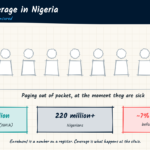
Out-of-pocket spending, money people pay directly at the point of care, is one of the main reasons Nigerians delay treatment or fall into poverty because of illness. Reducing it requires both wider insurance coverage and better-funded public facilities.
Progress claimed so far
Salako said nearly 8 million additional Nigerians have enrolled in health insurance since the current administration took office, including more than 3 million vulnerable people. The government directly supports more than 8,000 PHCs, and over 3,000 facilities have reached Level 2 readiness, according to Premium Times.
Facility-reported maternal deaths have fallen by about 60 per cent compared with 2024, neonatal deaths by 22 per cent and under-five deaths by 25 per cent, he said. The number of active pharmaceutical companies has risen by about 10 per cent, and local production’s share of the pharmaceutical market rose from 30 per cent in 2023 to 50 per cent in 2026, based on figures from the Manufacturers Association of Nigeria’s pharmaceutical group and NAFDAC.
“Survey and routine data answer different questions, so we shall read them side by side,” Salako said. He said the theme meant that “every number must be dependable enough to steer by.”
Challenges acknowledged
Permanent Secretary Daju Kachollom acknowledged that under-five and neonatal mortality remain far from targets and that health worker shortages continue. Only 22 per cent of public health events met the seven-day early response target during the review period, she said.
Ipalibo Banigo, Chairperson of the Senate Committee on Health, called for stronger accountability and sustainable financing, citing “competing national priorities and declining external assistance.”
Facility-reported deaths can fall because care improves, but also because of changes in reporting or in where women give birth. Survey data, such as the Nigeria Mini Demographic and Health Survey to be presented during the review, will help show whether the trends reflect real improvements across the population.
Health insurance coverage is another area where definitions matter. Enrolment figures include federal, state and private schemes, but coverage is only meaningful if enrollees can use services without heavy additional payments. The National Health Insurance Authority has said that enrolment reached about 23 million people in the second quarter of 2026, which is still a small share of Nigeria’s population, so reaching the Nigeria health sector targets will require rapid expansion.
What the review will produce
During the review, the government plans to unveil the National Sexual and Reproductive Health Policy 2026 to 2030 and updated task-shifting and task-sharing guidelines, which allow trained nurses, midwives and community health workers to take on some tasks usually done by doctors. The year 2027 is the final year of the current Health Sector Strategic Blueprint.
Task-shifting is widely used across Africa to stretch scarce doctors. In maternal care, trained midwives and community health extension workers can manage normal deliveries, give magnesium sulphate for pre-eclampsia and provide family planning, freeing doctors for complex cases.
Pharmacists are also part of the debate. Community pharmacies are often the first point of contact for Nigerians with chronic conditions such as hypertension and diabetes, and professional groups have argued that they could support screening, refills and follow-up if integrated into primary care and insurance schemes.
The Nigeria health sector targets will require sustained funding as donor support declines. Experts say the most important measures for patients are whether PHCs have staff, medicines, water and power, whether insurance pays for the care people need, and whether costs at the point of care fall.
Recent reporting has shown the gap between plans and reality in some states, including a Premium Times investigation into Kogi State’s PHC upgrades that found clinics locked or unstaffed. Independent monitoring and published facility data will be important tests of the new Nigeria health sector targets
.
Why it matters: Functional clinics and wider insurance could cut out-of-pocket costs that push Nigerian families into poverty when they fall ill.
Kogi’s N7bn PHC Upgrade Leaves Clinics Locked,… LOKOJA, NIGERIA — A Premium Times Kogi PHC upgrade investigation has found primary health centres that were locked, unfinished or without staff, months after Kogi State announced a N7 billion programme to revitalise its clinics,…
Mental Health Challenges in Nigeria: Funding,… The World Health Organization (WHO) has consistently emphasized the critical importance of mental health, making it a global concern for the past three years through their World Mental Health Day themes. In 2021, the WHO…
Health Insurance Coverage in Nigeria: 23 Million… For almost two decades, health insurance coverage in Nigeria barely moved. It hovered around a few percent of the population, almost all of them federal workers and employees of large companies. Since the National Health…
World Bank Launches New Health Centers in Northern Nigeria. Gombe, Nigeria – In a major development for Nigeria’s health sector, the World Bank has handed over 114 revitalized Primary Health Centres (PHCs) in Gombe State, aimed at improving access to quality healthcare in Northern…