LOKOJA, NIGERIA — A Premium Times Kogi PHC upgrade investigation has found primary health centres that were locked, unfinished or without staff, months after Kogi State announced a N7 billion programme to revitalise its clinics, the newspaper reported on 8 November.
Kogi committed more than N7 billion, with World Bank support, to upgrade 88 primary health centres (PHCs) across 21 local government areas, according to the report by Ogalah Dunamis. The state had aimed to upgrade more than 150 PHCs to functional Level 2 facilities, and on 7 November 2025 it announced that 80 revitalised PHCs had been commissioned, without publishing the full list.
What the Kogi PHC upgrade investigation found
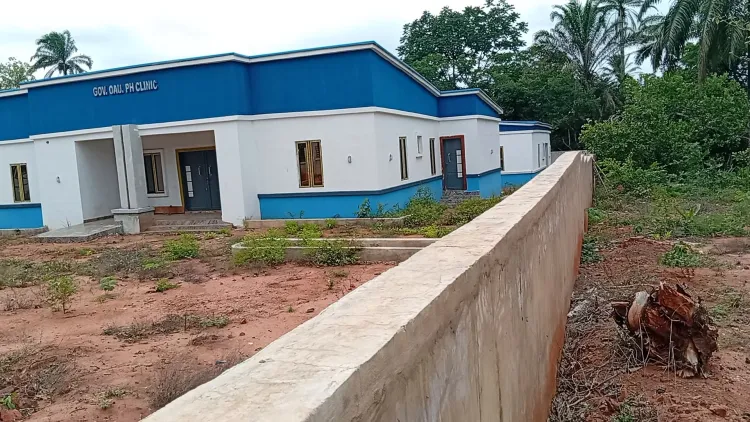
At OAU PHC Ojoku in Ankpa LGA, first visited in December 2025 and again on 6 May 2026, the building had been painted and fitted but was locked, with no staff and no clinical services. A borehole could not pump water without power or solar. “There is nothing inside,” a guard told the reporter.
PHCC Ankpa was running services and sees up to 70 patients on Mondays with about seven active workers, but had no water, no grid power and no solar apart from vaccine refrigerators. Rehabilitation stalled after contractors left between December 2025 and January 2026, and rain flooded the laboratory during a follow-up visit on 28 September. “We don’t have solar, we don’t have water here, we don’t have light,” said the officer in charge, Momo Oneshona. “They scattered our place and went away.”
At PHC Lokongoma in Lokoja, the gate was locked at about 5.45 pm on 13 May, and staff reportedly leave around 2 to 3 pm. In Ajaokuta LGA, Ganaja PHC staff still work from two classrooms at UBE Standard College, about eight years after flooding forced them out, with around 10 workers but no midwife.
Contracts and payments
Four procurement contracts total N6.091 billion, of which N5.516 billion, about 90.6 per cent, is recorded as paid, according to the report. The reporter could not verify the payments against bank or treasury records. One lot, held by Base-SAN Ventures Nigeria Ltd, covers 23 PHCs across seven LGAs, with about N1.069 billion recorded as paid.
Kogi’s 2025 fourth-quarter budget implementation report lists a final budget of N8.205 billion for the broader IMPACT programme, with about N7.818 billion spent, although that programme covers more than the 88 PHCs.
Premium Times said state officials, including the Commissioner for Health and the Executive Director of the Kogi State Primary Health Care Development Agency, did not provide detailed information on the upgrades.
Staff shortages behind the buildings
Aminu Jibrin Nuhu, Head of Health Services in Ankpa Local Government, said the LGA has about 68 functioning PHCs with 50 to 55 per cent of the staff they need. Twelve run entirely on volunteers, and six or seven retired workers help to provide services, according to his estimates, which Premium Times could not verify.
“Those that have been revitalised, we are looking for staff to put in those facilities,” Nuhu said.
Why primary health centres matter
Primary health centres are meant to be the first point of care for most Nigerians, providing immunisation, antenatal care, deliveries, malaria treatment, family planning and management of common illnesses close to home. A functional Level 2 PHC is expected to have skilled staff, water, power and basic equipment, and to be open around the clock for deliveries.
Nigeria has thousands of PHCs, but many lack staff, power, water or medicines. Federal and state programmes, supported by the World Bank and others, have tried to revitalise at least one functional PHC in every ward. Clinics that are renovated but not staffed or equipped do not improve care, and can leave communities with the appearance of progress but no services.
The Kogi PHC upgrade investigation also raises questions about sequencing. Buildings can be renovated quickly, but recruiting midwives, nurses and community health workers, installing solar power and boreholes, and supplying medicines and equipment take longer and require recurring funding that must be planned from the start.
Transparency is central to accountability. Publishing lists of upgraded facilities, contract details, payments and service indicators allows communities, journalists and legislators to check whether money has delivered results.
Community health committees, which exist in many Nigerian wards, are meant to monitor local PHCs and report problems. Strengthening these committees and giving them information on planned upgrades could help catch failures early.
The Kogi PHC upgrade investigation adds to calls for states to show what health spending has achieved, as federal and donor funds for primary care flow through the Basic Health Care Provision Fund and other programmes.
Why it matters: Renovated clinics without staff, water or power cannot deliver babies or treat malaria, and public money for primary care must be accountable.
Nigeria Targets 90% Functional Health Centres and… ABUJA, NIGERIA — Nigeria aims to make at least 90 per cent of its primary health care centres (PHCs) functional and cover 40 per cent of Nigerians with health insurance by 2031, Minister of State…
Audit Finds Only 29 Percent of 290 Nigerian Health… LAGOS, NIGERIA — Exposing a massive gap between official claims and ground-level reality, a new independent audit finds only 29% of assessed primary healthcare centres (PHCs) in Nigeria met the national benchmark for a fully…
Kogi Begins Distributing 3.8 Million Mosquito Nets… LOKOJA, NIGERIA — Kogi State has launched Kogi mosquito net distribution of 3,810,985 insecticide-treated nets (ITNs) to 1,130,935 households across all 21 local government areas, and Malaria Consortium has named the state’s First Lady as…
World Bank Launches New Health Centers in Northern Nigeria. Gombe, Nigeria – In a major development for Nigeria’s health sector, the World Bank has handed over 114 revitalized Primary Health Centres (PHCs) in Gombe State, aimed at improving access to quality healthcare in Northern…