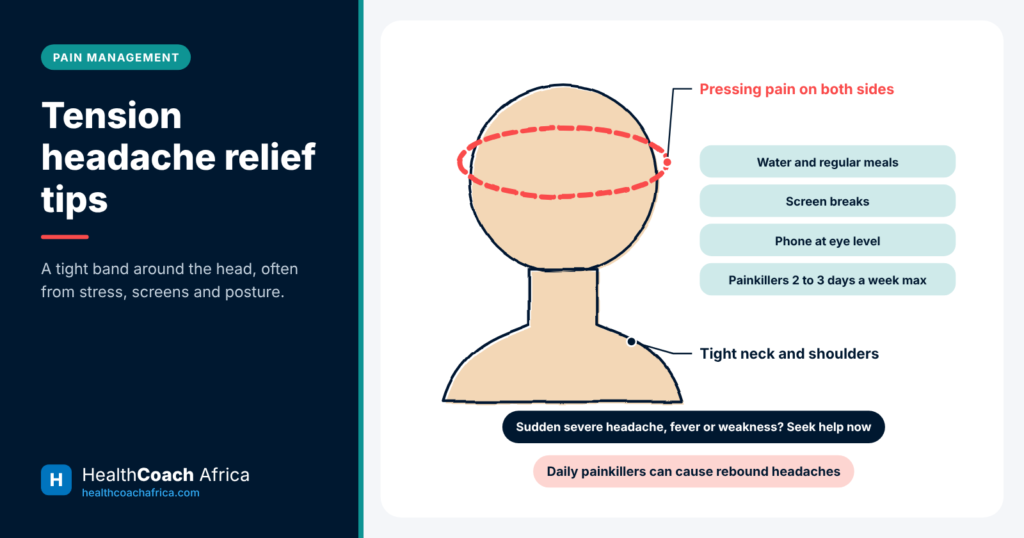
Tension headaches are the most common type of headache. They often feel like a tight band squeezing the head, or pressure behind the eyes. Long hours at a screen, stress, poor sleep, skipped meals and traffic all contribute. Many people reach for painkillers every day, but frequent painkiller use can actually make headaches worse. These tension headache relief tips explain how to ease a headache safely, prevent future ones and recognise when a headache needs medical attention.
What is a tension headache?
A tension headache causes a dull, aching pain on both sides of the head. It may spread to the neck and shoulders. Unlike migraine, it is usually not made worse by movement and does not cause vomiting.
Tension headaches can be:
Episodic, occurring now and then, lasting from 30 minutes to several days
Chronic, occurring on 15 or more days a month
Tension headache or migraine?
It helps to know which type of headache you have. Migraine often causes throbbing pain on one side, nausea or vomiting, and sensitivity to light and sound. Some people see flashing lights before a migraine. Tension headache is usually a steady, pressing pain on both sides without nausea. Some people have both. Different treatments may be needed, so ask a doctor if your headaches are severe or frequent.
Common triggers
Stress and anxiety
Poor posture, especially when using phones and computers
Eye strain
Tiredness and poor sleep
Skipping meals
Dehydration
Noise and heat
Too much caffeine, or sudden caffeine withdrawal
Clenching the jaw or grinding teeth
Tension headache relief tips: painkillers
Simple painkillers work well for occasional tension headaches:
Paracetamol1
Ibuprofen, taken with food2, if suitable for you
Aspirin, for adults only
Take them at the recommended dose when the headache starts. Avoid codeine and other opioid painkillers for headaches. They can cause dependence and make headaches more frequent.
HUBPHARM PHARMACIST’S NOTE
If you take painkillers for headaches on most days, you may be caught in a rebound cycle without realising it. Send a photo of the headache medicines you use to a HubPharm pharmacist. We will count how many days a month you are taking them, check for hidden caffeine and codeine, and help you plan a safe way to cut down with your doctor. We can also check your blood pressure, because very high readings can cause headaches too.
Beware of rebound headaches
Taking painkillers too often can cause medication overuse headache, also called rebound headache. The headache returns as each dose wears off, leading to more painkillers and more headaches.
To avoid this:
Limit simple painkillers to no more than about two or three days a week
Track how many days a month you take them
Speak to a doctor if you need painkillers on more days than this
Stopping overused painkillers can make headaches worse for a short time before they improve. A doctor can help you plan this.
Relief without medicine
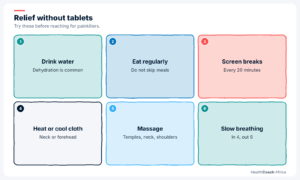
Six drug-free tension headache relief tips, from water and breaks to heat and slow breathing
Keep painkillers to two or three days a week to avoid rebound headaches.
Drink water. Dehydration is a common trigger.
Eat regular meals and healthy snacks.
Take a break from screens and look into the distance every 20 minutes.
Apply heat to the neck and shoulders, or a cool cloth to the forehead.
Massage your temples, scalp, neck and shoulders.
Try slow breathing, breathing in for four counts and out for six.
Go for a short walk in fresh air.
Rest in a quiet, dark room if needed.
Tension headache relief tips for students
Students often get headaches during exams from long reading hours, late nights, skipped meals and stress. Plan regular breaks, sleep well before exams, eat breakfast and drink water. Read in good light and hold books or screens at eye level. These tension headache relief tips help students stay focused and comfortable.
Fix your posture
Poor posture tightens neck and shoulder muscles. Practical tension headache relief tips for posture include:
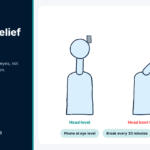
Raising your phone to eye level rather than bending your neck
Setting your computer screen at eye level
Sitting with your back supported and feet flat
Relaxing your shoulders away from your ears
Taking stretch breaks every 30 to 45 minutes
Sleep, stress and lifestyle
Keep a regular sleep routine
Limit caffeine, especially after midday
Exercise regularly, which reduces both stress and headaches
Find ways to manage stress, such as prayer, hobbies or talking with friends
Have your eyes tested if you squint or read for long periods
Treatment for frequent headaches
If you have tension headaches on many days each month, a doctor may recommend a preventive medicine, such as a low dose of amitriptyline3 taken at night. Talking therapies, stress management and physiotherapy can also help. These treatments reduce headache frequency, so you need fewer painkillers.
Tension headache relief tips for drivers
Long journeys in traffic cause tension in the neck and shoulders. Adjust your seat so your back is supported and your arms are relaxed. Take breaks to stretch on long trips. Keep water in the car and avoid driving when very tired. Wear sunglasses in bright sunlight to reduce squinting.
Check your eyes and blood pressure
Uncorrected vision problems and high blood pressure can both contribute to headaches. Have your eyes tested every two years, or sooner if you notice changes. Have your blood pressure checked regularly, especially if you are over 40.
Keep a headache diary
Record when headaches start, how long they last, what you were doing, what you ate and drank, and any medicines taken. Patterns often appear within a few weeks. A diary also helps your doctor if you need further assessment.
Red flags: when to seek urgent help
Most headaches are harmless, but seek urgent medical care for:
A sudden, severe headache, like a thunderclap
Headache with fever, stiff neck, rash or confusion
Headache after a head injury
Headache with weakness, numbness, slurred speech or vision loss
A new headache in someone over 50
A headache that keeps getting worse, or wakes you from sleep with vomiting
Headache in pregnancy or after birth, especially with vision changes or swelling
Also have your blood pressure checked. Very high blood pressure can cause headaches.
Myths about headaches
“Strong painkillers work best for headaches.” Opioids often make headaches worse over time.
“Every headache is caused by malaria.” Many headaches have other causes.
“Headaches mean high blood pressure.” Most people with high blood pressure have no headache, so regular checks are needed.
“You should take painkillers every day to prevent headaches.” Daily painkillers can cause rebound headaches.
Tension headache relief tips for parents and carers
Busy parents often skip meals, sleep little and carry heavy bags or children for long periods. These all trigger headaches. Eat regular small meals, drink water, share childcare when possible and take short rests. Looking after yourself is part of caring for your family.
Caffeine: friend or foe?
A small amount of caffeine can help some headaches, and some painkillers contain it. However, more than a few cups of coffee or tea a day, or several energy drinks, can cause headaches, and stopping suddenly can cause withdrawal headaches. Cut down gradually if you drink a lot.
Screens and sleep
Phones in bed delay sleep and strain the eyes and neck. Put your phone away an hour before bed and charge it outside the bedroom. Better sleep is one of the most effective tension headache relief tips.
Jaw clenching and teeth grinding
Clenching the jaw or grinding teeth at night can cause morning headaches. A dentist can check for signs and may suggest a mouth guard.
For occasional headaches. Limit to two or three days a week.
2
Ibuprofen
Pharmacy medicine
Take with food if suitable for you.
3
Amitriptyline (low dose)
Prescription only
Preventive treatment for frequent tension headaches.
To order any of these, or to ask a pharmacist a question first, message HubPharm on WhatsApp or visit hubpharmafrica.com. Prescription medicines are supplied against a valid prescription.
Safe Use of Painkillers: Getting Relief Without Harm Painkillers are among the most widely used medicines in Nigeria. Many are sold over the counter, and people often take them for headaches, body aches, period pain and fever without a second thought. Used correctly,…
Period Pain Relief Tips: Easing Cramps So You Can… Many girls and women miss school, work or important events because of painful periods. Some are told that pain is simply part of being a woman and must be endured. While mild cramps are common,…
Neck Pain Relief Tips: Easing a Stiff, Sore Neck Neck pain is very common. Long hours on phones and laptops, poor sleeping positions, heavy loads carried on the head and long journeys in traffic all strain the neck. Most neck pain is not serious…
Period Pain Relief Tips for Every Woman and Girl Most women and girls experience some pain during their periods. For many, it is a mild ache. For others, it is severe enough to cause vomiting, fainting or days off school and work. Too often,…