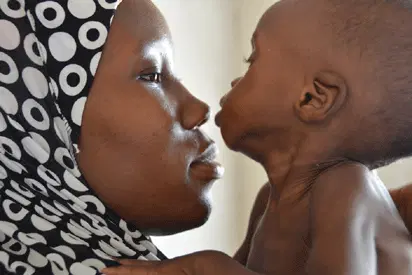
MUBI, NIGERIA — Clinical admissions for severe child malnutrition in north east nigeria have surged by 18 percent over the past year, as persistent insecurity prevents rural families from cultivating agricultural land.According to operational disclosures released by the International Committee of the Red Cross (ICRC), admissions across ten supported health facilities rose from approximately 17,000 between January and September 2025 to nearly 20,000 during the corresponding period in 2026.
The humanitarian crisis is particularly acute in Mubi, Adamawa State, where pediatric admissions at local stabilization centers increased by nearly 24 percent—rising from 4,600 to 5,700 young patients.Food security analysts warn that ongoing armed conflict forces farmers to abandon outlying fields, restricting local food production to small, low-yield residential gardens.
Crisis Metrics and Child Malnutrition in North East Nigeria
Data compiled by international humanitarian agencies outlines the expanding scale of food insecurity and pediatric clinical admissions across the region:
Crisis Benchmark Category
Regional Metrics & Clinical Parameters
ICRC Facility Admissions
~20,000 malnourished children admitted (Jan–Sept 2026 vs 17,000 in 2025)
Mubi Stabilization Center Surge
24% increase in Adamawa State admissions (5,700 pediatric cases)
National Food Insecurity Projection
>34 million Nigerians projected to face acute food deficits in 2026
Community Nutrition Recovery
>13,000 children recovered using locally produced Tom Brown therapeutic blends
Pathophysiology and Clinical Risks of Severe Malnutrition
Understanding the physiological impact of child malnutrition in north east nigeria highlights why early clinical intervention is necessary to prevent infant mortality:
Immune Suppression and Secondary Infection: Severe acute malnutrition severely degrades childhood immune systems, increasing mortality risks from common infectious diseases like diarrhea, pneumonia, and malaria.
Noma Disease Vulnerability: Severe protein-energy malnutrition predisposes young children to opportunistic, gangrenous facial infections such as noma, alongside heightened susceptibility to measles and diphtheria.
Therapeutic Interventions and Community Nutrition Models
To combat moderate acute malnutrition across more than 200 rural communities, the ICRC and the Nigerian Red Cross Society rely on decentralized food interventions.Central to this response is “Tom Brown,” a nutrient-dense, locally sourced therapeutic blend composed of roasted sorghum, millet, soybeans, groundnuts, and moringa powder.This community-level intervention has successfully rehabilitated more than 13,000 undernourished children, offering a cost-effective alternative to imported ready-to-use therapeutic food (RUTF).
However, tertiary stabilization centers handling severe cases with medical complications depend heavily on continuous donor financing. Recent contractions in international humanitarian aid allocations across 2025 and 2026 threaten the continuity of these essential life-saving nutrition programs.
Primary Triage, Warning Signs, and Regional Health Systems
Early clinical screening remains the frontline defense against infant mortality from acute malnutrition.Primary health workers utilize Mid-Upper Arm Circumference (MUAC) measuring tapes to identify children requiring immediate nutritional therapy.Parents are urged to seek emergency medical evaluation at primary health centers upon observing visible muscle wasting, bilateral foot edema, lethargy, or persistent loss of appetite.
As Nigeria contends with undernutrition in conflict regions and rising diet-related non-communicable diseases in urban centers, strengthening primary health infrastructure remains essential.Securing rural agricultural access, expanding community-based food production, and stabilizing donor funding are vital to reversing the tide of child malnutrition across the North-East.
Why It Matters: Conflict continues to strip rural families of their farming livelihoods, pushing thousands of infants into severe malnutrition that requires immediate therapeutic feeding to prevent fatal disease complications.
Aid Cuts Push Millions Into Hunger in Northeast Nigeria Northeast Nigeria is facing a worsening humanitarian crisis as aid cuts by international donors intensify hunger and malnutrition across conflict-affected states like Borno, Adamawa, and Yobe. With over 4.4 million people projected to face acute…
Nigeria Faces Unprecedented Hunger Crisis, UN Warns Abuja, Nigeria — Nigeria is currently grappling with an unprecedented hunger crisis as the United Nations (UN) and humanitarian agencies warn of rising food insecurity across the country. Driven by conflict, economic challenges, climate change,…
MSF Treated 425,634 Nigerian Children for Acute… ABUJA, NIGERIA — Medical humanitarian organization msf treats child acute malnutrition cases across northern communities as Médecins Sans Frontières (MSF) treated 425,634 children for acute malnutrition in Nigeria in 2025. Marking 30 years of medical…
Malnutrition Kills 652 Children in Nigeria Nigeria is facing a deepening nutritional crisis as at least 652 children have died from severe malnutrition in the first half of 2025, according to official reports from UNICEF and Nigeria’s Federal Ministry of Health.…